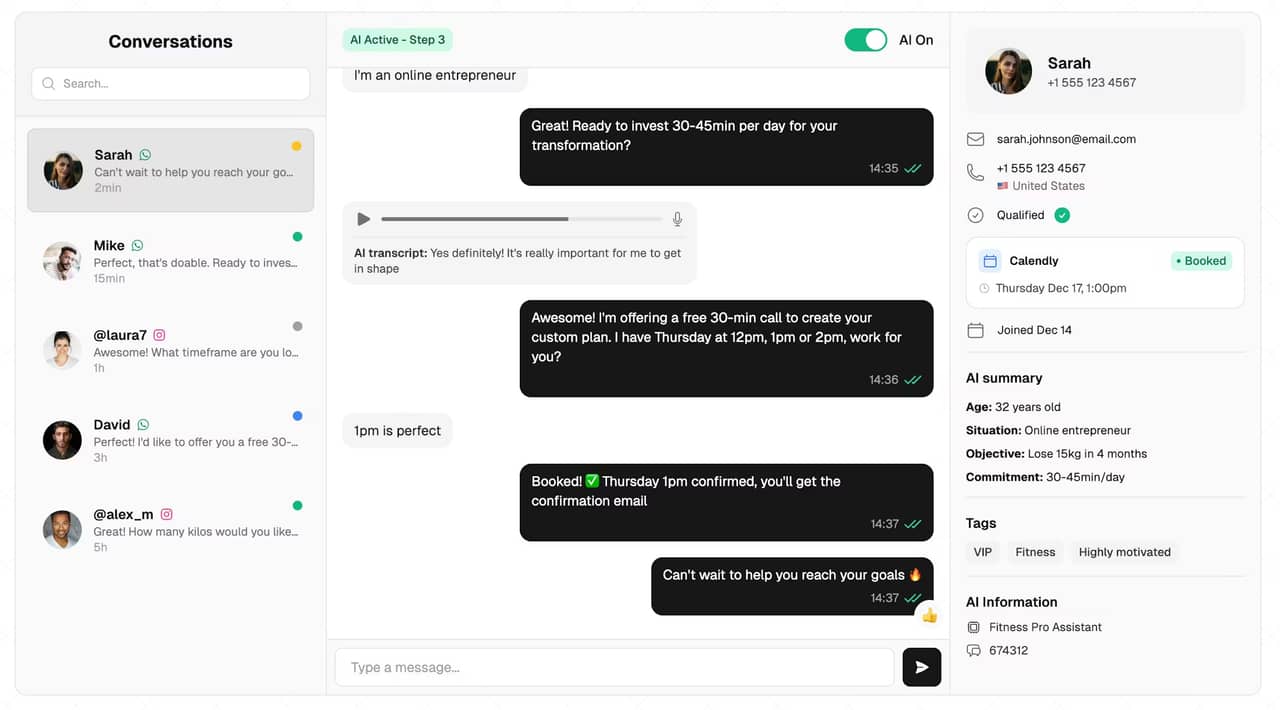
WhatsApp Business API Pricing 2026: Per-Message Rates

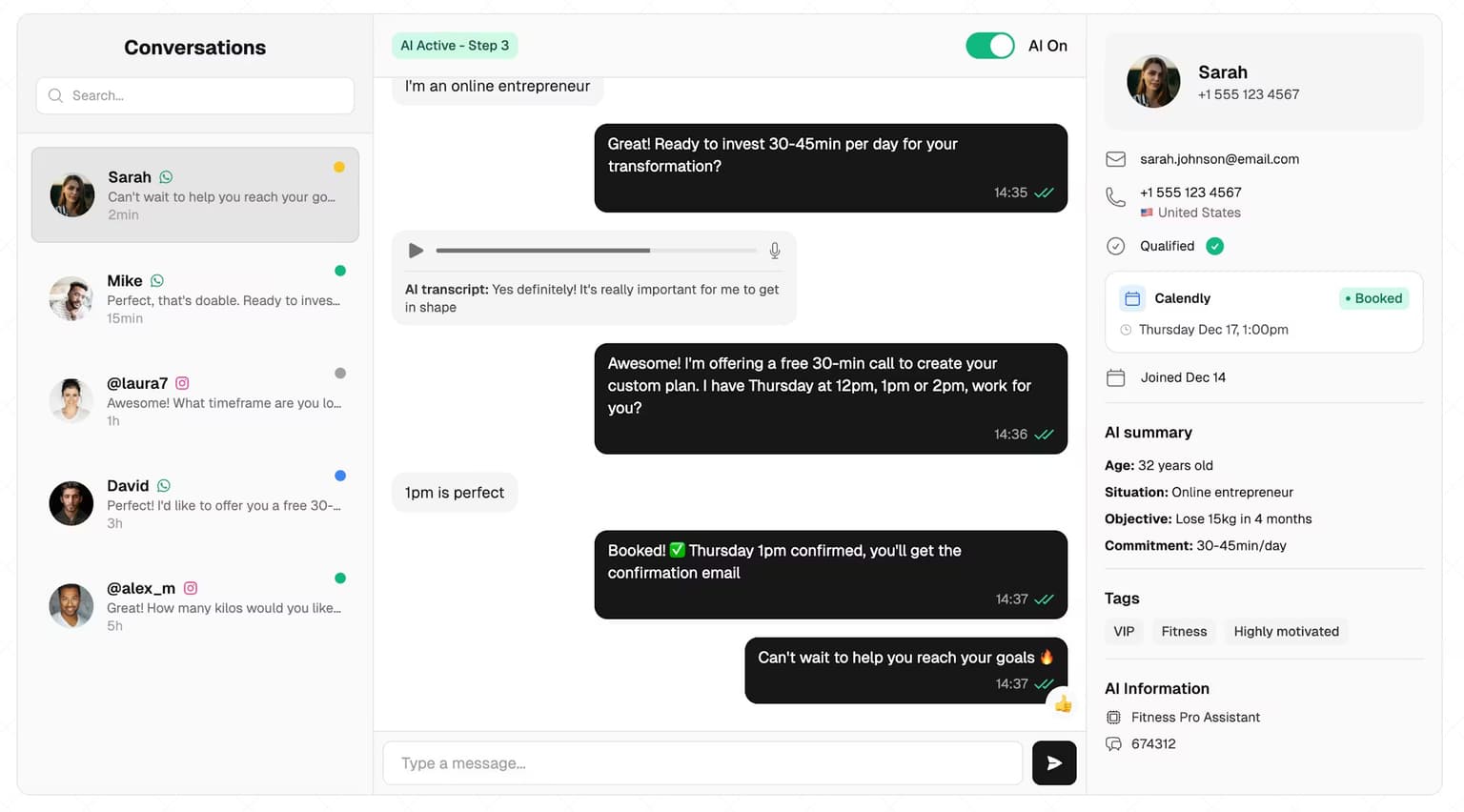
WhatsApp Business API pricing works differently than most guides still describe. On July 1, 2025, Meta switched billing from per-conversation to per-message: every template message you send is billed individually, the rate depends on the recipient country and the template category, and replies inside the 24-hour customer service window are free with no monthly cap. On top of Meta's bill you also pay your BSP (Business Solution Provider): Twilio, 360dialog, Wati, Gupshup, AiSensy, or any platform like ManyChat or SetSmart that wraps the API.
Most articles on this topic show the Meta rate card and stop there. The real cost is 2x to 5x higher once you factor in BSP markup, template approval delays, and the messages that get blocked or marked as spam (which you still pay for). We've sent millions of WhatsApp messages through the API and we'll show you what each layer actually costs.
This guide covers: the per-message model, the 2026 country-by-country rates, BSP markups (with a comparison table), the free messaging windows that cut your bill in half, and the hidden costs nobody warns you about.
How WhatsApp Business API Pricing Works in 2026
WhatsApp Business API pricing is per-message, not per-conversation. Every template message you send is billed individually when it's delivered, based on the recipient's country code and the message category. Everything you send inside the 24-hour customer service window (regular replies and utility templates) is free.
This is a major shift from the old conversation-based pricing introduced in 2022 and retired on July 1, 2025. Under the old model, a single 24-hour "conversation" could include unlimited messages for one flat fee. Under the current model, each template message you send is its own line item on the invoice.
The breakdown:
- Marketing messages: promos, broadcasts, abandoned cart nudges, re-engagement. Most expensive. Charged on every delivered message, always, even if the user is already inside a 24-hour service window. No volume discount, ever.
- Utility messages: order updates, shipping alerts, appointment reminders, payment confirmations. Cheapest template category. Free if delivered inside the customer service window.
- Authentication messages: OTPs and verification codes. Own per-market rate (between utility and marketing in most Western markets, equal to utility in India). Also free inside an open customer service window.
- Service messages: your replies to a user-initiated conversation, sent inside the 24-hour window. Free worldwide, with no monthly cap.
Plus, a few rules you only learn after your first invoice:
- The 24-hour customer service window opens when a user sends you a message. Inside that window, your free-form replies and utility templates are free. As soon as you send a marketing template, or the window closes, billing resumes.
- Service conversations are free and uncapped. The old "first 1,000 free service conversations per month" cap was removed on November 1, 2024. If leads message you first and you reply inside the window, that traffic costs nothing on Meta's side, at any volume.
- When a user starts a conversation from a click-to-WhatsApp ad, a 72-hour free entry point window opens: every message you send inside it, templates included, is free.
- Utility and authentication templates get volume discounts at high monthly volumes (tiers reset each month, per market). Marketing templates do not, at any volume.
- If a template fails delivery (number not on WhatsApp, blocked, etc.), you don't pay. If it's delivered but the user marks it spam, you do pay.
If you're new to the API, our WhatsApp automation for sales guide covers the channel basics first. This article assumes you already know why you want the API.
WhatsApp Business API Pricing by Country (2026 Rate Card)
Per-message rates vary wildly by country. The cheapest market (India) is roughly 20x cheaper than the most expensive (Germany, France, UAE) for marketing messages. Here are Meta's base rates for the four message categories in the markets we ship the most volume through.
| Country | Marketing | Utility | Authentication | Service |
|---|---|---|---|---|
| United States | $0.0250 | $0.0040 | $0.0135 | Free |
| United Kingdom | $0.0592 | $0.0171 | $0.0358 | Free |
| Germany | $0.1365 | $0.0331 | $0.0768 | Free |
| France | $0.1431 | $0.0314 | $0.0691 | Free |
| Spain | $0.0615 | $0.0135 | $0.0298 | Free |
| Brazil | $0.0625 | $0.0070 | $0.0225 | Free |
| India | $0.0118 | $0.0014 | $0.0014 | Free |
| UAE | $0.0816 | $0.0285 | $0.0492 | Free |
| Mexico | $0.0436 | $0.0080 | $0.0207 | Free |
| Indonesia | $0.0271 | $0.0036 | $0.0079 | Free |
Rates shown are from Meta's rate cards under the per-message model and can change; always check Meta's current rate card for your markets. These are Meta's wholesale rates. Your invoice from Twilio, 360dialog, Wati or any platform that wraps the API will be higher, sometimes 50% higher, sometimes 4x, depending on the BSP markup model.
A horizontal view of how the marketing rate alone varies by country:
The takeaway: if you're sending the same campaign to a German list and an Indian list, the German send costs you 11x more per delivery. Most companies optimize for "best country to acquire customers"; fewer optimize for "cheapest country to message." For high-volume utility flows (OTP, shipping alerts), routing logic per country is a real margin lever.
How WhatsApp Pricing Changed: From Conversations to Per-Message
If you last checked WhatsApp API pricing before mid-2025, everything you remember is outdated. Three dates matter:
- 2022 to mid-2025: conversation-based pricing. One "conversation" = a 24-hour session with unlimited messages for one flat fee, priced by category and country. The first 1,000 service conversations per month were free.
- November 1, 2024: Meta made all service conversations free, removing the 1,000-per-month cap entirely. Replying to inbound messages inside the 24-hour window has cost nothing since.
- July 1, 2025: Meta switched template billing from per-conversation to per-message. Each delivered marketing, utility, or authentication template is now its own charge. Free-form replies inside the 24-hour service window stay free.
The practical impact is sharp on heavy outbound senders:
- A SaaS sending 5 marketing nudges per active user per month previously paid for 1 conversation. Now it pays for 5 messages.
- An ecommerce store sending order confirmation + shipped + delivered + review request now pays 4 utility messages per order (or pays nothing if all 4 land inside the user's service window, which they often do not, because order shipped notifications happen days apart).
Two softeners came with the per-message model:
- Volume tiers for utility and authentication. Rates drop as your monthly delivered volume in a market crosses Meta's thresholds. Tiers reset every month. Marketing is explicitly excluded: the $0.025 US marketing rate is the same whether you send 100 or 10 million.
- Max-price for marketing messages. Meta is launching a max-price option through its Marketing Messages API in 2026: you set the maximum you're willing to pay per delivered marketing message, and Meta charges the lower of your max price and the market rate. Worth watching if you run a lot of click-to-WhatsApp ads.
BSP Pricing: Twilio vs 360dialog vs Wati vs Gupshup
The Meta rate is just the wholesale price. You can't access the WhatsApp Business API directly: you must go through a BSP (Business Solution Provider) or a no-code platform that wraps a BSP. BSPs charge a markup, a monthly fee, or both. Here's how the four largest BSPs compare in 2026.
| BSP | Monthly base | Markup model | Effective US marketing cost | Best for |
|---|---|---|---|---|
| 360dialog | $49 (Hosting) | Pass-through Meta + flat $0.005 / msg | ~$0.030 | High volume, transparent billing |
| Twilio | $0 | Meta + $0.005 / msg sent | ~$0.030 | Devs already on Twilio stack |
| Wati | $49 / $99 / $299 | Meta pass-through + included no-code UI | ~$0.025 + plan | SMBs that want shared inbox |
| Gupshup | $10–$80 | Meta + $0.001–$0.004 / msg | ~$0.026–$0.029 | India / SEA-focused senders |
| ManyChat WhatsApp | $29 (Pro) | Meta pass-through + plan-tier message limits | ~$0.025 + $29 | Already using ManyChat for IG |
| SetSmart | From $97 | Meta pass-through, no per-message markup | $0.025 | AI qualification + booking |
A few notes that don't fit in the table:
- 360dialog is a Meta-tier BSP: they sell direct API access at the cleanest markup. If you have engineering bandwidth and your own messaging platform, they're the cheapest path. If you don't, you're paying for nothing because you still need a UI.
- Twilio is great if you already use Twilio for SMS. The same auth, the same SDK, the same console. But Twilio's flat $0.005 markup adds up at high volume: at 1M marketing messages/month in the US, that's $5,000 of markup on top of $25,000 of Meta cost.
- Wati is the most popular no-code WhatsApp tool for SMBs. The plan tiers ($49 / $99 / $299) include a shared team inbox, broadcast tools, and a no-code flow builder. You still pay Meta on top.
- Gupshup dominates India and Southeast Asia, where their volume discounts are real. In US/EU markets they're middle-of-the-pack.
- ManyChat WhatsApp wraps the API for the marketers already using ManyChat for Instagram. Convenient if you're a one-person agency, but the ManyChat per-channel limits hit fast; our ManyChat WhatsApp review covers the gotchas.
- SetSmart is the AI layer on top of the API: we plug into your BSP, run conversations end-to-end with AI, qualify leads, and book calls. We pass Meta cost through with no per-message markup. If your goal is more booked calls per ad dollar (vs more messages sent), this is a different category, not a BSP comparison.
The mental model: pick a BSP for infrastructure (deliverability, template approval, number provisioning), pick a layer on top for what you do with the messages (broadcast, automation, AI qualification, support inbox). Most companies need both.
Hidden Costs Nobody Warns You About
The Meta rate card and the BSP markup are the two visible line items. Here are the four costs that surprise most teams in their first 60 days on the WhatsApp Business API.
1. Phone number provisioning + display name verification
Activating a WhatsApp Business number is not instant. You need:
- A phone number not already used on WhatsApp (personal or Business app). If it is, you have to migrate.
- A Meta Business Manager + Business Verification (corporate documents, address proof). Most BSPs walk you through this. Expect 2-7 days.
- Display name approval. Meta reviews your brand name. If it's generic ("Marketing Pro") it'll be rejected. If it's a registered business it usually passes.
- A green tick (Official Business Account) if you want one: separate review by Meta, no SLA, often refused on the first try.
None of these have a direct fee, but the time cost matters. Most BSPs charge a one-time onboarding fee ($0–$100) and some require you to be on a paid plan during the wait.
2. Template approval and rejection
You can only send marketing/utility/authentication templates that Meta has pre-approved. Approval takes 1-24 hours and rejection rates are high: about 1 in 5 templates we submit needs at least one revision. Common rejection reasons:
- Generic promo language without context ("Don't miss our deal!")
- Missing variable placeholders for personalization
- Category mismatch (you tagged it Utility but it reads Marketing)
- Wrong language tag
Each rejected template is wasted dev time. At scale, this is a real cost. Plan to ship templates in batches with the same variable structure to amortize the back-and-forth.
3. Follow-up templates get billed at marketing rates
This one stings. If a lead messages you and goes silent, you have 24 hours to follow up freely. Re-engage 26 hours later and you can no longer send a free-form message; you need a pre-approved template. And a casual "Hey, did you get a chance to check what I sent yesterday?" template gets categorized as marketing, the most expensive category.
Marketing rates are 4-10x higher than utility rates depending on country. For high-volume re-engagement flows, this single rule can quadruple your bill.
The fix is a smart AI lead follow-up cadence that respects the 24-hour window. Our own send data shows the first follow-up should land inside 4 hours if possible, well within the free service window, and a second one between 23h and 27h, where you often still catch the window before it closes. Outside that, you're paying marketing rates.
4. Quality rating drops and tier resets
Every WhatsApp Business number has a messaging quality rating (high / medium / low) and a messaging tier (1K / 10K / 100K / unlimited recipients per 24h). If users mark too many of your messages as spam or block your number, your quality drops, your tier resets to a lower cap, and Meta can suspend the number.
You don't pay an extra fee for this directly, but you lose the ability to deliver. A SaaS we worked with had to provision 3 new numbers in a month after one campaign tanked their main number to "low" quality. New numbers = new approval flow = days of lost time = real cost.
The biggest driver of low quality: sending marketing messages to opted-in lists that haven't engaged in 90+ days. Treat your WhatsApp list like an email list with stricter consequences.
Cost Math: 3 Realistic Use Cases
Numbers in isolation are abstract. Here's what the API actually costs for three common setups.
Case 1: Coaching business doing $30K/month in Instagram + WhatsApp DMs
Profile: solo creator, ~600 leads/month from Instagram comment-to-DM and click-to-WhatsApp ads, ~200 of those move to WhatsApp for booking.
- Inbound on Instagram: 100% free (handled by Instagram DM API, see our Instagram DM automation guide).
- Click-to-WhatsApp ad leads: every message you send in the first 72 hours after the ad click is free, templates included. You pay for the ad click, not the messages.
- WhatsApp service replies (inside 24h window): free and uncapped (200 conversations × ~30 msgs each = $0 on Meta's side).
- Marketing follow-ups for no-shows / lapsed leads: ~150/month × $0.025 (US) = $3.75.
- BSP: Wati Pro plan = $99/month.
Total monthly cost: ~$103. This is the reason WhatsApp is a margin printer for solo coaches: at $30K MRR, the messaging stack costs 0.34% of revenue.
Case 2: D2C ecommerce with 10K monthly orders
Profile: Shopify store, US + UK + DE, sends order confirmation, shipped, delivered, review request (4 utility messages per order). Plus weekly marketing broadcasts to 50K subscribers.
- Utility, US (5K orders × 4 msgs): most land in service window if the customer initiated checkout chat. Assume 50% billable = 10K × $0.004 = $40.
- Utility, UK (3K orders × 4 msgs): 50% billable = 6K × $0.0171 = $103.
- Utility, DE (2K orders × 4 msgs): 50% billable = 4K × $0.0331 = $132.
- Weekly marketing broadcasts (50K subscribers × 4 weeks, mixed countries, blended $0.045): 200K × $0.045 = $9,000.
- BSP (360dialog Hosting): $49 + 226K × $0.005 markup = $1,179.
Total monthly cost: ~$10,454. Marketing dominates the bill: 86% of it. The levers that matter here are utility volume tiers (this store is deep into discounted territory on the utility side) and Meta's upcoming max-price option for marketing sends.
Case 3: SaaS sending OTPs at scale
Profile: B2C app, 200K OTPs/month, mostly India and Brazil.
- Authentication, India (140K): 140K × $0.0014 = $196.
- Authentication, Brazil (60K): 60K × $0.0225 = $1,350.
- BSP (Gupshup): $80 plan + 200K × $0.001 markup = $280.
Total monthly cost: ~$1,826. OTP volume is the easiest case to underestimate: the rate looks tiny per message, but it scales linearly with active users. At 1M OTPs/month this grows fast, softened only by authentication volume tiers kicking in.
How Pricing Connects to ROI: What You Actually Get for $0.025
A US marketing message at $0.025 sounds expensive next to email at fractions of a cent. The economics flip once you compare outcomes per dollar.
In our 828K AI DM conversation study, we found that WhatsApp responders qualify at 33.96%, 1.9x Instagram DMs and somewhere between 5x and 20x typical email open-and-click rates. Among WhatsApp leads who respond, 18.82% explicitly book a call when an AI handles the qualification.
Doing the unit economics:
- US marketing message: $0.025
- Response rate (industry blended): ~23%
- Of responders, 33.96% qualify
- Of qualified, 18.82% book a call
That's a booked call for every ~615 messages sent. At $0.025/message that's $15.40 per booked call, before any optimization. For high-ticket coaches, agencies, B2B SaaS, anything north of $1K LTV, this is a 30-100x ROI channel.
For lower-ticket businesses where $15/booked call isn't viable, the lever is the service window. Replies to user-initiated messages are free worldwide. Lead with click-to-WhatsApp ads or comment-to-DM auto-handoffs from Instagram so the user opens the conversation, then your AI handles the rest at $0 message cost. This is the model behind most successful WhatsApp-led funnels; see our breakdown in WhatsApp automation for sales.
The pricing question isn't "is the API expensive." It's "do my conversations qualify and convert at rates that make $0.025 cheap." For most B2B and high-ticket B2C, the answer is yes by an order of magnitude.
How to Cut Your WhatsApp API Bill in Half
Five practical levers, in order of impact for most senders.
- Maximize the service window. Anything you can defer until a user replies is free, with no monthly cap. Train your AI to ask one short opener, wait, then run the full qualification inside the free window. Don't burn marketing budget asking "What's your budget?" via template.
- Categorize ruthlessly. Half of templates labeled "Marketing" are actually utility (order updates, appointment reminders). Re-tag them. Resubmit. Save 4-10x per send, and utility volume gets cheaper as you scale while marketing never does.
- Cap volume at the right cadence. Sending 4 follow-up nudges to a cold lead has diminishing returns and risks quality penalties. Our data shows that the first follow-up doubles booked calls (+106%), the second adds another +45%, but the third onwards adds nothing. Stop at 2.
- Route campaigns by geography. Marketing in Germany costs 11x what it costs in India. If your offer is global, send the same campaign on different schedules to maximize the cheap markets first. This rarely saves whole campaigns but cuts 10-20% on blended cost.
- Replace template re-engagement with AI conversation. Most "we miss you" template campaigns die in spam folders, hurt your quality score, and cost full marketing rate. An AI like an AI sales assistant running through SetSmart can re-engage by referencing the user's specific conversation history: much higher reply rate, often inside the service window, often free.
The combination of #1 + #2 alone has cut bills by 40-60% for the senders we work with. The other levers add another 10-20% on top.
Frequently Asked Questions About WhatsApp Business API Pricing
Is the WhatsApp Business API free?
Partly. Every reply you send inside the 24-hour customer service window is free, with no monthly cap (Meta removed the old "first 1,000 free service conversations" limit on November 1, 2024). What you pay for are template messages: since July 1, 2025 Meta bills each delivered marketing, utility, or authentication template individually, and marketing templates are charged even inside the 24-hour window.
How much does WhatsApp charge per message in 2026?
Per-message rates depend on category and country. In the US: marketing $0.025, utility $0.004, authentication $0.0135. In Germany or France: marketing rises to $0.13-$0.14. In India: marketing as low as $0.0118. Service messages (replies inside the 24-hour window) are free worldwide. See the country table above for the full rate card.
What changed with WhatsApp API pricing in July 2025?
On July 1, 2025 Meta switched from per-conversation to per-message billing for template messages. Before, one 24-hour conversation covered unlimited messages for a flat fee; now each delivered template is billed individually. Free-form replies inside the 24-hour customer service window remain free and uncapped, so inbound-led funnels got relatively cheaper while heavy template broadcasters pay more.
What's the cheapest WhatsApp Business API provider?
For pure pass-through pricing at scale, 360dialog has the cleanest markup ($49 base + flat $0.005 per message). For India and Southeast Asia, Gupshup wins on volume rates. For SMBs that want a no-code interface, Wati at $49-99/month bundles tooling. The "cheapest" depends on your volume, geography, and whether you need a UI on top: at low volume the Twilio markup is invisible, at high volume 360dialog's flat rate wins.
What's the difference between WhatsApp Cloud API and WhatsApp Business API?
WhatsApp Cloud API is Meta's own free-to-host implementation (the BSP is essentially Meta itself). The on-premise WhatsApp Business API was deprecated in 2025. Today, "WhatsApp Business API" effectively means Cloud API; the difference is whether you go through Meta directly via Cloud API + your own integration, or through a BSP like Twilio/360dialog/Wati that builds on top of Cloud API and adds tooling.
Do WhatsApp messages get cheaper at high volume?
Only two categories do. Utility and authentication templates have volume tiers per market: once your delivered volume in a month crosses Meta's thresholds, the per-message rate drops, and tiers reset monthly. Marketing templates have no volume discount at any volume, which is deliberate on Meta's part to keep promotional blasting expensive.
Do I pay for WhatsApp messages that are not delivered?
No. Meta only bills on delivered messages. If the recipient's number is not on WhatsApp, blocked you, or has notifications disabled to a degree the API marks the send as failed, you don't pay. You do pay for delivered messages that the user later marks as spam, and your messaging quality rating takes a hit, which can cap your future send volume.
How does the max-price option for marketing messages work?
Meta is launching a max-price feature through its Marketing Messages API in 2026. Instead of paying the flat country rate, you set the maximum you're willing to pay per delivered marketing message, and Meta charges the lower of your max price and the market rate. Availability varies by market and by how you send (it's tied to the Marketing Messages API), so check with your BSP whether your account can use it.
Can I use ManyChat to access WhatsApp at the API rate?
Yes. ManyChat's WhatsApp tier ($29/month Pro plan) wraps the WhatsApp Cloud API and passes Meta's per-message rate through. You pay $29 + Meta's per-message cost. The catch is ManyChat's plan-tier message limits and the lack of multi-account management at higher volumes. For full details and limits, see our ManyChat alternative comparison and the ManyChat WhatsApp review.
Ready to automate your DMs?
Start your free 7-day trial and let AI handle your lead qualification 24/7.
Try SetSmart free