Facebook Messenger Marketing: 2026 DM Playbook

Facebook Messenger marketing in 2026 is no longer about blasting promotional broadcasts to a subscriber list. Meta closed that door. What works now is a tight inbound funnel: a comment or ad opens a Messenger thread, an AI qualifies the lead with a few questions, and the booked sales call lands on your calendar before the conversation goes cold.
This playbook is written for the people who actually run Messenger as a revenue channel: coaches, course creators, info-product sellers, and SMMAs who treat the inbox as the front of their funnel. If you are picturing a creator with a Facebook Page and an offer, not a 50-rep outbound floor, you are in the right place. We will cover what changed in 2026, the rules you cannot break, the strategies that still convert, the tools, and a 30-day plan you can start today.
Facebook Messenger marketing in 2026, in one line
Facebook Messenger marketing is the practice of turning Page conversations into qualified, booked sales calls, using triggers (comments, ads, links) to start threads inside Meta's 24-hour window and automation to qualify and route leads fast.
The shift this year is simple: the old "build a Messenger list, broadcast offers weekly" model is dead, because Meta is removing Recurring Notifications. The new model is conversational and consent-first. You earn the conversation, answer fast, qualify, and book. Speed and depth beat volume, every time.
What is Facebook Messenger marketing?
Facebook Messenger marketing uses the Messenger inbox attached to your Facebook Page as a marketing and sales channel. Instead of pushing people to a landing page and hoping they fill a form, you start a real-time conversation where most of your buyers already are.
There are three jobs it does well:
- Capture: turn ad clicks, post comments, and profile visits into Messenger threads.
- Qualify: ask the two or three questions that separate a real buyer from a tire-kicker.
- Route: send hot leads to a booked call, send the rest to nurture, and never let a thread die in silence.
It overlaps heavily with Instagram DM automation, because both run on Meta's messaging infrastructure and follow the same conversation rules. Many creators run Messenger and Instagram together from a single inbox, which is exactly what a multi-channel AI setter is built for.
What changed in 2026: Recurring Notifications are gone
The biggest 2026 update: Meta is sunsetting Recurring Notifications on Messenger. For years, the core "Messenger marketing" play was to collect opt-ins and send recurring promotional sequences (a daily tip, a weekly drop, a sale alert). That mechanism is being retired, which is why half of the 2018-era Messenger marketing advice is now obsolete.
What replaces it is Marketing Messages, Meta's newer, more tightly governed format, plus a heavier reliance on real conversations inside the 24-hour window. The practical takeaway: stop thinking of Messenger as a broadcast list and start thinking of it as a high-intent conversation channel.
This is good news if your offer is high-ticket. Broadcasting never closed a $3,000 coaching program anyway. A focused, fast, qualifying conversation does. The death of Recurring Notifications pushes everyone toward the model that already worked for coaches and creators: talk to fewer people, qualify them properly, and book the ones who are ready.
The Meta 24-hour rule (and the 4 ways to message after it)
Here is the single constraint that governs all Facebook Messenger marketing. After a user messages your Page, you have a 24-hour window to reply with standard messages, including promotional content. Once 24 hours pass without a new message from them, the window closes, and you can only send messages under specific Meta-approved exceptions.
The four ways to message a user after the 24-hour window closes:
The lesson for marketers: the window is your friend, not your enemy. If you answer in seconds instead of hours, you do almost everything important inside the free 24-hour window and rarely need the workarounds. Slow replies are what force you into paid Sponsored Messages and clumsy re-engagement. The lead response time statistics are brutal on this point: the longer you wait, the lower your odds, and the more you have to pay to reopen a conversation you already had.
How Facebook Messenger marketing works: the inbound DM funnel
Modern Facebook Messenger marketing is an inbound funnel with four stages. Each one has a clear job, and automation handles the parts that humans are bad at (speed and consistency).
- Trigger: something starts the thread. The strongest triggers are a comment-to-Messenger keyword on a high-performing post, a click-to-Messenger ad, or a link in your bio or content that opens Messenger directly.
- Open: the first reply lands instantly. It thanks them, sets context, and asks one qualifying question. No wall of text, no menu of 8 buttons.
- Qualify: two or three short questions sort the lead. Budget, timeline, current situation, goal. The AI or your team tags the lead based on the answers.
- Route: hot leads get a calendar link or two proposed call slots. Warm leads get a nurture path. Cold or unfit leads get a polite off-ramp so you do not waste a call slot.
This is the same mechanism behind Instagram comment-to-DM automation, and it is why creators who run both channels treat them as one motion. The trigger differs (a Facebook post vs an Instagram reel), but the qualify-and-book engine is identical.
9 Facebook Messenger marketing strategies that still work in 2026
Most "messenger marketing strategy" lists are recycled from 2019 and lean on broadcast tactics that no longer exist. These nine actually fit the 2026 rules.
- Comment-to-Messenger on your best post. Pin one piece of content, tell people to comment a keyword, and auto-open a thread. It is the cleanest opt-in that exists, and it starts the 24-hour window with intent.
- Click-to-Messenger ads instead of lead forms. A conversation converts warmer than a static form because you can qualify in real time. Send the ad to Messenger, not a landing page.
- One question, not a quiz. Open with a single qualifying question. Multi-part questionnaires kill reply rates. Ask, then branch based on the answer.
- Answer in seconds, not hours. Speed is the highest-leverage variable in the whole funnel. An AI that replies instantly beats a human who replies tomorrow.
- Qualify before you pitch. Never lead with price or a calendar link. Earn the right to book by understanding the goal first.
- Book the call, do not close in chat. For high-ticket offers, the inbox books the call; the call closes the deal. More on this below.
- Follow up once on silent threads. A single, specific follow-up recovers a large chunk of stalled conversations. Automate it so it never gets forgotten.
- Tag and segment as you go. Tag leads by fit and stage inside Messenger so you can route, report, and re-engage cleanly. Think of it as a lightweight Instagram CRM for your inbox.
- Run Messenger alongside Instagram and WhatsApp. Your buyers do not live on one app. A multi-channel setup catches them wherever they reply, and WhatsApp automation often qualifies even higher than Messenger.
Facebook Messenger marketing tools compared
The right messenger marketing tool depends on whether Messenger is your only channel or one of several, and whether you want a visual flow builder or an AI that holds a real conversation. Here is an honest snapshot of the main options creators evaluate.
Where each genuinely wins: ManyChat has the best-in-class comment-to-DM growth tooling and a real free plan, which is why it dominates the entry level (see our full ManyChat alternative breakdown and the ManyChat Messenger setup guide). Chatfuel is strong for ecommerce flows. The Meta native inbox is fine until you have more than a handful of threads a day. SetSmart's edge is the qualifying conversation itself plus multi-channel coverage, which matters most when Messenger is one of several inboxes you run. If you want a deeper field, our roundup of Instagram automation tools covers the adjacent stack.
Facebook Messenger marketing automation: where AI changes the game
Facebook messenger marketing automation used to mean drag-and-drop flows: if the user clicks button A, send message B. That still works for simple menus, but it breaks the moment a real human types something off-script, which is most of the time.
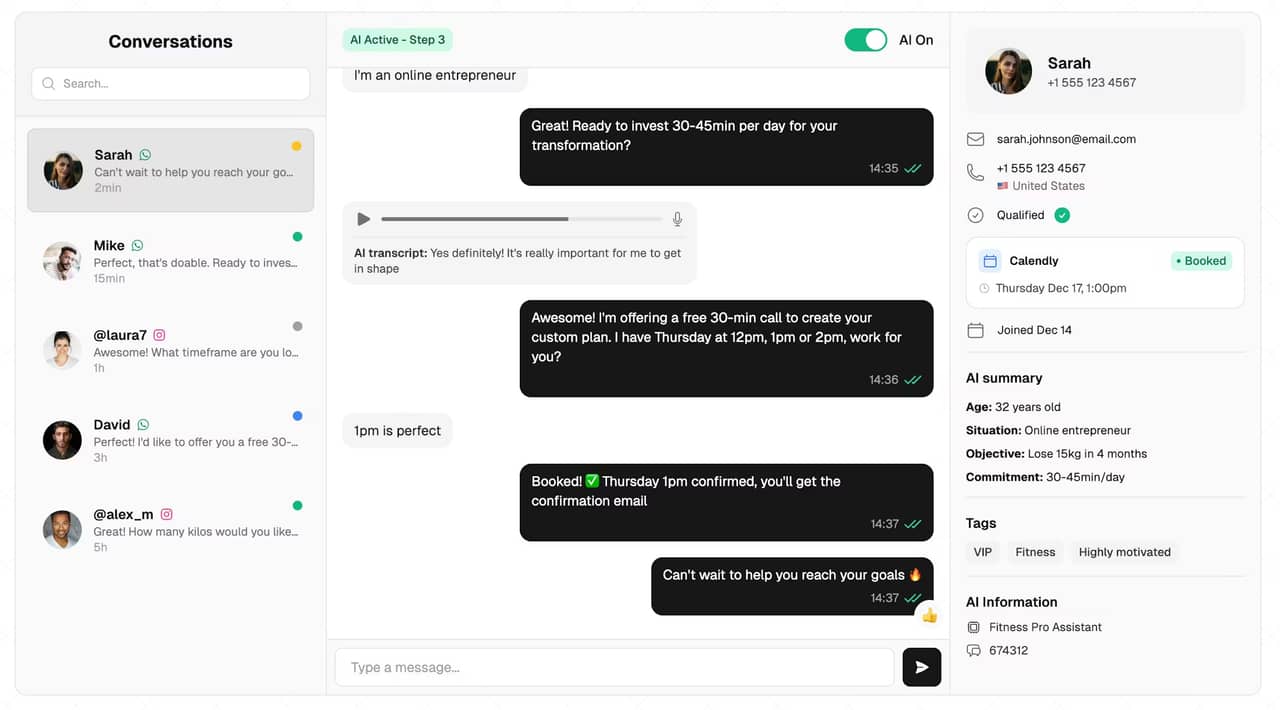
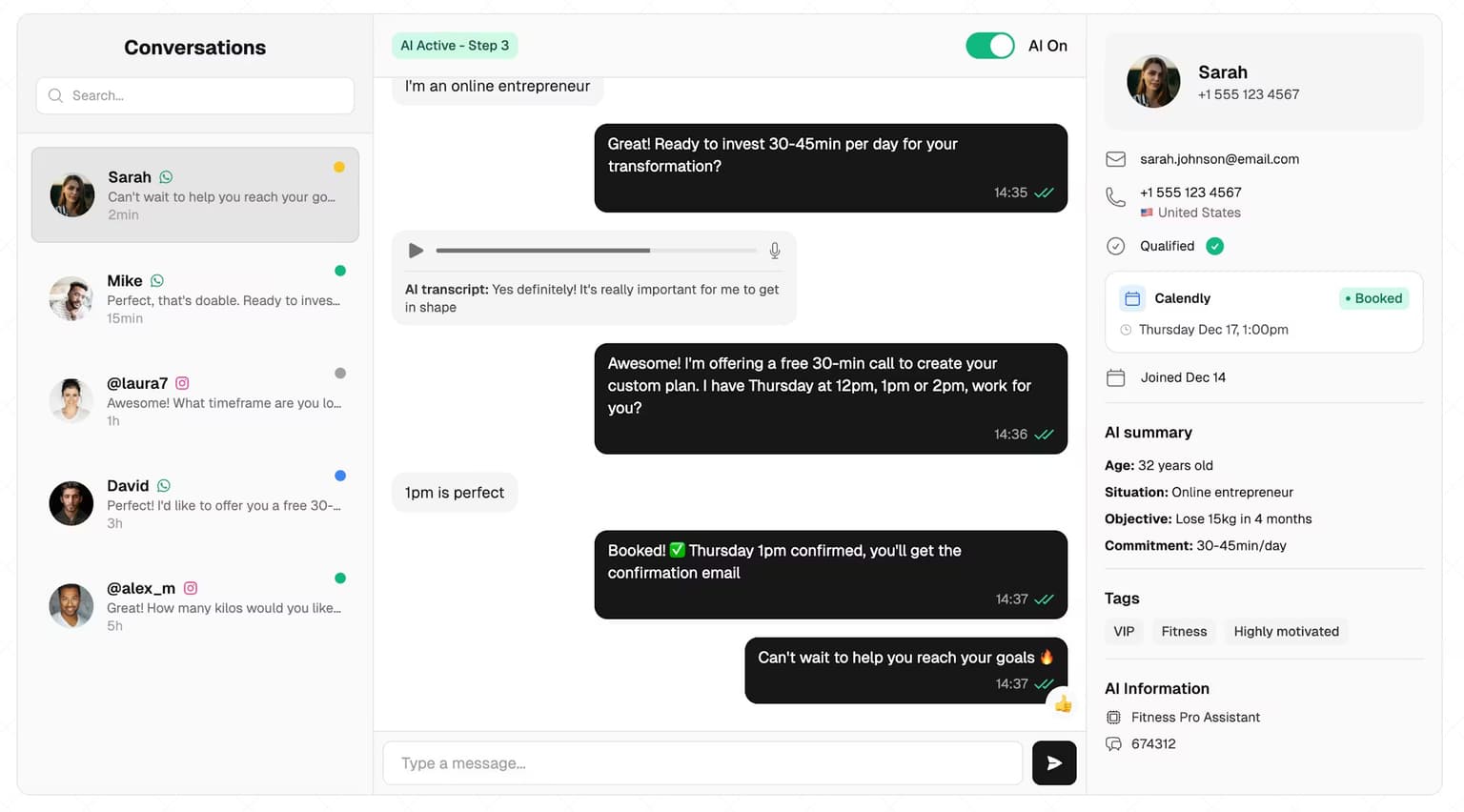
AI messenger marketing flips it. Instead of guessing every branch in advance, an AI setter reads what the lead actually wrote, asks the right next question, and adapts. It handles the messy middle of a conversation, the part flow builders cannot.
The reason this matters is depth. In our analysis of 828K AI DM conversations, 53% of conversations die before the third message, and the leads who book are overwhelmingly the ones who reach a real back-and-forth. A flow that dead-ends after two clicks loses those people. An AI that keeps the conversation moving, and follows up once when it stalls, recovers them, a single follow-up roughly doubles booked calls among engaged leads.
"We were leaking leads every time we slept. The AI now answers in seconds and books the call before they cool off." (Théo Riffault)
This is also why the AI setter category grew so fast. Automation that only handles the easy clicks is not enough when the money is in the conversations that go off-script.
The real job: qualify and book the call, do not close in the DM
This is the most misunderstood part of Facebook Messenger marketing, and getting it wrong costs coaches real money.
For a high-ticket offer (a coaching program, a done-for-you service, a $2,000+ course), you do not close in the inbox. You qualify and book a sales call. The DM is the appointment-setting layer; the close happens on the call, run by you or your closer. Anyone telling you to "sell in the chat" is describing a low-ticket impulse buy, not a considered purchase.
So the success metric for your Messenger funnel is not "sales in chat". It is qualified calls on the calendar. The job of automation is to fill your calendar with people who are a genuine fit, so your call time is spent closing, not screening. If you sell high-ticket, study high-ticket closing as the next step after the booking, and treat the DM setter role as the thing that feeds it. Coaches specifically should pair this with the fundamentals in how to get coaching clients.
Frame everything around one outcome: more qualified sales calls booked from your Messenger inbox.
5 Facebook Messenger marketing mistakes to avoid
- Treating Messenger like an email list. With Recurring Notifications gone, broadcast-first thinking is a dead end. Build for conversations, not sends.
- Replying slowly. Every hour you wait, the window narrows and the lead cools. If you cannot answer in seconds yourself, automate the first reply.
- Opening with a pitch or a price. You have not earned it yet. Lead with a question that helps the buyer, not a link that helps you.
- No follow-up. Letting silent threads die is the single most expensive habit in the channel. One automated follow-up changes the math.
- Ignoring the 24-hour rule. Sending promotional content outside the window or the approved exceptions risks Page-level messaging restrictions. Know the rules before you scale.
A 30-day Facebook Messenger marketing plan
You do not need a big launch to start. Here is a four-week plan to stand up a working Messenger funnel, mirroring the steps in this article's setup guide.
Week 1: Trigger. Pick one Facebook post or ad and turn on a comment-to-Messenger keyword. Write the auto-open reply: a thank-you plus one qualifying question. Keep it human and short.
Week 2: Qualify. Define the two or three questions that identify your ideal buyer (goal, timeline, budget or current situation). Map which answers mean hot, warm, or unfit. Set tags for each.
Week 3: Book. Connect your calendar. For hot leads, send a booking link or propose two slots automatically. For warm leads, set a nurture sequence inside the rules. For unfit leads, write a kind off-ramp.
Week 4: Recover and scale. Turn on a single automated follow-up for silent threads. Review your tags, see where leads drop, and tighten the opener. Then add a second trigger (an ad, or a second post) and consider extending the same engine to Instagram and WhatsApp.
By day 30 you have a channel that captures, qualifies, and books on autopilot, the modern version of Facebook Messenger marketing that actually fits the 2026 rules.
FAQ
Is Facebook Messenger marketing still worth it in 2026?
Yes, but the model changed. Broadcast-style Messenger marketing is fading with the removal of Recurring Notifications. Conversational, consent-first Messenger marketing (qualify and book inside real threads) is more effective than ever, especially for high-ticket coaches and creators who need quality conversations over volume.
What is the best tool for facebook messenger marketing automation?
It depends on your need. ManyChat is the strongest entry-level option for comment-to-DM growth and has a free plan. Chatfuel suits ecommerce flows. For AI that holds a real qualifying conversation across Messenger, Instagram, and WhatsApp and books the call, an AI setter like SetSmart is the better fit. Match the tool to whether Messenger is your only channel or one of several.
How does the Facebook Messenger 24-hour rule affect marketing?
After a user messages your Page, you have 24 hours to send standard messages including promotions. Once the window closes, you can only message under Meta-approved exceptions: Message Tags, Sponsored Messages, Marketing Messages, and the Human Agent tag. Fast replies let you do most of your marketing inside the free window.
Can I still send Messenger broadcasts in 2026?
Not in the old recurring-notification sense, which Meta is removing. You can use Meta's Marketing Messages format with explicit opt-in and approval, or paid Sponsored Messages. The reliable play is to keep conversations active and qualify leads inside the 24-hour window rather than relying on broadcasts.
How is Messenger marketing different from Instagram DM marketing?
The qualify-and-book engine is identical because both run on Meta's messaging rules, including the 24-hour window. The difference is the trigger and audience: Facebook posts and Pages vs Instagram reels and stories. Most creators run both from one inbox, and our Instagram DM marketing guide covers the IG side in depth.
Does Facebook Messenger marketing work for high-ticket coaching?
It works very well, as long as you use it to book sales calls rather than close in the chat. The inbox qualifies the lead and fills your calendar with fit buyers; the close happens on the call. That separation is what makes Messenger a strong top-of-funnel channel for $2,000+ coaching and service offers.
Ready to automate your DMs?
Start your free 7-day trial and let AI handle your lead qualification 24/7.
Try SetSmart free