Instagram Close Friends: How Creators Use It (2026)

Instagram Close Friends is the green-star list that lets you share stories, notes, and reels with a hand-picked group instead of your whole following. Most guides stop at "how to make the list." This one shows you the part that actually matters for a creator or coach: how a private Close Friends list becomes a warm-audience engine that feeds qualified DM conversations and booked sales calls.
If you run an offer on Instagram, Close Friends is one of the most underused features on the platform. It quietly separates your warmest audience from the casual scrollers, and a warm audience is exactly where booked calls come from. Below is the full mechanic, the privacy facts people get wrong, and the 2026 playbook to turn the green ring into pipeline.
What is Close Friends on Instagram?
Close Friends is a single, private list you build of accounts you choose. Anything you post to Close Friends, a story, a note, or a reel, is only visible to the people on that list. Everyone else sees nothing. When you view a Close Friends story, it is wrapped in a green ring instead of the usual gradient, and a small green star badge appears on the content.
Three things define the feature:
- It is one list, not many. You get a single Close Friends list per account. You can edit it freely, but you cannot run multiple separate lists the way Snapchat allows private stories. (Instagram has tested changes here, but as of 2026 it is still one list for most accounts.)
- It is private to you. Only you can see who is on your Close Friends list. The people on it cannot see the full list, and they cannot see who else made the cut.
- It is silent. When you add someone to Close Friends, they are not sent a notification. They only find out because a green ring shows up on your story. The same is true when you remove someone, there is no alert.
That combination, exclusive content plus a private, silent list, is why creators use it as a status signal. Being on someone's Close Friends feels like access. For a coach or course creator, that feeling of access is the raw material of trust, and trust is what shortens the path from follower to booked call.
How the Close Friends list works (the mechanics)
The feature is deliberately simple, which is part of its charm. Here is exactly what happens under the hood.
When you mark a story as Close Friends, Instagram filters the audience at delivery. Only accounts on your list get the story in their tray, and it shows with the green ring. People not on the list never know the story exists, so there is no "why didn't you share this with me" friction unless they happen to spot the green badge on a shared screenshot (and Instagram does not notify you when someone screenshots a story or DM in the first place).
Close Friends works across the formats that matter for warm engagement:
- Stories: the core use. Tap the green star before posting to send a story only to the list.
- Notes: the short text status at the top of the DM inbox can be set to Close Friends only, which is a quiet, high-open-rate nudge. We cover the format in depth in our guide to Instagram Notes.
- Reels: you can publish a reel to Close Friends only, useful for testing an offer or sharing a raw behind-the-scenes clip with your inner circle.
There is no published hard cap that most creators will ever hit, so the list scales with your warm audience. The practical limit is your own judgment: the moment the list stops feeling exclusive, it stops working.
Close Friends vs your main audience vs a broadcast channel
Creators often confuse Close Friends with the other "reach a group" tools. They solve different problems:
| Tool | Who sees it | Best for |
|---|---|---|
| Close Friends | A private list you curate | Warm, intimate, "you're an insider" content and soft offers |
| Main story | All followers | Top-of-funnel reach, polls, link stickers, comment-to-DM prompts |
| Broadcast channel | Anyone who opts in (one-to-many) | Public newsletter-style updates at scale |
If you want the full breakdown of the one-to-many option, see our guide to the Instagram broadcast channel. Close Friends is the opposite end of the spectrum: small, curated, and warm rather than broad and public.
How to set up your Close Friends list
Setting up the list takes about a minute.
- Open your Instagram profile and tap the menu (the three lines, top right).
- Tap Close Friends. You will see a green star screen.
- Search for accounts and tap Add next to each one. You can add anyone you follow or who follows you.
- Tap Done. The list is saved, private, and editable any time.
- To use it, create a story as normal, then tap the green Close Friends star at the bottom instead of Your Story.
That is the whole technical setup. The strategy is what separates a creator who gets DMs from one who just posts to a smaller crowd.
The creator wedge: turn Close Friends into booked calls
Here is the angle no help-page covers. A Close Friends list is not just a privacy toggle. It is a warm-audience segment, and warm audiences convert. The people who joined your list raised their hand, they care enough to be your insiders. That intent is gold for an offer.
The mistake most creators make is treating Close Friends like a diary, posting moods and selfies with no path forward. The fix is to treat it like the bottom of your funnel: exclusive value, then a clear conversation trigger.
A simple framework:
- Give first. Share something the public feed does not get: a raw client win, a mini-training, an early-bird spot, a behind-the-scenes look at your method.
- Then open a loop. End the story with a single instruction: "Reply WIN if you want the breakdown," or "DM me COACH and I'll send the details." This is the same trigger logic behind comment-to-DM automation, just inside your warmest segment.
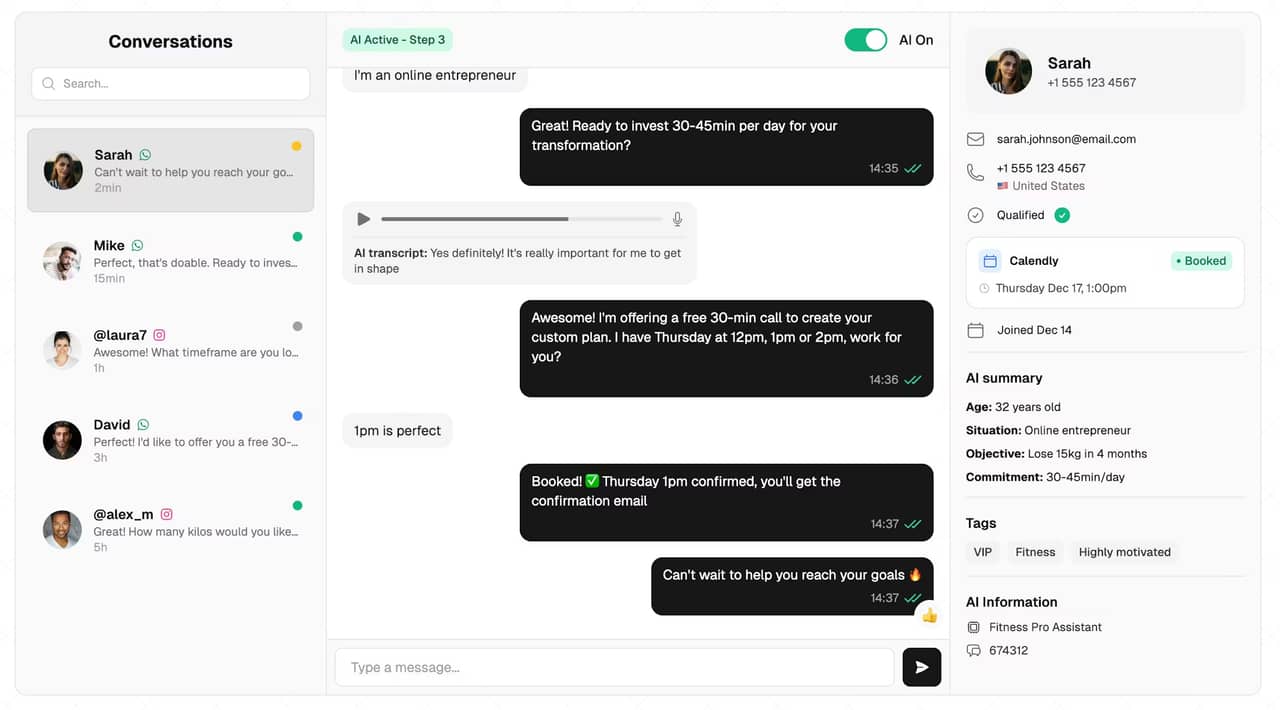
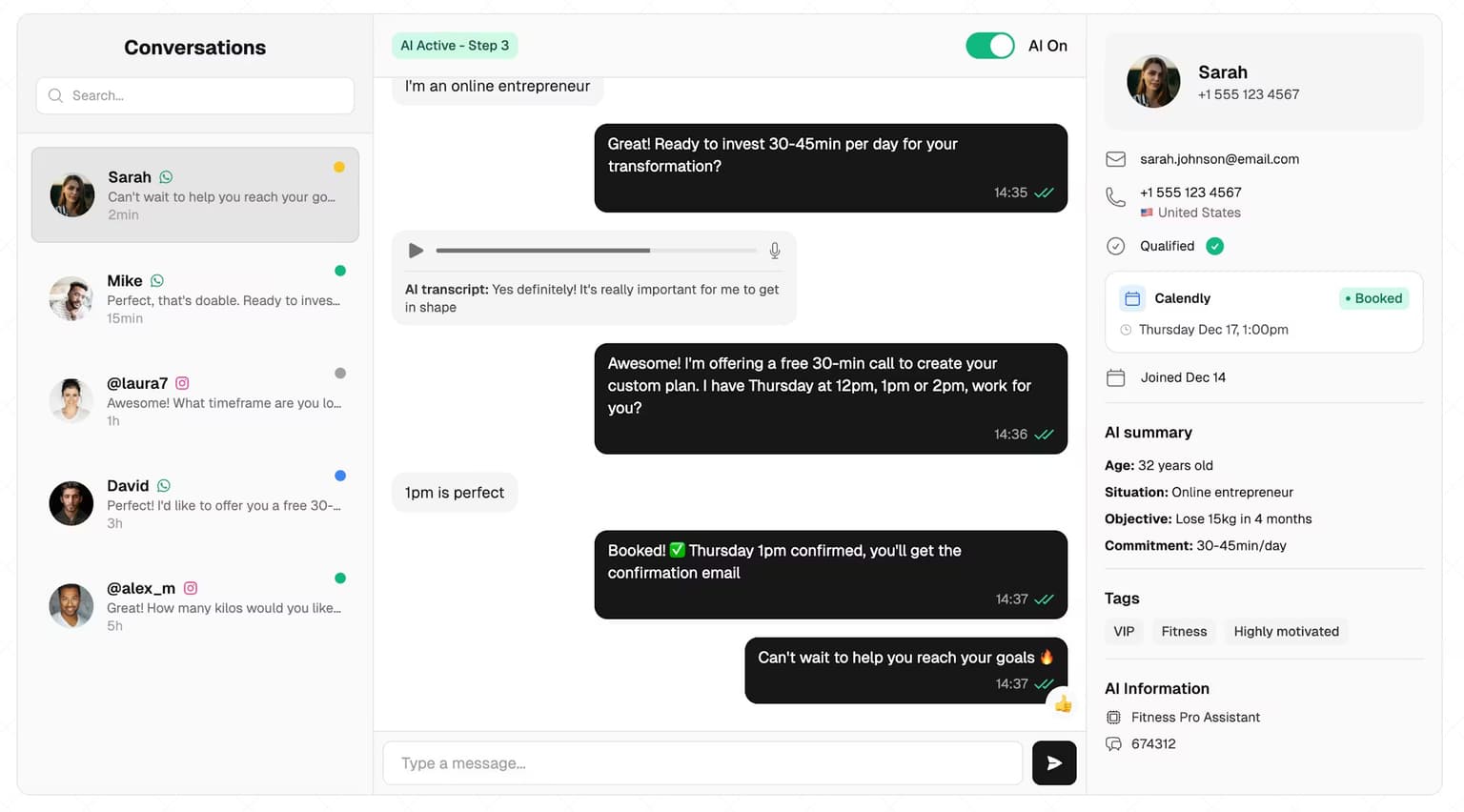
- Let the DM do the qualifying. When the reply lands, you (or an AI) ask two or three questions to understand the person's goal and timeline, then offer a call. That is the appointment-setting layer, and it is where the AI DM setter earns its keep.
This is the part worth saying clearly: the DM does not close the sale. For high-ticket coaches and creators, the close happens on a booked call. Close Friends starts the warm conversation, the DM qualifies and books, and you (or your closer) sell on the call. Frame the whole flow around filling your calendar with qualified calls, not closing in the inbox.
Why warm beats cold (and why depth matters)
Reach is not the goal, conversation is. Across 828K AI DM conversations we analyzed, a single follow-up more than doubles booked calls (+106%), and conversations that go deep convert far better than one-and-done replies. A Close Friends audience is primed to go deep: they already trust you, so the conversation that starts from a green-ring story tends to run longer and warmer than a cold inbound from a random reel.
That is the strategic case for Close Friends. It concentrates the people most likely to reply, and replies are the input to the only metric that matters: booked calls. If you want to see how that funnel performs end to end, our Instagram lead generation guide maps every stage from content to call.
Close Friends content ideas that drive DMs
Content for the list should feel like access, not broadcast. A few formats that consistently start conversations:
- The insider win: a short story showing a client result with the caption "this is the exact thing we fix, reply if you want the steps."
- The soft launch: open a handful of spots to the list 24 hours before the public feed. Scarcity plus exclusivity is a strong combination for warm buyers.
- The poll-to-DM: run a poll ("are you stuck on X or Y?"), then DM everyone who voted with a tailored next step.
- The mini-training: a 3-part Close Friends story teaching one tactic, ending with "want the full version? DM TRAIN."
- The note nudge: set a Close Friends-only note like "2 coaching spots left this week, reply here" to catch people who live in the inbox.
Each of these ends with a reply, and each reply is a thread you can qualify. Pair them with proven openers from our Instagram DM scripts so the conversation flows instead of stalling.
Where it fits in a real Instagram funnel
Close Friends is one tool in a larger acquisition system, not the whole thing. A healthy 2026 creator funnel usually looks like this:
- Public content for reach (reels, main stories, comment-to-DM prompts).
- Warm segmentation with Close Friends and a broadcast channel for the people who engage.
- DM conversation that qualifies intent and timeline.
- Booked call for the actual sale.
The friction is almost always at step 3. You can build the warmest Close Friends list on Instagram, but if every "DM me WIN" reply waits hours for an answer, the warmth cools fast. Speed and consistent follow-up are what convert warm intent into a calendar slot, which is exactly why creators automate the conversation layer. Tools like the ones in our best AI setters roundup answer in seconds, qualify with a few questions, and propose a time, so the warm audience you worked to build does not leak.
If you are automating that layer yourself, our walkthrough on how to automate Instagram DMs with AI and the broader Instagram DM automation guide cover the safe, Meta-compliant setup. The point is simple: Close Friends fills the top of the warm funnel, and the AI setter handles the conversation that turns it into pipeline.
Common mistakes to avoid
- Treating it like a personal diary. If there is never a next step, the list builds zero pipeline. Give value, then open a loop.
- Adding everyone. The moment the list stops feeling exclusive, the magic dies. Curate it.
- Posting and ghosting. A reply that sits unanswered for hours is a lost call. Reply fast or automate the first response.
- Selling hard every day. Warm audiences punish constant pitching. Lead with value; pitch occasionally and softly.
- Ignoring the data. Track which Close Friends stories get the most replies and double down on that format. The reply rate, not the view count, is your signal. For more on turning IG attention into DMs, see our Instagram DM marketing playbook.
FAQ
Can you tell if you are on someone's Close Friends list on Instagram?
Not directly. There is no notification and no list you can view. The only clue is that their Close Friends stories appear to you with a green ring and a green star badge. If you see that green ring, you are on their list; if you never see it, you are not.
What is the difference between friends and close friends on Instagram?
"Friends" is not a formal Instagram setting, people usually mean your followers or mutuals. Close Friends is a specific feature: a private, curated list that only you control, used to share stories, notes, and reels with a chosen subset of your audience instead of everyone.
Can people see who your Close Friends are on Instagram?
No. Your Close Friends list is private and visible only to you. The people on it cannot see the full list or who else is included. They only know they are on it because your Close Friends content reaches them with the green ring.
Is there a limit to how many people you can add to Close Friends?
There is no published hard cap that most creators will realistically reach, so the list scales with your warm audience. The practical limit is strategic, not technical: once the list grows so large that it no longer feels exclusive, it loses the intimacy that makes it convert.
How do creators use Close Friends to get clients?
They use it as a warm-audience nurture tier. They share exclusive value (client wins, mini-trainings, early-bird spots) to the list, end each post with a conversation trigger like "reply WIN," then qualify and book a call in the DM. The close happens on the call, Close Friends just starts the warm conversation that fills the calendar.
Does adding someone to Close Friends notify them?
No. Instagram does not send a notification when you add or remove someone from your Close Friends list. The change is silent. People only realize they have been added when a green-ring story shows up, and they will not be alerted if you remove them.
Ready to automate your DMs?
Start your free 7-day trial and let AI handle your lead qualification 24/7.
Try SetSmart free