Fitness Marketing: The 2026 Coach's DM Playbook
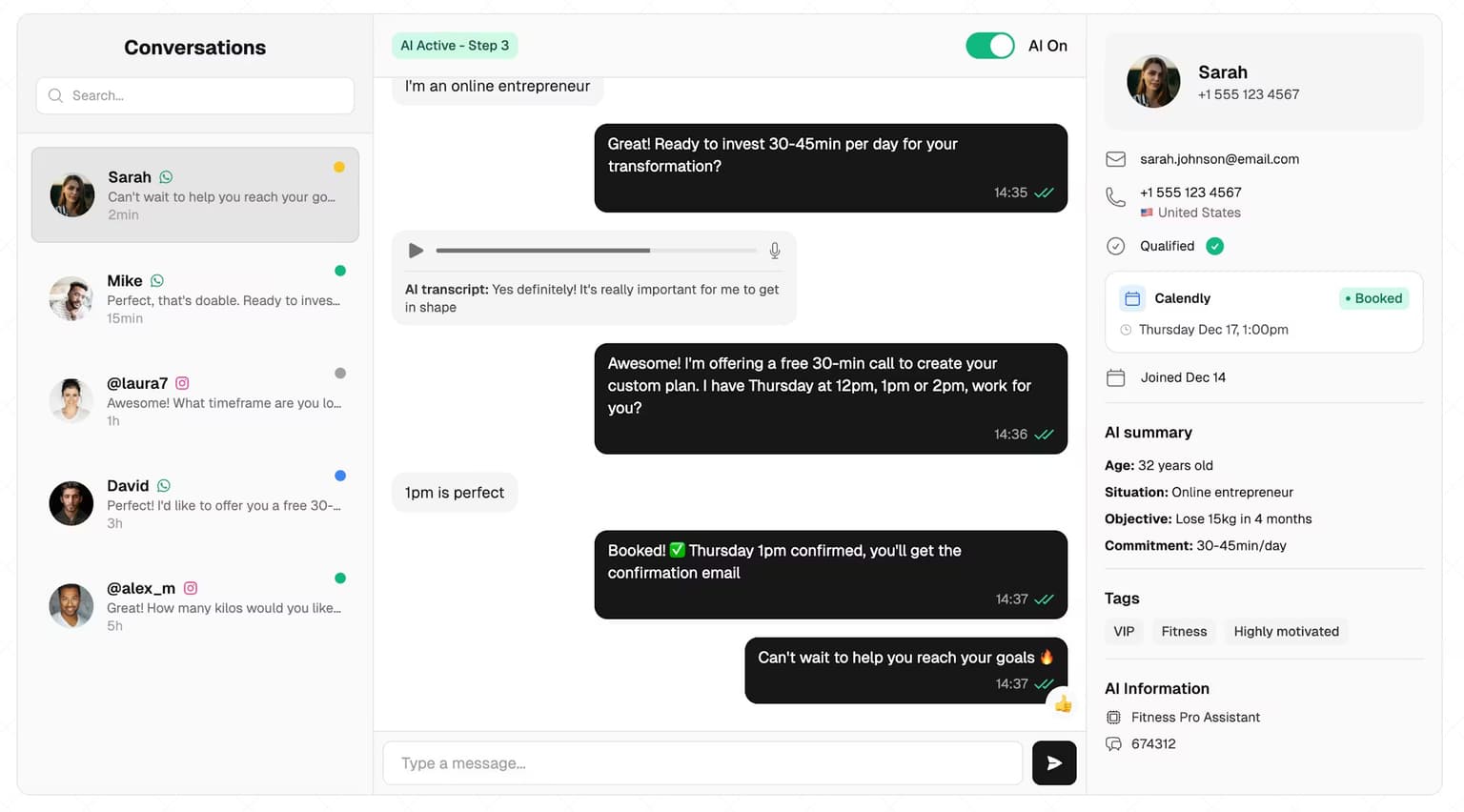
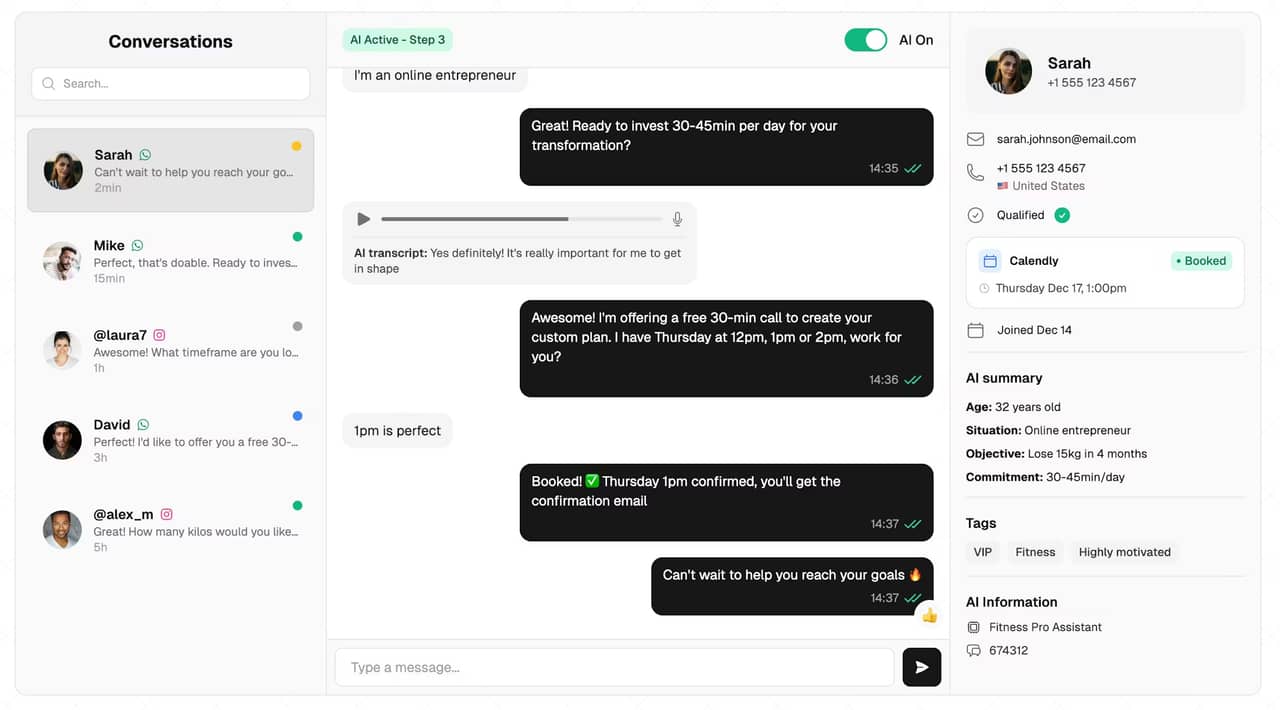
If you search "fitness marketing" today, almost everything you find is written for someone you are not. It is advice for big-box gyms running membership promos, for boutique studios filling 6am classes, or for agencies selling done-for-you ad management. Almost none of it speaks to the person who actually drives our industry forward in 2026: the online fitness coach selling a high-ticket transformation program through Instagram DMs. If you are still standing the business up, our guide on how to start online fitness coaching walks through the full launch.
That is the gap this playbook fills. If you are an online weight-loss, nutrition, or body-transformation coach who gets leads from content and conversations, your fitness marketing problem is not "post more reels." It is that interested people slide into your DMs, ask a question, and then vanish before you ever get them on a call. The fix is a repeatable inbound funnel: content that starts conversations, a DM flow that qualifies, and a calendar that fills with booked sales calls instead of dead message threads.
One thing up front, because it shapes everything below: in this model the DM does not close the sale. It qualifies the lead and books the call. You (or your closer) still sell the program on a real conversation. So when you read "automate your DMs," read it as "fill your calendar with qualified sales calls," not "let a bot sell your $3,000 program." Get that distinction right and the rest of fitness marketing gets a lot simpler.
Why most fitness marketing advice fails online coaches
Generic fitness marketing strategies optimize for the wrong thing. Gym marketing is about foot traffic and trials. Studio marketing is about local SEO and class schedules. Agency content is about selling you a retainer. None of those map to how an online coach actually gets clients.
An online coach lives and dies by the conversation. Your prospect found you through a reel, a story, or a friend's recommendation. They are curious but skeptical: Can this person actually help me? Is the program worth the price? Will I get individual attention? Those questions get answered in the DMs, not on a landing page. Which means your fitness marketing is only as good as what happens after someone messages you.
This is also why "more reach" is rarely the real bottleneck. Most coaches already get more inbound interest than they realize. They lose it in the gap between "interested comment" and "booked call" because they are answering DMs manually, late, and inconsistently between coaching sessions. The leak is in the conversation layer, and that is exactly where a focused fitness marketing system pays off.
The online coach's fitness marketing funnel
Here is the whole funnel in one view. Every step exists to move a stranger one inch closer to a booked sales call.
| Stage | Job to be done | What it looks like |
|---|---|---|
| 1. Attract | Get the right people watching | Reels, carousels, stories aimed at one avatar |
| 2. Capture | Turn attention into a DM | Comment-to-DM, story replies, "DM me the word" |
| 3. Qualify | Find out if they're a fit | A short, natural set of questions in the DM |
| 4. Book | Get the call on the calendar | Offer a slot, confirm, send a reminder |
| 5. Recover | Save the ones who went quiet | Timed follow-ups that reopen the thread |
Notice that four of the five stages happen inside the DM. That is the whole point: for an online coach, the inbox is the funnel. The rest of this guide breaks down each stage with tactics you can run this week.
Step 1: Content that starts conversations, not just likes
The first job of fitness marketing content is not to go viral. It is to make exactly the right person stop and think "that's me" so strongly that they reply. Vanity metrics are a trap; a reel with 200 views and 8 DMs beats one with 50,000 views and zero conversations.
Three content angles consistently start DMs for online coaches:
- The mirror. Describe your avatar's exact frustration. "If you've lost the same 15 pounds three times, the problem isn't your willpower, it's your plan." People who feel seen reply.
- The myth-bust. Take a belief your ideal client holds and flip it. "You don't need to train six days a week to get lean. Here's what actually moves the needle." Disagreement and relief both drive comments.
- The proof. Show a client transformation with the process, not just the before/after. The process is what makes a stranger think "I could do that with help."
End content with a single, concrete next step that invites a message: "Comment GO and I'll send you the breakdown," or "DM me 'PLAN' and I'll tell you where to start." That call to action is the bridge from your fitness marketing content to the conversation where deals actually begin. For a deeper breakdown of the trigger mechanics, see our guide to Instagram comment-to-DM automation.
Step 2: Turn comments and stories into DMs
Once your content earns a comment or a story reply, you have seconds to keep momentum. The biggest mistake coaches make is letting those signals sit for hours. The person who commented "GO" at 9pm has cooled off by the time you reply between client calls the next afternoon.
This is where automation earns its place in your fitness marketing stack. A comment-to-DM trigger sends the promised resource, such as a quiz funnel result, instantly and opens the thread while interest is still hot. The same applies to story mentions and keyword replies: the moment someone raises their hand, a message should land in their inbox. You can wire this up with the tactics in our Instagram DM automation guide, and study the Instagram lead generation funnel for how the pieces connect end to end.
A word on safety: do this through official Meta tools, not browser bots that scrape Instagram. Automated mass-DMing from unofficial tools is the fastest way to get an action block or a ban. The whole funnel collapses if the account running it disappears. Stick to compliant comment-to-DM and keyword triggers, and treat the platform's rules as part of your fitness marketing risk management.
Step 3: Qualify and book the sales call in the DM
Capturing a DM is not the goal. Booking a qualified call is. The middle of your funnel is a short, friendly qualification flow that does two things: confirms the person is a fit for your program, and earns the right to suggest a call.
For an online coach, a good qualification flow asks about:
- The goal. What are they actually trying to change, and by when?
- The history. What have they already tried, and why did it stall?
- The commitment. Are they ready to invest time and money in coaching, or just browsing?
Notice what is missing: a hard pitch. You are not selling the program in the DM. You are deciding whether to invite them to a call where you can sell it. When the answers line up, the natural next step is: "Based on what you've told me, I think I can help. Want to grab a quick call this week so I can map it out for you?" Then offer specific slots and lock it in.
The scripts that do this well are short, human, and ask one question at a time. We keep a tested library in our Instagram DM scripts post, and the broader logic of what to ask is covered in how to get coaching clients. If you would rather an AI run the flow for you, an AI DM setter can qualify and book around the clock so leads never wait, then hand the warm prospect to you for the actual sales call.
That handoff matters. The DM books the call; the close happens live. If you want to sharpen what happens on the call itself, our high-ticket closing guide picks up exactly where the DM funnel ends.
Step 4: Follow up the leads who go quiet
Here is the most under-rated lever in all of fitness marketing: the follow-up. Most coaches send one message, get no reply, and move on. That single decision quietly kills the majority of their pipeline, because interested people get busy, distracted, or nervous, not uninterested.
In our analysis of 828K AI DM conversations, a single follow-up message more than doubled booked calls (+106% among engaged leads), and on Instagram specifically, following up nearly tripled qualification (+182%). The leads were there the whole time. The coaches who win simply reach out again when the thread goes silent.
A simple, effective follow-up rhythm for coaches:
- A few hours later: a light nudge tied to what they said. "Still thinking it over? Happy to answer anything."
- The next day: add value or remove friction. "Here's a quick win you can use either way" or "I've got two slots open Thursday if you want to chat."
- A few days later: a clean final check-in. "Want me to keep your spot, or should I close it out for now?"
Doing this by hand across dozens of threads is where coaches burn out. Automating the timing, while keeping the message personal, is what makes follow-up sustainable. Speed matters too: the faster the first reply, the better the outcome, which is why we track it in our lead response time statistics.
Fitness marketing channels: where Instagram, WhatsApp, and the call each fit
Instagram is the front door for almost every online coach: it is where the content lives and where the first conversation starts. But the smartest fitness marketing setups use more than one channel for what each does best.
- Instagram DMs — top of funnel. Discovery, first contact, qualification. This is where most of your volume comes from.
- WhatsApp — warmer, higher-intent conversations and international clients. Many coaches move serious prospects here for booking and reminders; see our WhatsApp automation guide for setup.
- The sales call — the close. Zoom or phone, run by you or a closer. Nothing replaces this for high-ticket coaching.
The rule of thumb: use Instagram to start the conversation, use whichever channel the lead prefers to book it, and always funnel high-ticket prospects to a real call. Trying to close a $3,000 program purely over text is a recipe for ghosting and refunds.
A 30-day fitness marketing plan for online coaches
You do not need a 12-month strategy to start. You need 30 focused days to build the engine. (Newer than that and still setting up shop? Start with how to start an online coaching business.)
Week 1: Pick one avatar and one offer. Define the single client you want more of (e.g. "busy professional women who want to lose 20 pounds without the gym") and the single offer you are booking calls for. Vague marketing attracts vague leads.
Week 2: Build the conversation starters. Plan and film 8 to 12 pieces of content using the mirror, myth-bust, and proof angles. Add one clear DM call to action to each.
Week 3: Wire up capture and qualification. Set up comment-to-DM and keyword triggers so every raised hand gets an instant reply. Write your qualification questions and your booking message. Test the flow on yourself.
Week 4: Turn on follow-ups and measure. Add the follow-up rhythm from Step 4. Then track the only numbers that matter: DMs started, calls booked, and calls held. Double down on the content that produces conversations, not just views.
By day 30 you will have a fitness marketing system, not a pile of disconnected tactics. From there it is refinement, and then growing the coaching business behind the marketing.
Tools that run the online coach's funnel
You can run the whole thing manually at first. As volume grows, tooling stops being optional, because answering and following up with every lead by hand does not scale past a few dozen conversations a week.
| Tool type | Best for | Notes |
|---|---|---|
| SetSmart | AI that qualifies and books the call | GPT conversations across IG + WhatsApp + Messenger, in-chat booking, smart follow-ups. Built as an AI DM setter for fitness coaches. Free 7-day trial, then $97/month with 1,000 messages. |
| ManyChat | Button flows + comment-to-DM | Great for sending lead magnets and links; flow-based, not real conversation. See alternatives. |
| Calendar (Calendly / GHL) | Locking in the slot | Connect it to the DM so booking happens without leaving the chat. |
| Content scheduler | Consistency at the top | Keeps the conversation-starter content flowing weekly. |
If your bottleneck is the conversation layer, prioritize a tool that can actually qualify and book, not just send a link. Our roundup of the best AI setters compares the options for exactly this job, and the AI setter pillar explains the concept end to end.
Common fitness marketing mistakes online coaches make
- Chasing reach instead of conversations. Views feel good; booked calls pay rent. Optimize content for replies.
- Answering DMs late. A 12-hour reply to a hot lead is a lost lead. Speed is a marketing channel.
- Pitching in the DM. Trying to sell high-ticket over text scares people off. Qualify, then book the call.
- Sending one message and quitting. No follow-up is the single biggest pipeline leak in coaching.
- Marketing to everyone. "Anyone who wants to get fit" is not an avatar. Narrow it until your content feels personal.
- Using unsafe automation. Browser bots get accounts banned. Use official, compliant tools only.
"I was getting plenty of DMs but booking maybe two calls a week because I couldn't keep up. Once I set up a proper qualification and follow-up flow, I went to eight to ten booked calls a week without spending more time in my inbox." — Théo Riffault, online fitness coach
That shift, from chasing leads to a system that books them, is the entire goal of modern fitness marketing for online coaches.
FAQ
What is the best fitness marketing strategy for online coaches in 2026?
The highest-leverage strategy is an inbound DM funnel: post content that starts conversations, capture interest with comment-to-DM and keyword triggers, qualify leads in the DM, and book a sales call. For online coaches, the conversation layer beats chasing raw reach because that is where high-ticket clients decide whether to trust you.
How do online fitness coaches get clients from Instagram?
They turn content into conversations, not just followers. A reel earns a comment, a comment-to-DM trigger opens the thread, a short qualification flow confirms fit, and the coach (or an AI setter) books a sales call. The close happens on the call, not in the DM.
Should I automate my fitness marketing DMs?
Yes, for speed and consistency, but with the right framing. Automation should qualify leads and book calls instantly so nobody waits, then hand warm prospects to you for the actual sale. Use official Meta-compliant tools, never browser bots that risk a ban.
How much should an online fitness coach spend on marketing?
You can start with $0 in ad spend by leaning on organic content and a tight DM funnel. The bigger investment is the system: tooling that runs qualification and follow-up so you stop losing leads, sitting on top of whichever online coaching platform delivers your program. Many coaches book more calls by fixing their conversation layer than by buying more reach.
What's the difference between fitness marketing for gyms and for online coaches?
Gym marketing optimizes for local foot traffic, trials, and memberships. Online coaching marketing optimizes for conversations that lead to high-ticket sales calls. Most published fitness marketing advice is written for gyms, which is why it rarely works for an online coach selling a transformation program through DMs.
How important is following up with leads?
It is one of the most important and most neglected parts of fitness marketing. Most interested leads do not reply to the first message because they got busy, not because they lost interest. A timed, personal follow-up rhythm recovers a large share of those conversations and turns them into booked calls.
Ready to automate your DMs?
Start your free 7-day trial and let AI handle your lead qualification 24/7.
Try SetSmart free