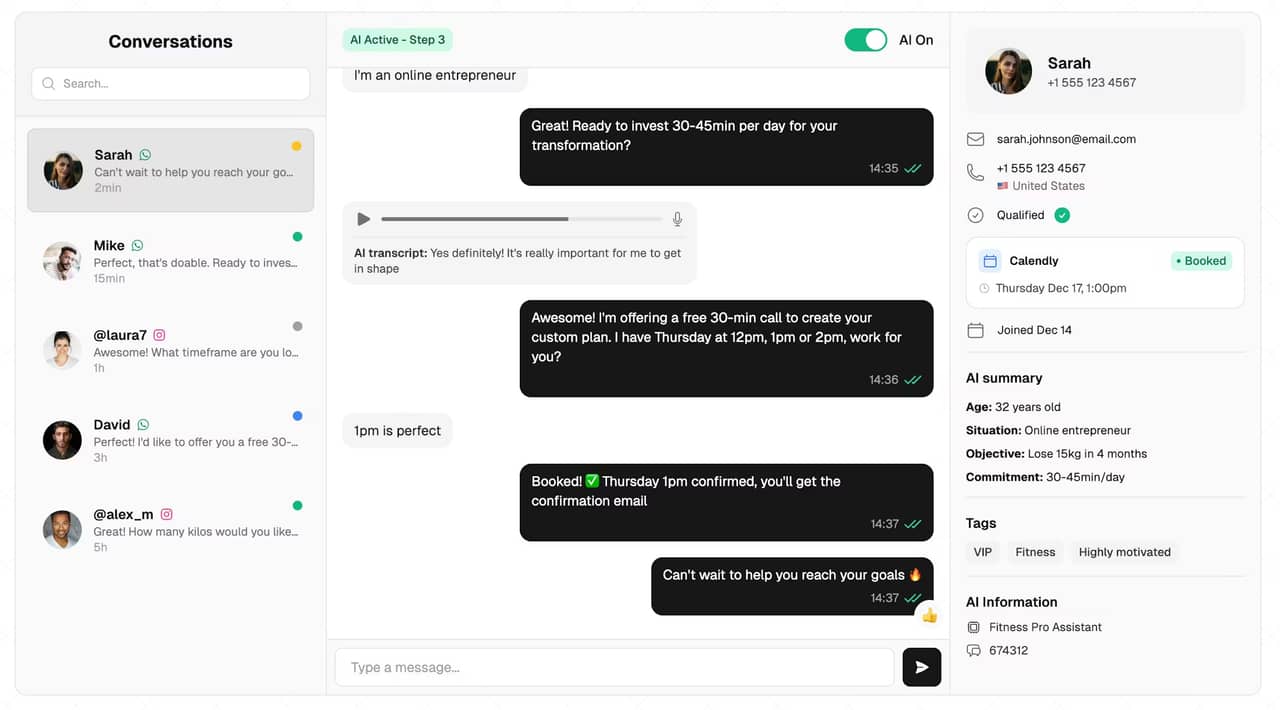
Messenger Chatbot: 7 Best AI Bots Compared (2026)

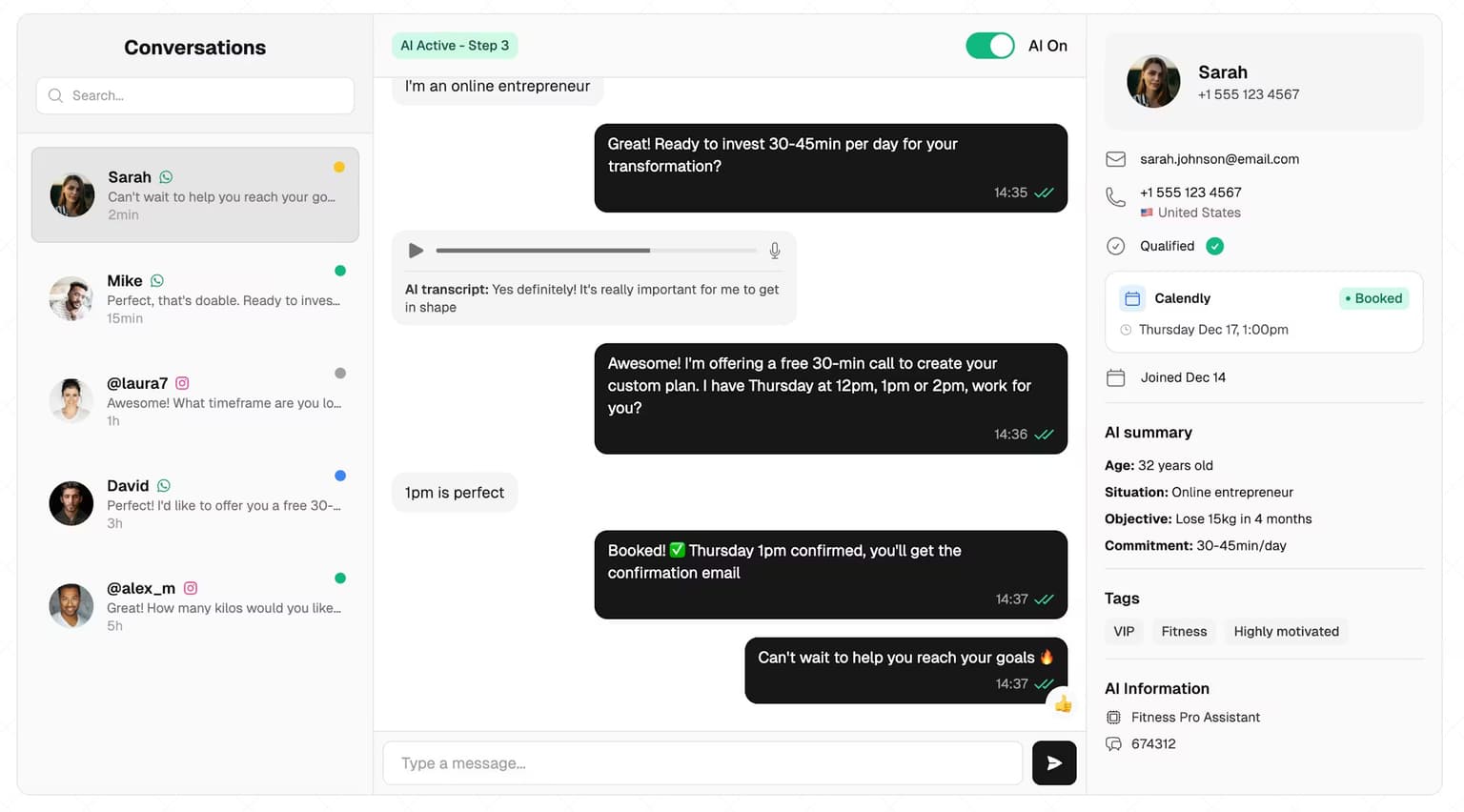
Most 2026 "best Messenger chatbot" lists still review the same three no-code builders — ManyChat, Chatfuel, MobileMonkey — as if Messenger were a single-platform marketing channel from 2019. It isn't. In 2026, Facebook Messenger sits inside a multi-channel inbox that overlaps with Instagram DMs and WhatsApp, lives under Meta's strict 24-hour messaging rule, and competes with Meta's own native AI in the chat thread. A Messenger chatbot that doesn't acknowledge any of that is the reason most "still worth it?" Reddit threads about Messenger marketing exist in the first place.
This guide ranks the 7 Messenger chatbots worth shortlisting in 2026 — across AI-first DM setters, no-code flow builders, ecommerce helpdesks, and open-source DIY platforms — with a 6-dimension scoring rubric, three paste-ready scripts (pre-sales, comment-to-Messenger, 24-hour-rule re-engagement), a "which one first?" decision framework by use case, the 7-day deployment playbook, and a clear distinction between a brand-side Messenger chatbot and Meta AI itself.
Short version: Messenger is still a viable channel in 2026 — but only if the bot is paired with Instagram DM and WhatsApp on a single inbox, respects the 24-hour rule, and uses AI strong enough to handle off-script buyers. The brands winning at Messenger in 2026 do not run a Messenger-only bot — they run a multi-channel AI setter with Messenger as one of four channels.
TL;DR — the 7 best Messenger chatbots in 2026
| # | Chatbot | Best for | AI vs flow | Starting price | Our score |
|---|---|---|---|---|---|
| 1 | SetSmart | AI setter on Messenger + Instagram + WhatsApp | AI-first | Free 7-day trial, then $97/month | 9.2 / 10 |
| 2 | ManyChat | Comment-to-Messenger growth on a free tier | Flow + AI add-on | Free up to 25 contacts, Essential $14/month | 8.6 / 10 |
| 3 | Chatfuel | Ecommerce stores on Messenger with GPT-5 flows | Flow + GPT-5 AI tier | Fuely Super from $39/month | 8.3 / 10 |
| 4 | Tidio (Lyro AI) | Storefront chat + Messenger fallback for small shops | AI (Lyro) + flow | Free plan, paid from $29/month | 7.9 / 10 |
| 5 | Heyy | Mid-size brands wanting a modern AI Messenger bot | AI-first | Custom (mid-market plans) | 7.5 / 10 |
| 6 | Customers.ai (formerly MobileMonkey) | Agencies running paid-ads-to-Messenger funnels | Flow + AI add-on | Starter plans (custom on the site) | 7.2 / 10 |
| 7 | Botpress | Developer teams building a custom Messenger bot | Open-source + LLM-backed | Free self-host; Cloud paid plans | 7.0 / 10 |
If you only have time for one decision: if more than half of your Messenger volume actually starts on Instagram or WhatsApp before crossing over, skip Messenger-only tools and use a multi-channel AI setter like SetSmart; if Messenger is genuinely your primary channel (typically a Facebook-Group-led brand, a comment-to-Messenger ad funnel, or a local-services business with a Facebook Page that buyers find first), start with ManyChat free or Chatfuel and add AI later.
Is a Messenger chatbot still worth building in 2026?
The first question every buyer asks now — including the top organic result on Google, a Reddit thread asking exactly this — is whether Messenger is even a worthwhile channel in 2026. The honest answer: yes, for specific use cases; no, as a single-channel strategy.
Messenger still delivers value when:
- Your audience lives on Facebook (Groups, Pages, Marketplace, Watch). Coaches, consultants, and local businesses with established Facebook Groups still see meaningful inbound from Messenger.
- You run click-to-Messenger ads in Meta Ads Manager. The "Send Message" CTA sends a click straight into a Messenger thread with the bot, bypassing the storefront friction. For DTC brands and lead-gen, click-to-Messenger ads often beat website-form CPLs by 30-60% — see the closely related click-to-WhatsApp ads playbook for the equivalent on WhatsApp.
- You run comment-to-Messenger growth from Facebook posts and Reels. A specific keyword in a comment ("MENU" or "GUIDE") triggers a private Messenger DM with the offer. Still one of the cleanest organic-acquisition channels on Meta in 2026.
- You provide post-purchase or post-booking support and your buyers already use Messenger for everything else.
Messenger does not work as a standalone strategy when:
- Your audience is Gen Z or millennial-female-skewed and lives on Instagram. They open the IG app daily; they open Messenger weekly. A Messenger-only bot misses them.
- You sell in a category dominated by WhatsApp (international, ecommerce in EMEA/LATAM, restaurants).
- You expect outbound — Meta's 24-hour rule (more on this below) cripples cold outbound on Messenger.
The 2026 reality: Messenger is one of three Meta DM channels, and the strongest setups treat all three (Instagram DM, Messenger, WhatsApp) as one inbox. Tools that do that — SetSmart, ManyChat, Heyy — win. Tools that are Messenger-only struggle to justify their place in a stack.
What a Messenger chatbot actually does in 2026
A modern Messenger chatbot is rarely a single product. It's the combination of five jobs running inside a Messenger thread:
- Greet & capture — meet the user on a Facebook Page DM, a click-to-Messenger ad reply, a comment-to-Messenger trigger, or a Group-funnel intake, and start the conversation before they bounce.
- Answer FAQ & route — answer the "What are your hours? Do you ship to Canada? How much does the program cost?" questions, and route the rest to a human or to a checkout/booking link.
- Book or recover — get the buyer to take the next action: book a call, complete checkout, claim the lead magnet, or accept a callback.
- Handoff — recognise when a human is needed (refund, complaint, complex objection) and page a team member with full context inside 60 seconds.
- Post-window re-engagement — once Meta's 24-hour rule closes the standard messaging window, fall back to Message Tags (the only allowed reasons) or a paid One-Time Notification to bring the user back without violating policy.
A Messenger chatbot is not a marketing automation tool (Klaviyo, Mailchimp), not a helpdesk (Zendesk, Help Scout in isolation), and not Meta AI (the consumer assistant inside the Messenger app). It's the live-conversation layer on top of your Facebook Page. See our AI setter primer for the broader multi-channel category.
The three flavours of Messenger chatbot
The 2026 Messenger chatbot market splits into three shapes:
- AI setters that treat Messenger as one channel among many (SetSmart, Heyy). The bot runs an LLM-driven conversation, qualifies, and books — same logic across Messenger, Instagram DM, WhatsApp, sometimes SMS and email. Best when Messenger is part of a multi-channel funnel.
- No-code flow builders that started on Messenger and added Instagram DM and WhatsApp later (ManyChat, Chatfuel, Customers.ai, Botsify). Visual flow editor, button-based menus, AI add-on layered on top. Best for marketers who want to design specific click-to-Messenger or comment-to-Messenger funnels without engineering help.
- Open-source or developer-first platforms (Botpress, Rasa, custom builds on the Messenger Platform API). LLM-backed conversation, configurable webhooks, full control of the data and prompt. Best for engineering teams with specific compliance or workflow requirements.
The fourth shape — a website chat widget with Messenger as a fallback (Tidio, Drift, Intercom) — is a different product line that ships Messenger support as one of many channels. Useful if Messenger is a small slice of your inbound, but not Messenger-first.
The Meta 24-hour rule — the one constraint that breaks 80% of Messenger bots
The single biggest difference between Messenger and Instagram or WhatsApp in 2026 is Meta's 24-hour messaging window. It's the rule that breaks most Messenger automation that worked in 2019. Every chatbot below has to be evaluated against how it handles it.
Here's the policy as it stands in 2026:
- Once a user sends a message to your Facebook Page, you can reply freely for 24 hours.
- After 24 hours, you cannot send a standard message unless the user messages again — even to follow up on the same conversation.
- You can send a message after 24 hours under exactly four conditions:
- Message Tags — for transactional reasons (account update, post-purchase update, confirmed event reminder, human agent message). Strictly enforced. Marketing content is not a tag.
- Sponsored Messages — a paid Meta ad delivered into the Messenger inbox.
- One-Time Notification (OTN) — the user explicitly opted in to receive one future message about a specific topic.
- Customer Feedback Template — a one-time NPS or CSAT survey.
The trap: a Messenger chatbot that "automates follow-up" the same way an email tool does is out of policy the moment it crosses the 24-hour mark with marketing content. Meta has been aggressively enforcing this since 2020; the consequence is a Page-level messaging restriction (your bot stops sending altogether) for repeated violations.
What the good chatbots in this guide do differently:
- They send the first-touch follow-up inside the 24-hour window (under 60 seconds for SetSmart, 1-5 minutes for AI tools, up to 30 minutes for human-in-loop tools). This is where the bulk of conversion happens.
- They use Message Tags correctly — only for the four allowed transactional reasons, with clear messaging that fits.
- They use One-Time Notification as the marketing-style follow-up — but only after the user opts in, and only for one message per opt-in.
- They use Sponsored Messages as a paid retarget if marketing content is needed after the window — same channel, paid distribution.
Tools that don't enforce this distinction inside the product are the ones that get Pages restricted. Worth checking before signing up.
Why most Messenger chatbots broke in 2026 — and what fixed it
Three things changed in the last 18 months that made the 2024-era Messenger chatbot obsolete:
- Meta AI shipped natively in Messenger. Casual buyers now use the in-app AI to answer "What's the return policy?" or "Where's the nearest store?" before they ever message your Page. A 2026 brand-side Messenger chatbot has to be specifically better than Meta's generic AI on your products and your policies — or buyers skip it.
- Apple ATT and IDFA changes weakened click-to-Messenger ad tracking. Brands lost some attribution on Messenger ads, which made bots that don't pass back rich conversion data (Page-level token, conversion API, custom events) effectively invisible to the Meta ad algorithm. The Messenger bots that survived are the ones with proper Conversion API integration.
- GPT-4-class models made flow-builder bots feel obsolete. A "Please choose: (1) Sales (2) Support (3) Other" button menu in 2026 feels robotic when the user could have an actual conversation. Flow bots still work for narrowly-defined funnels; for anything resembling a real intake conversation, AI-first tools have closed the gap fast.
Across our analysis of 828K AI-driven DM conversations, 53% of inbound conversations died before message 3 — usually because the response came hours later, when the buyer had already moved on to the next page in their Messenger inbox. Speed inside the 24-hour window is the leak; the chatbots ranked above are the ones that plug it.
How we scored each Messenger chatbot
Every chatbot in this guide was evaluated on six dimensions, weighted for what actually matters when running a Facebook Page in 2026:
- 24-hour rule compliance (20%) — does the tool respect Meta's messaging window, handle Message Tags correctly, and offer OTN / Sponsored Messages as the marketing-style alternative?
- AI quality (20%) — does it handle off-script buyer questions, mirror tone, recover from unclear inputs, and avoid the "talk to a human" rejection?
- Multi-channel coverage (15%) — does it cover Messenger AND Instagram DM AND WhatsApp on a unified inbox, or just Messenger?
- Setup speed (15%) — under an hour for self-serve, days for assisted, weeks for engineering-led — what does it actually take to get the first conversation live?
- Click-to-Messenger / comment-to-Messenger features (15%) — does it ship ready-made flows for the two highest-ROI Meta ad mechanics?
- Price-to-value at SMB scale (15%) — fits a solo founder, a coach, an SMMA agency, or a small DTC brand without an enterprise contract?
The full rubric is published at the end. None of these vendors paid for placement.
1. SetSmart — best AI-first Messenger chatbot for DM-led brands
Best for: coaches, course creators, SMMAs, and DTC brands where Messenger is one of several DM channels (Instagram DM, WhatsApp, sometimes SMS) and the goal is a single AI setter across all of them.
SetSmart is a DM-native AI setter that handles the five Messenger jobs end-to-end across Messenger, Instagram DM, WhatsApp, and SMS — with a unified inbox and a single AI prompt per brand. It replies in under 5 seconds inside the 24-hour window, asks 3-6 product-aware qualification questions, recognises high-intent signals ("price", "available", "book", "ships to"), and triggers a booking or checkout link inside the same Messenger thread. Post-window, SetSmart handles re-engagement through proper OTN opt-ins on the Messenger side and natural inbound on Instagram / WhatsApp (which don't have the same window rule), so brands don't accidentally violate Meta policy.
The wedge versus legacy Messenger chatbots: ManyChat, Chatfuel, and Customers.ai were built as Messenger flow builders first and added AI as a feature. SetSmart was built as a multi-channel AI setter first and added Messenger as a channel. That matters when a buyer asks an off-script question ("Does the course include 1-on-1 calls, or only the group?") — flow bots fall through; SetSmart answers from the trained brand context.
- Channels: Messenger, Instagram DM, WhatsApp, SMS, website widget
- AI quality: GPT-4-class, prompt-customisable per brand
- Messenger features: click-to-Messenger ad replies, comment-to-Messenger triggers, 24-hour-rule-compliant follow-up, OTN opt-in flow, Message Tag support for transactional reasons
- Integrations: Meta Business Suite, Calendly, iClosed, Cal.com, Stripe, Shopify, Zapier
- Pricing: Free 7-day trial, then $97/month flat (1,000 messages included)
- Where it loses points: not the cheapest if your only channel is Messenger and your volume is tiny — for a single Page under 100 messages a month, ManyChat free is more cost-effective.
2. ManyChat — best free Messenger chatbot for comment-to-DM growth
Best for: creators, solo founders, and small businesses running comment-to-Messenger funnels from Facebook posts and Reels, who want to start free and scale to paid only when volume justifies it.
ManyChat is the dominant Messenger chatbot builder. It pioneered Messenger marketing in 2016 and remains the most flexible no-code option in 2026. The visual flow builder lets a non-engineer design comment-to-Messenger triggers, click-to-Messenger ad replies, and multi-step menus without writing code. The 2026 product layered an AI Agent on top of the flows, so off-script questions get a GPT-driven response inside a flow step. The free tier (25 active contacts) and Essential plan ($14/month) make it the entry-point of choice for most small businesses — see our full ManyChat pricing breakdown for the 2026 tier structure.
The trade-off vs an AI-first setter: ManyChat is fundamentally a flow builder. Every "if this then that" branch has to be designed. For narrowly-defined funnels (lead-magnet delivery, post-comment opt-in, click-to-Messenger ad acknowledge), the flows are clean and fast. For anything that resembles a real conversation, the AI Agent works but lags GPT-4-native tools. The standard upgrade path for coaches and creators outgrowing flow logic is documented in our ManyChat alternative guide.
- Channels: Messenger, Instagram DM, WhatsApp, SMS, email (paid)
- AI quality: visual flow builder + AI Agent on Pro and Business tiers
- Messenger features: native Messenger first-party support, comment-to-Messenger keyword triggers, click-to-Messenger ad replies, broadcast (within Message Tag rules), Sponsored Messages
- Integrations: Meta Business, Shopify, Klaviyo, Mailchimp, Google Sheets, Zapier
- Pricing: Free up to 25 active contacts, Essential $14/month, Pro $29/month, Business $69/month (with overage fees at $0.018-$0.025 per active contact)
- Where it loses points: flow logic gets brittle at scale; the AI Agent isn't on Free or Essential; overage fees catch you off-guard if comment-to-Messenger triggers viral on a single post.
3. Chatfuel — best Messenger chatbot for ecommerce flows with GPT-5
Best for: ecommerce brands (Shopify, WooCommerce) wanting a Messenger chatbot with a stronger AI tier than ManyChat and built-in support for click-to-Messenger ads and order-related flows.
Chatfuel was the other early Messenger chatbot builder (2015), competing with ManyChat for years. The 2026 release of Fuely Super and Fuely Max — with GPT-5 powering the Max tier — moved Chatfuel toward AI-first while keeping the visual flow editor. The product has historically leaned ecommerce: Shopify integration, abandoned-cart Messenger flows, click-to-Messenger ads optimised for products. For mid-size DTC brands running paid Messenger acquisition, Chatfuel often outperforms ManyChat on the flow side; for solo creators on a free tier, it has no free plan anymore — see Chatfuel pricing for the 2026 details.
The trade-off vs SetSmart and Heyy: Chatfuel is still fundamentally a flow builder with an AI tier, not an AI-first tool. The GPT-5 layer is strong inside Fuely Max conversations, but the underlying logic is still flow-driven. The depth of ManyChat vs Chatfuel covers the head-to-head if you're choosing between the two no-code leaders.
- Channels: Messenger, Instagram DM, WhatsApp, web chat
- AI quality: visual flow builder + GPT-4 (Fuely Super) or GPT-5 (Fuely Max)
- Messenger features: native Messenger Platform support, click-to-Messenger ads, comment-to-Messenger triggers, ecommerce flows (abandoned cart, order status, recommendation)
- Integrations: Shopify, WooCommerce, Stripe, Calendly, Meta Business, Zapier
- Pricing: 7-day free trial, then Fuely Super from $39/month (150 contacts) or Fuely Max from $59/month — no permanent free tier
- Where it loses points: no free plan in 2026; pricing scales with contact count, so viral comment-to-Messenger triggers can drive the bill up; AI quality is good but still flow-first.
4. Tidio (Lyro AI) — best Messenger chatbot bundled with a storefront widget
Best for: small Shopify, WooCommerce, Wix, or Magento stores wanting a website chat widget that also handles Messenger and Instagram DMs from a single inbox.
Tidio is primarily a storefront chat widget with Messenger and Instagram channels added on top. Lyro AI (GPT-driven, added in 2023, improved through 2025) handles conversations across all three channels. For brands whose primary inbound is the website but who also get inbound from a Facebook Page, Tidio is the cheapest way to handle both without two separate tools. Setup is self-serve from the Tidio dashboard; the AI trains on the brand's catalogue and FAQ.
The trade-off: Tidio is storefront-first. The Messenger and Instagram integrations work, but they're not the primary investment area. For a Messenger-led brand (comment-to-Messenger or click-to-Messenger ads at scale), tools that started on Messenger handle the nuances better.
- Channels: website widget, Messenger, Instagram DM, email, WhatsApp (paid add-on)
- AI quality: Lyro AI (GPT-driven)
- Messenger features: basic Messenger inbox unification, automated replies, conversation routing
- Integrations: Shopify, WooCommerce, Wix, BigCommerce, Klaviyo, Zapier
- Pricing: Free plan (50 conversations/month), paid from $29/month, Lyro add-on metered per conversation
- Where it loses points: Messenger features are thinner than the dedicated Messenger tools; no click-to-Messenger ad templates out of the box; AI is decent but not GPT-4-class.
5. Heyy — best modern AI Messenger chatbot for mid-size brands
Best for: mid-size brands (typically $1M-$10M ARR) wanting a modern AI-driven Messenger chatbot with a clean inbox UX and a more enterprise-style onboarding, without going through ManyChat's flow-builder learning curve.
Heyy is one of the newer entrants in the Messenger chatbot category — it shows up in the top 5 organic results for "Messenger chatbot 2026" alongside Infobip, ManyChat, and Chatfuel. The product is AI-first: a GPT-driven bot trained on the brand's content and product catalogue, handling Messenger, Instagram, and the storefront widget under a single inbox. Heyy positions against the legacy flow builders as a "no-flow" alternative — the brand sets the system prompt, defines the qualification criteria, and the AI handles the conversation logic dynamically.
The trade-off: as a newer tool, Heyy has fewer third-party integrations than ManyChat or Chatfuel, no permanent free tier, and pricing is custom. For brands wanting a turnkey AI Messenger setup without the SetSmart-style multi-channel sprawl (no SMS, lighter WhatsApp), Heyy is a clean alternative.
- Channels: Messenger, Instagram DM, storefront widget; WhatsApp on higher plans
- AI quality: AI-first, GPT-driven, prompt-customisable
- Messenger features: 24-hour-rule compliant follow-up, comment-to-Messenger triggers, unified inbox with Instagram DM
- Integrations: Shopify, WooCommerce, HubSpot, Zapier
- Pricing: custom — mid-market plans, no permanent free tier
- Where it loses points: newer entrant with smaller integration catalogue; pricing not transparent; no WhatsApp on cheaper plans.
6. Customers.ai (formerly MobileMonkey) — best agency Messenger chatbot for paid-ads funnels
Best for: SMMAs and digital marketing agencies running paid-Meta-ad-to-Messenger funnels at volume — typically for local services, info-products, lead-gen for clients.
Customers.ai (the rebrand of MobileMonkey since 2022) is an agency-first Messenger chatbot platform. The DNA of the product is paid acquisition: click-to-Messenger ads, audience segmentation from Messenger interactions, ad pixel retargeting from Page-level events. For an agency running 20 client Facebook Pages on Messenger ad campaigns, Customers.ai's bulk-management features and white-label options are competitive. The product also handles Instagram DM and SMS now, but Messenger is the strongest channel.
The trade-off vs ManyChat / Chatfuel: Customers.ai is heavier on agency / ad-ops features and lighter on the "creator with one Page" experience. For a solo coach running one Facebook Page, ManyChat free is faster and simpler. For an online agency managing 10+ client accounts on paid Meta ads, Customers.ai's bulk tools matter.
- Channels: Messenger, Instagram DM, SMS, web chat
- AI quality: AI add-on layered on flow logic
- Messenger features: paid-ads-to-Messenger templates, audience segments, retargeting pixel from Page events, Sponsored Messages
- Integrations: Meta Business, HubSpot, Salesforce, Zapier
- Pricing: starter plans (custom on the site), agency tiers higher
- Where it loses points: dated UX in places; pricing not fully transparent; less polished AI than Heyy or SetSmart.
7. Botpress — best open-source Messenger chatbot for engineering teams
Best for: in-house engineering teams or technical agencies wanting full control over a Messenger chatbot — custom prompt, custom webhook, custom data-flow, and the option to self-host.
Botpress is an open-source conversational AI platform with native Messenger Platform integration. The LLM-backed conversation engine (LiteLLM-compatible — OpenAI, Anthropic, open models) gives teams full prompt control. Self-hosted Botpress is free; the Cloud tier is paid. For a regulated industry (healthcare, financial services), Botpress on a private cloud often wins versus SaaS tools because the data never leaves the customer's infrastructure.
The trade-off vs SaaS: Botpress requires engineering investment. A solo founder won't get value here. For a team with one or two Node.js engineers comfortable with webhook integrations and prompt design, Botpress is the most flexible option in this list.
- Channels: Messenger, WhatsApp, Telegram, web chat, Slack, custom via API
- AI quality: LLM-agnostic (BYO key), full prompt control
- Messenger features: native Messenger Platform integration via Botpress channel, webhook hooks for every event, custom Message Tag implementation
- Integrations: any (open-source plugin ecosystem); native to Zapier, n8n, Make
- Pricing: free self-host; Cloud paid plans with usage-based pricing
- Where it loses points: not for non-developers; UX is engineer-friendly, not marketer-friendly; setup measured in days, not hours.
Messenger chatbot coverage by channel
The single biggest differentiator across the 7 isn't features — it's which channels each chatbot covers alongside Messenger. This table is the fastest way to see the gap.
| Chatbot | Messenger | Instagram DM | SMS | Web widget | |
|---|---|---|---|---|---|
| SetSmart | Yes | Yes | Yes | Yes | Yes |
| ManyChat | Yes | Yes | Yes | Yes | No |
| Chatfuel | Yes | Yes | Yes | No | Yes |
| Tidio (Lyro) | Yes | Yes | Add-on | No | Yes |
| Heyy | Yes | Yes | Higher plans | No | Yes |
| Customers.ai | Yes | Yes | No | Yes | Yes |
| Botpress | Yes | Custom | Yes | Custom | Yes |
The pattern: only SetSmart and ManyChat cover all four DM-style channels (Messenger, Instagram DM, WhatsApp, SMS) natively. If your brand runs Meta ads across Messenger and Instagram simultaneously, the gap matters more than the price.
Which Messenger chatbot first? — decision framework
Here's how to match the chatbot to your dominant Messenger use case. Pick the row that describes where most of your Messenger volume actually comes from.
| Your main Messenger use case | Start with | Add later |
|---|---|---|
| Comment-to-Messenger growth from Facebook posts and Reels | ManyChat (free or Essential) | SetSmart when AI conversations matter |
| Click-to-Messenger ads in Meta Ads Manager | Chatfuel or Customers.ai | SetSmart for the AI conversation layer |
| Multi-channel DM funnel (Messenger + Instagram DM + WhatsApp) | SetSmart | Storefront widget separately |
| Storefront chat that also covers Messenger | Tidio (Lyro AI) | SetSmart or ManyChat on the DM side |
| Mid-size brand wanting an enterprise-style AI Messenger bot | Heyy or SetSmart | ManyChat for the long-tail comment funnels |
| Agency managing 10+ Pages with paid Meta ads | Customers.ai | SetSmart for premium client builds |
| Engineering team with compliance / data residency requirements | Botpress (self-host) | SaaS layer for marketing teams |
The simplest rule: if Messenger is one of three Meta DM channels for your brand, pick a multi-channel AI tool. If Messenger is genuinely your primary channel from a comment-to-Messenger funnel or a Facebook-Group community, pick ManyChat or Chatfuel.
3 paste-ready Messenger chatbot scripts
The actual script matters more than the vendor. The three scripts below — one per use case — are the ones that consistently outperform generic "How can I help you?" openers on Messenger intake. Paste them into your chosen tool and adjust the placeholders.
Click-to-Messenger ad — pre-sales intake
"Hey 👋 — thanks for clicking through from our ad. Quick few questions so I can get you a straight answer:
- What were you most interested in — the or the ?
- When are you hoping to get started? This week, this month, or just exploring?
- What's the one thing that would make this a yes for you?
If you'd rather hop on a quick call instead of typing, here's the calendar: . Otherwise I'm happy to keep this in Messenger."
This opens with the ad context (so the conversation doesn't feel cold even though it technically just started), narrows the buyer's interest in 2-3 messages, and offers both an in-Messenger conversation and a call-booking option. Click-to-Messenger ad CTRs are higher than form CTRs precisely because the first reply doesn't ask for an email — keep it that way.
Comment-to-Messenger — Facebook post or Reel trigger
"Hey ! 👋 Thanks for commenting '' on the . Here's the :
Quick question before you dive in — what made you interested in this? I'm trying to understand who's reading it, so I can send you more useful stuff (and never more than 1-2 messages a week)."
This delivers the promised lead magnet immediately (Meta's 24-hour rule starts the moment the user comments), then asks ONE follow-up question to start the qualification conversation. The transparency about message frequency builds trust and reduces the unsubscribe / block rate, which protects your Page's messaging quality score.
24-hour-rule-compliant follow-up — One-Time Notification opt-in
"Hey , before you go — would you like a heads-up when goes live next week? I'll send you exactly one message with the link when it's ready (no spam, promise). Tap '✅ Yes' below and I'll add you to the notification list."
After the user taps Yes, Meta records the OTN opt-in, and you can send exactly one Messenger message about that topic — even after the 24-hour window closes. This is the policy-clean way to do "marketing follow-up" on Messenger in 2026. Doing it without OTN is what gets Page-level messaging restrictions.
AI vs flow-builder Messenger chatbot — what's actually different in 2026
The single most common buying confusion in 2026 is between a scripted flow-builder Messenger chatbot and an AI-first one. Both call themselves "chatbots". They behave very differently when a buyer goes off-script — which on Messenger intake is most of the time.
| Capability | Flow builder | AI Messenger chatbot (2026) |
|---|---|---|
| Handles off-script questions | No (falls through) | Yes |
| Mirrors buyer tone & urgency | No | Yes |
| Adapts qualification flow dynamically | Only if branch is built | Yes |
| Comment-to-Messenger trigger | Yes (strong) | Yes |
| Click-to-Messenger ad reply | Yes | Yes |
| 24-hour-rule policy compliance | Depends on tool | Depends on tool |
| Setup time | Days (flow building) | Hours (prompt tuning) |
The 2026 picture: AI Messenger chatbots win on every dimension except the narrow case of "I need a tightly-controlled lead-magnet delivery from a comment-to-Messenger trigger" — where a flow builder is still cleaner. Most brands end up with both: an AI tool for the actual conversation, a flow tool for the very specific delivery flows from posts and ads.
How to deploy a Messenger chatbot in 7 days
A realistic timeline for a small business, coach, or DTC brand rolling out their first Messenger chatbot:
- Day 1 — Pick the use case. Decide if you're starting with comment-to-Messenger growth, a click-to-Messenger ad funnel, or storefront/Page general inbound. Each maps to a different tool.
- Day 2 — Sign up and connect Meta Business. Trial the tool, connect your Facebook Page through Meta Business Suite, grant the required permissions (Page messaging, ads management if applicable).
- Day 3 — Write the intake script. Use one of the three scripts above as your base. Adapt to your brand voice and your top 5 buyer questions. Keep the first message under 200 characters — Messenger users skim.
- Day 4 — Configure the 24-hour-rule fallback. Decide what happens after the messaging window closes: OTN opt-in (with a clear topic), Sponsored Messages retarget, Message Tag (for transactional updates only), or simply nothing. Most brands pick OTN for marketing-style follow-ups and Message Tags for post-purchase.
- Day 5 — Set up escalation keywords. "Refund", "complaint", "speak to a human", "press inquiry" — any of these should bypass the bot and page a team member within 60 seconds. See lead response time statistics for why this matters.
- Day 6 — Soft launch. Turn the bot on during business hours only for the first 48 hours. Watch the first 20 transcripts; fix obvious wording problems and policy edge cases.
- Day 7 — Full launch and follow-up sequence. Go 24/7. Configure your inside-the-window follow-up (1-3 messages depending on intent) and your post-window OTN message. See AI lead follow-up for cadence-specific guidance that works on Messenger.
By the end of week 2, you'll have enough transcripts to identify the 5-10 things buyers ask that your script doesn't yet handle (pricing edge cases, location-specific questions, comparison-with-competitor questions). Iterate from there.
Solo founder vs SMB vs mid-size brand vs agency — different stack, different Messenger chatbot
The right Messenger chatbot depends as much on team size and traffic mix as on Messenger-specific features.
- Solo founder or side-hustle (under $100K revenue). Pick one free tool: ManyChat free tier if you're running Facebook Groups or comment-to-Messenger. Don't pay for a Messenger bot until your conversation volume justifies a paid plan. Tidio's free plan if you mainly need the storefront.
- Small business or solo creator ($100K-$1M). ManyChat Essential ($14/month) or Chatfuel Fuely Super ($39/month) covers the basics. Add an Instagram chatbot on the same tool if you're getting equivalent volume on Instagram.
- Mid-size DTC or coach business ($1M-$10M). Move to SetSmart or Heyy. The AI quality compounds at this scale because each conversation has a higher dollar value, and the multi-channel inbox saves a team member's time.
- SMMA or agency managing client Pages. Customers.ai for the bulk-management tooling on paid ad funnels, plus white-label SetSmart for premium clients who want AI-driven Messenger conversations.
The mistake at every brand size is buying the most expensive tool first or trying to do everything with a free tier. Start lean, prove ROI on week-1 transcripts, then layer up.
5 Messenger chatbot mistakes that get Pages restricted
Recurring patterns from brands auditing a Messenger bot that "isn't working" — or worse, a Page that's lost messaging permissions:
- Sending marketing content after the 24-hour window. The single most common policy violation. Once 24 hours pass since the user's last message, Meta blocks marketing-style messages. You can only continue with Message Tags (transactional), Sponsored Messages (paid ad), OTN (one approved topic), or Customer Feedback. Anything else is a policy violation.
- Misusing Message Tags. Sending "Hey, our sale ends tomorrow!" with a transactional Message Tag is the fastest way to lose Page-level messaging permission. Tags are for account updates, post-purchase status, confirmed event reminders, or human-agent messages. Not marketing.
- No escalation keyword. A buyer typing "complaint" or "refund" or "broken" should not still be answering "What did you think of our last post?". Build a hard escalation rule for high-intent or high-risk keywords — paging a human within 60 seconds is the difference between a 5-star review and a Better Business Bureau complaint.
- The bot pretends to be human. Don't. Identify as "the virtual assistant" or "the chatbot". Trying to pass as human breaks trust the moment a buyer notices, and may run afoul of California, Colorado, and EU disclosure rules on AI in conversations.
- No data flowing back to the Meta ad algorithm. A Messenger bot from a click-to-Messenger ad needs to feed conversion events (booked, qualified, purchased) back through the Conversions API. Without this, the ad algorithm gets blind, CPL drifts up, and the channel stops working before anyone realises why.
A linked failure pattern that affects intake across DM channels: slow response time. See lead response time statistics for the data on how response speed correlates with conversion across Messenger, Instagram DM, and WhatsApp.
Free Messenger chatbots — what's actually available
Free options for solo founders and small businesses wanting to test the category without committing budget:
- ManyChat free plan — 25 active contacts per month on Messenger and Instagram DM. Best for absolute beginners testing comment-to-Messenger or a single ad funnel. See ManyChat pricing for the upgrade math.
- Tidio free plan — website widget + Messenger / Instagram, 50 conversations/month. Decent for an extremely low-volume Shopify or WooCommerce store.
- Botpress self-host — open-source, fully free if you bring your own LLM API key and host on your own infrastructure. Requires engineering time, not money.
- Custom GPT (ChatGPT Plus) — a "Brand Concierge GPT" can answer Messenger-style questions, but there's no native Messenger Platform integration, no comment-to-Messenger trigger, no Page inbox sync.
- Manual Messenger inbox — for solo founders with under 50 messages a month, just answer them yourself. Free, and you'll learn what questions buyers actually ask before you automate.
None of these are a substitute for a real intake tool above ~100 conversations a month. They're useful for proving you'd benefit from a paid one before buying.
Messenger chatbot vs Meta AI — the disambiguation
A confusion that surfaces in every "best Messenger chatbot" thread in 2026: a brand-side Messenger chatbot and Meta AI inside the Messenger app are not the same thing.
- Brand-side Messenger chatbot. Talks to your buyers on your Facebook Page's inbox. Trained on your products, your policies, your tone. Examples: the 7 above (SetSmart, ManyChat, Chatfuel, Tidio, Heyy, Customers.ai, Botpress).
- Meta AI in Messenger. Talks to end users as a built-in consumer assistant inside the Messenger app itself. Generic capability: answer general questions, generate images, summarise threads. Trained on Meta's own data, not your brand. Examples: Meta AI in the search bar of Messenger, @MetaAI in group threads.
You'll likely see both in your buyer's path. Consumers use Meta AI to answer "What's a chatbot? Is this brand legit?" — then DM your Page for "Does the program include 1-on-1 coaching and what's the price?", which is where your brand-side Messenger chatbot picks up. They don't compete for the same job, and confusing them is the source of most "ranked best Messenger AI" lists that don't help anyone.
Real brands running this stack
Three composite examples (brand names anonymised, workflows real) of how working teams combine the tools above:
- Solo coach, $200K consulting practice. ManyChat free tier on Messenger + Facebook Group as the main funnel. Comment-to-Messenger triggers from weekly content posts capture ~80 new contacts/month. Manual follow-up from the coach inside the 24-hour window converts 8-12 of those into discovery calls. Monthly tools cost: $0.
- DTC apparel brand, $3M ARR. Chatfuel Fuely Max on click-to-Messenger ads + storefront Tidio Lyro for after-hours website chat + manual Messenger inbox for high-intent inbound. Result: click-to-Messenger ad CPL down 35% vs the form-based equivalent; abandoned-cart Messenger flows recover ~12% of carts; Pages messaging quality stays in good standing.
- SMMA running 18 client Pages. Customers.ai for bulk Messenger ad funnels + SetSmart white-labelled for the 4 highest-value clients who pay for premium AI-driven conversations. Result: agency can manage all 18 Pages from one dashboard, premium clients get the AI conversation layer their leads expect.
The common pattern: small businesses run one free or low-cost flow tool. Mid-size brands run a flow tool for ads and an AI tool for conversations. Agencies run bulk tools plus a premium layer for the top of the client roster.
When NOT to deploy a Messenger chatbot
Not every brand should. Skip the Messenger bot if any of these are true:
- Your audience isn't on Facebook. Gen-Z-first creators, Instagram-only DTC brands, and most B2C apps see almost no Messenger inbound. Put the budget into Instagram or WhatsApp tools instead — see Instagram DM bot for the IG equivalent of this guide.
- You can't handle the conversation volume. A Messenger bot that triggers from a Reel can pull in hundreds of contacts in a day. If you can't answer them within the 24-hour window with quality, you'll burn the Page's messaging quality score.
- Your category has strict CS regulations. Regulated supplements, financial advice, healthcare — there are rules about who can answer specific questions. Confirm your bot's responses meet your regulatory environment before launch.
- You don't have any inbound at all. A bot is a multiplier on existing demand. If your Page gets 2 messages a month, you don't have a chatbot problem — you have a marketing problem.
If none of the above apply, you're a candidate.
FAQ
How do you make a chatbot on Facebook Messenger in 2026?
The fastest path in 2026 is to sign up for a Messenger-compatible tool (ManyChat free is the easiest entry point), connect your Facebook Page through Meta Business Suite, and configure a basic intake flow or AI prompt. Setup takes under an hour for ManyChat or Chatfuel and a few hours for SetSmart or Heyy. For comment-to-Messenger and click-to-Messenger flows, ManyChat ships ready-made templates. Skip the manual Messenger Platform API route unless you have an engineering team and a specific compliance reason.
Is there a free Messenger chatbot?
Yes — three credible free options exist. ManyChat's free plan covers 25 active contacts on Messenger and Instagram DM (best for testing comment-to-Messenger triggers). Tidio's free plan offers 50 conversations/month with website + Messenger + Instagram coverage. Botpress is free if you self-host (open-source, bring your own LLM API key). Chatfuel removed its free plan in 2026 — it now only offers a 7-day trial. None of the free plans match paid AI-first tools on quality once you exceed 100 conversations a month.
Are Messenger chatbots still worth building in 2026?
Yes, but only as part of a multi-channel DM strategy. Messenger is still a viable channel when you run comment-to-Messenger growth, click-to-Messenger paid ads, or have a strong Facebook Group community. Messenger as a single-channel strategy struggles in 2026 — younger audiences live on Instagram and WhatsApp, and Meta's 24-hour messaging rule limits outbound. The brands winning at Messenger run it alongside Instagram DM and WhatsApp on one inbox with one AI prompt.
What is the best AI Messenger chatbot in 2026?
For a multi-channel DM funnel (Messenger + Instagram + WhatsApp), SetSmart is the AI-first pick at $97/month. For comment-to-Messenger growth on a free or near-free budget, ManyChat is the dominant choice. For ecommerce stores running click-to-Messenger ads with GPT-5-level AI, Chatfuel Fuely Max is the best flow-plus-AI option. For mid-size brands wanting a clean modern AI bot without the flow-builder learning curve, Heyy is the alternative. The right pick depends on whether Messenger is your primary channel or one of several.
How much does a Messenger chatbot cost in 2026?
Pricing ranges widely. Free plans exist (ManyChat 25 contacts, Tidio 50 conversations, Botpress self-host). Mid-range paid plans run $14-$39/month for ManyChat Essential and Chatfuel Fuely Super. AI-first tools sit higher: SetSmart at $97/month flat, Heyy custom mid-market pricing. Enterprise deployments (Customers.ai agency plans, Chatfuel Fuely Max for ecommerce at scale) run $100-$500+/month. Real-world cost for a working small business is usually $0-$50/month for a flow tool or $97-$150/month for an AI-first multi-channel tool.
Can a Messenger chatbot send messages after the 24-hour window?
Only under four specific Meta-approved scenarios. (1) Message Tags — for transactional reasons (account update, post-purchase status, confirmed event reminder, human agent message). (2) Sponsored Messages — a paid Meta ad delivered into the Messenger inbox. (3) One-Time Notification (OTN) — the user explicitly opted in to receive one future message about one specific topic. (4) Customer Feedback Template — a one-time NPS or CSAT survey. Marketing-style messages outside these four categories are policy violations and can result in Page-level messaging restrictions.
What's the difference between a Messenger chatbot and Meta AI in Messenger?
A Messenger chatbot is a brand-side tool that runs on your Facebook Page's inbox, trained on your products, policies, and tone — examples: SetSmart, ManyChat, Chatfuel. Meta AI in Messenger is a consumer-side built-in assistant inside the Messenger app itself, trained on Meta's general data — examples: @MetaAI mentioned in a thread, the search-bar AI assistant. They serve different jobs: Meta AI helps buyers find or research a brand; your Messenger chatbot talks to buyers once they reach your Page.
Ready to automate your DMs?
Start your free 7-day trial and let AI handle your lead qualification 24/7.
Try SetSmart free