Can You See Who Clicks Your Instagram Link? (2026)

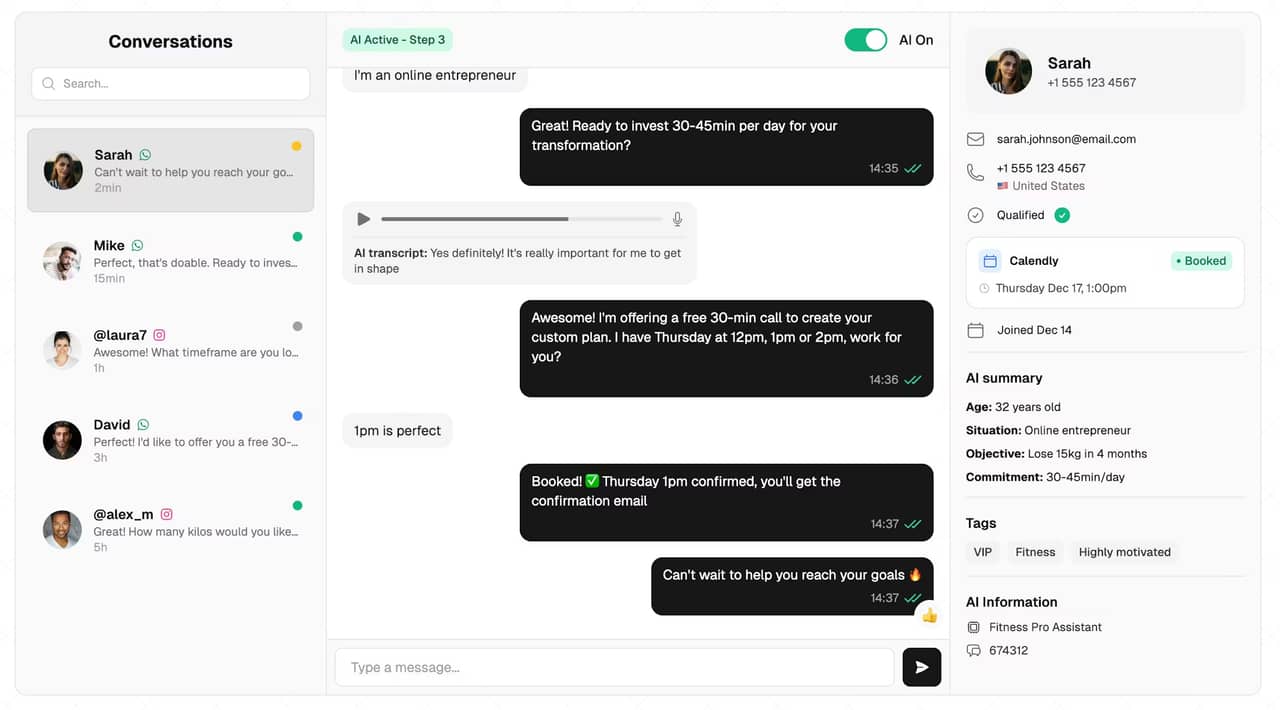
Someone taps the link in your Instagram bio, visits your offer, and then vanishes. Naturally you want to know who they were, because a warm visitor who never writes to you is a lead you cannot follow up with. So can you see who clicks your Instagram link? This guide gives the honest answer, shows exactly what Instagram Insights do and do not reveal, and explains the DM-first fix that coaches and creators use to turn anonymous taps into named conversations they can qualify and book.
Can you see who clicks your Instagram link? The short answer
No. Instagram never shows you the identity of the people who click your link. There is no screen, no list, and no official setting that names a single person who tapped your bio link or your story link sticker. This is a deliberate privacy decision by Meta, and it applies to every account type.
What you can see is a count. If your account is a professional one (Business or Creator), Instagram Insights shows you how many link taps you got over a date range. You learn the number of taps, not the names behind them. On a personal account you do not even get the count.
So the realistic answer to "can you see who clicks your Instagram link" is: you can see how many, sometimes, but never who. Any tool, app, or trick that promises to name your clickers is either guessing, harvesting your login, or simply lying. The rest of this article shows what the real numbers look like, where to find them, and how to stop losing those interested visitors to anonymity.
What Instagram actually shows: taps versus clicks in Insights
Instagram counts taps on your links, and it files those taps inside Insights rather than next to each follower. It is worth understanding the difference between a few metrics people mix up:
- Link taps (bio). How many times people tapped the website link in your bio. This is the closest thing to a "link click" that Instagram reports.
- Link sticker taps (stories). How many times viewers tapped the link sticker on a specific story.
- Website taps. An older label for bio link taps that still appears in some accounts.
- Profile visits and reach. Related activity numbers that help you read whether your content is sending people to your profile in the first place.
Every one of these is an aggregate count. Instagram tells you forty people tapped your link this week, not which forty. Even the follower-level Insights (which do exist for some actions, like who viewed a story) stop short of attributing a link tap to a named person. If you have a professional account and you open the Instagram professional dashboard, you will find the activity numbers there, and that is the ceiling of what the platform gives you.
This matters because the metric is useful for one job only: measuring whether your content and your call to action are working. A rising link-tap count means your hook is landing. It will never, on its own, hand you a lead you can message.
How to see how many people clicked your Instagram link
If you only want the count, here is where it lives. You need a professional account first, because personal accounts do not report link taps at all.
- Switch to a professional account. Go to Settings, then Account type and tools, and choose Business or Creator. This unlocks Insights.
- Open Insights. Tap the menu on your profile and open Insights, or tap View Insights under a specific post or story.
- Find link taps. In profile Insights, look under the activity or reach breakdown for "Link taps" or "Website taps" and set the date range you care about.
- Check story link sticker taps. Open the story (live or from your archive), swipe up on it, and read the "Link sticker taps" number for that story.
- Read bio link performance over time. Compare weeks to see which posts, reels, or story prompts pushed the most people to tap.
On desktop the picture is thinner. The web version of Instagram exposes far less than the mobile app, so for link-tap data you should use your phone. If you run ads, the Meta Ads Manager reports link clicks on promoted posts separately, and again those are counts by audience segment, not names.
One more honest caveat: the numbers can look inconsistent. Taps are deduplicated and sampled in ways Meta does not fully explain, so a bio link tool and Instagram Insights will rarely match to the digit. Treat the count as a directional signal, not an accountant's ledger.
Can you see who clicks your link in Stories or your bio?
This is the most common version of the question, so let us answer both halves directly.
Stories. You can see how many people tapped a story link sticker, and you can see who viewed the story itself (that viewer list is one of the few identity-level features Instagram offers). But Instagram does not cross those two together. You cannot open a list that says "these specific viewers tapped the link." You get a viewer list and a separate tap count, never the overlap. If you want to understand the mechanics of the sticker itself, our guide to the Instagram link sticker walks through setup and limits.
Bio. The bio link reports only a total tap count in Insights. There is no viewer-level attribution whatsoever. If you want to make that single bio slot work harder, the Instagram link in bio guide and our explainer on what "link in bio" means cover how to structure it so taps actually convert.
So whether the click happens in a story or in your bio, the identity stays hidden. That is the design, and no setting flips it.
Why link-in-bio and third-party tools can't name your clickers either
A lot of people assume a Linktree-style page or a URL shortener will reveal who clicked. It will not, and it helps to understand why.
When someone taps your link, your website or your link-in-bio tool receives a web request. That request carries technical signals: a rough location, a device type, a referring source, sometimes a timestamp. It does not carry an Instagram username, a name, or an email. The web and the app are separate worlds, and Instagram does not pass a person's identity across to the page you send them to. This is true for Linktree, Beacons, Stan, Koji, and every other bio-link product.
What these tools can show you is source and volume: how many taps came from Instagram versus TikTok, which link got the most interest, what time of day traffic peaked. You can sharpen that with UTM parameters or a branded short link, which is genuinely worth doing because it tells you which channel and which post drove the tap. But a UTM is an anonymous label, not a name tag.
The same logic kills the "see who clicked" apps you find in the app store. Any app claiming to name your Instagram clickers is doing one of three things: inventing the data, showing you unrelated profile-view guesses, or asking for your password so it can scrape your account, which is both against Instagram's terms and a security risk. Treat those apps the way you would treat the Instagram comment bot shortcuts that promise the impossible: skip them.
| What you want | Can Instagram show it? | Where |
|---|---|---|
| How many tapped your link | Yes (professional accounts) | Insights: Link taps |
| Who tapped your link | No | Not available anywhere |
| Who viewed your story | Yes | Story viewer list |
| Which source drove the tap | Yes (with UTMs) | Your own analytics |
The fix coaches use: turn anonymous clicks into named DM conversations
Here is the reframe that changes everything. If you cannot see who clicks your link, stop relying on the link to identify your best prospects. Move the interested person into a channel where they announce themselves: your DMs.
A tap on a bio link is a dead end for relationship building, because the person lands on a page and leaves no trace you can act on. A direct message is the opposite. The moment someone writes to you, you have a named account, an open thread, and permission to reply. That is a lead you can actually qualify and book.
The highest-converting creators have quietly swapped "link in bio" for "DM me the keyword." Instead of sending people to a silent landing page, they ask followers to comment a word or send a message, which routes every interested person into a conversation. A few ways to do it:
- Comment-to-DM. Ask people to comment a keyword on a reel or post, then automatically open a DM with them. Our guide to Instagram comment-to-DM automation shows the exact setup, and the broader how to automate Instagram DMs with AI walkthrough covers the mechanics.
- ig.me links. Instead of a web link, use an ig.me link that opens a DM thread directly, so a tap becomes a conversation rather than a page view.
- Story prompts and stickers. Pair a question sticker or a "reply to this story" prompt with your offer, so the tap turns into an inbound message you can see and answer.
Every one of these turns an anonymous click into a named lead. You stop guessing who tapped and start talking to the people who raised their hand. For the full funnel view, our Instagram sales funnel and Instagram lead generation guides map how DMs feed a calendar of calls, and how to sell on Instagram ties the content side together.
How an AI setter books calls from those DMs
Routing clicks into DMs solves the visibility problem. The next problem is volume: once a popular reel sends a wave of messages, you cannot answer all of them fast enough, and the ones you miss go cold. This is where an AI setter earns its keep.
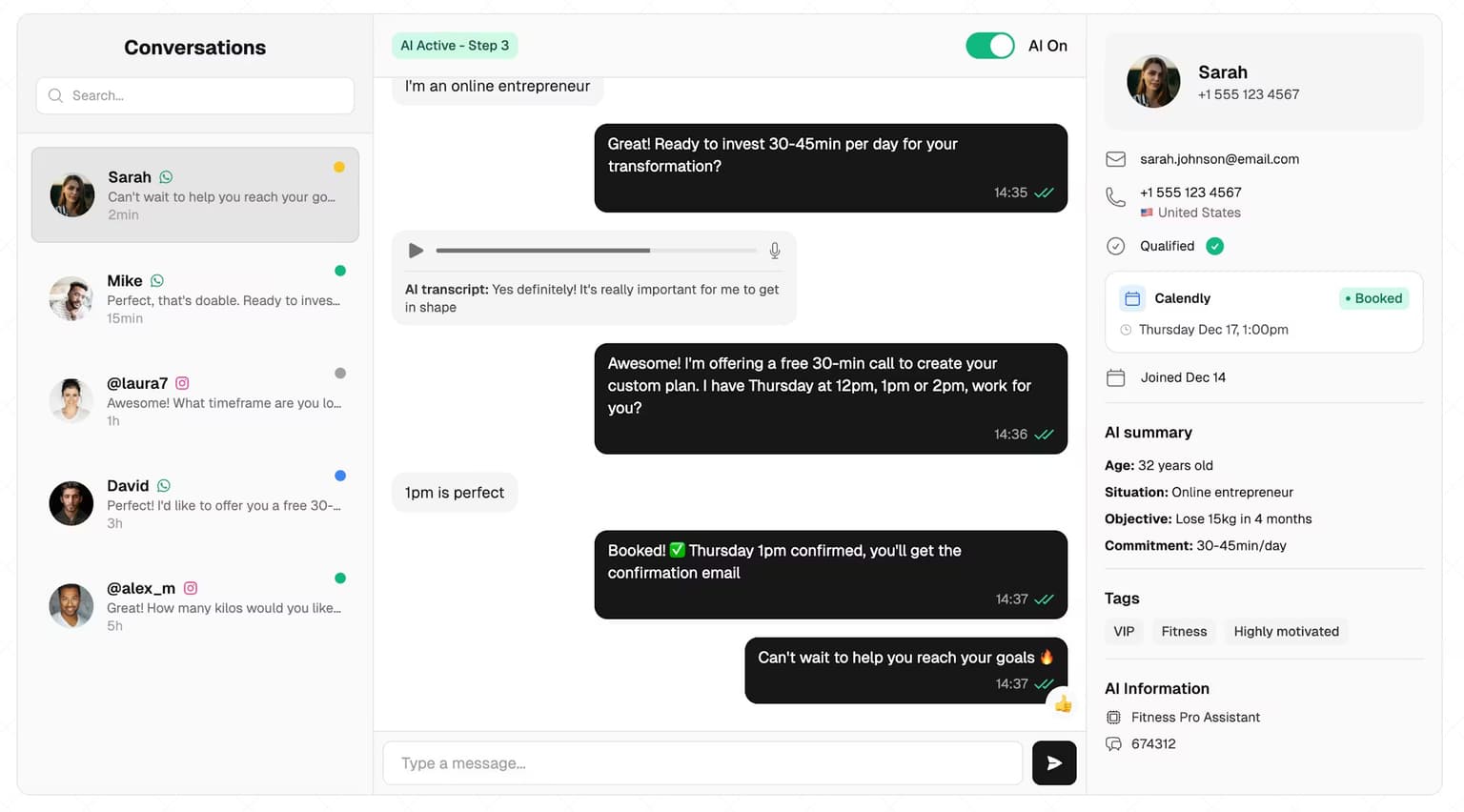
An AI setter replies to every inbound DM in seconds, asks your qualifying questions in a natural back-and-forth, and when the person is a fit, offers times and books a call straight into your calendar. It does the appointment setting, not the selling. The actual close still happens where it should, on the booked sales call with you or your closer, because high-ticket coaching and consulting is won in a real conversation, not in a chat window. If you are new to the role, what is a DM setter breaks down exactly what the setter does and does not do.
That is the honest promise: you will never see who clicked your link, but you can make sure that everyone who is genuinely interested ends up in a DM, gets answered instantly, and lands on your calendar as a qualified sales call. SetSmart runs that layer across Instagram, WhatsApp, and Messenger, and if you also track your Instagram link clicks alongside your DM volume, you get the full picture: how many people are curious, and how many of them you actually turned into conversations. For CRM-style lead tracking of those conversations, see our Instagram CRM overview.
SetSmart starts with a free 7-day trial, then from $97 per month, and you can see every plan on the pricing page.
FAQ
Can you see who clicks a link in your Instagram story?
No. You can see how many people tapped a story link sticker (in that story's Insights), and separately you can see the list of accounts that viewed the story, but Instagram never tells you which of those viewers tapped the link. The two data points are never joined.
Can you see who clicks your Linktree on Instagram?
No. Linktree and similar link-in-bio tools report traffic counts and sources, not identities. They receive a web request with technical signals like device and referrer, but no Instagram username or name is passed through, so they cannot name your clickers.
Does Instagram show link clicks on a personal account?
No. Link-tap data lives in Insights, and Insights are only available on Business and Creator accounts. If you want the count, switch to a professional account first. Even then you see the number of taps, never who made them.
How do I see link clicks in Instagram Insights?
Switch to a professional account, open Insights from your profile menu, and look for "Link taps" or "Website taps" under the activity or reach breakdown for your chosen date range. For story links, open the story and read its "Link sticker taps" count.
Can you see who viewed your Instagram profile?
No. Instagram does not offer a profile-viewer list for standard accounts, and any app claiming to provide one is guessing or unsafe. The only identity-level viewer data Instagram gives you is the story viewer list.
Is there an app to see who clicks your Instagram link?
No legitimate one. Apps that promise to name your clickers either fabricate the data or ask for your login so they can scrape your account, which breaks Instagram's terms and risks your security. Instead of chasing identities, route interested people into your DMs where they identify themselves.
Ready to automate your DMs?
Start your free 7-day trial and let AI handle your lead qualification 24/7.
Try SetSmart free