How to Start an AI Agency in 2026 (Step by Step)

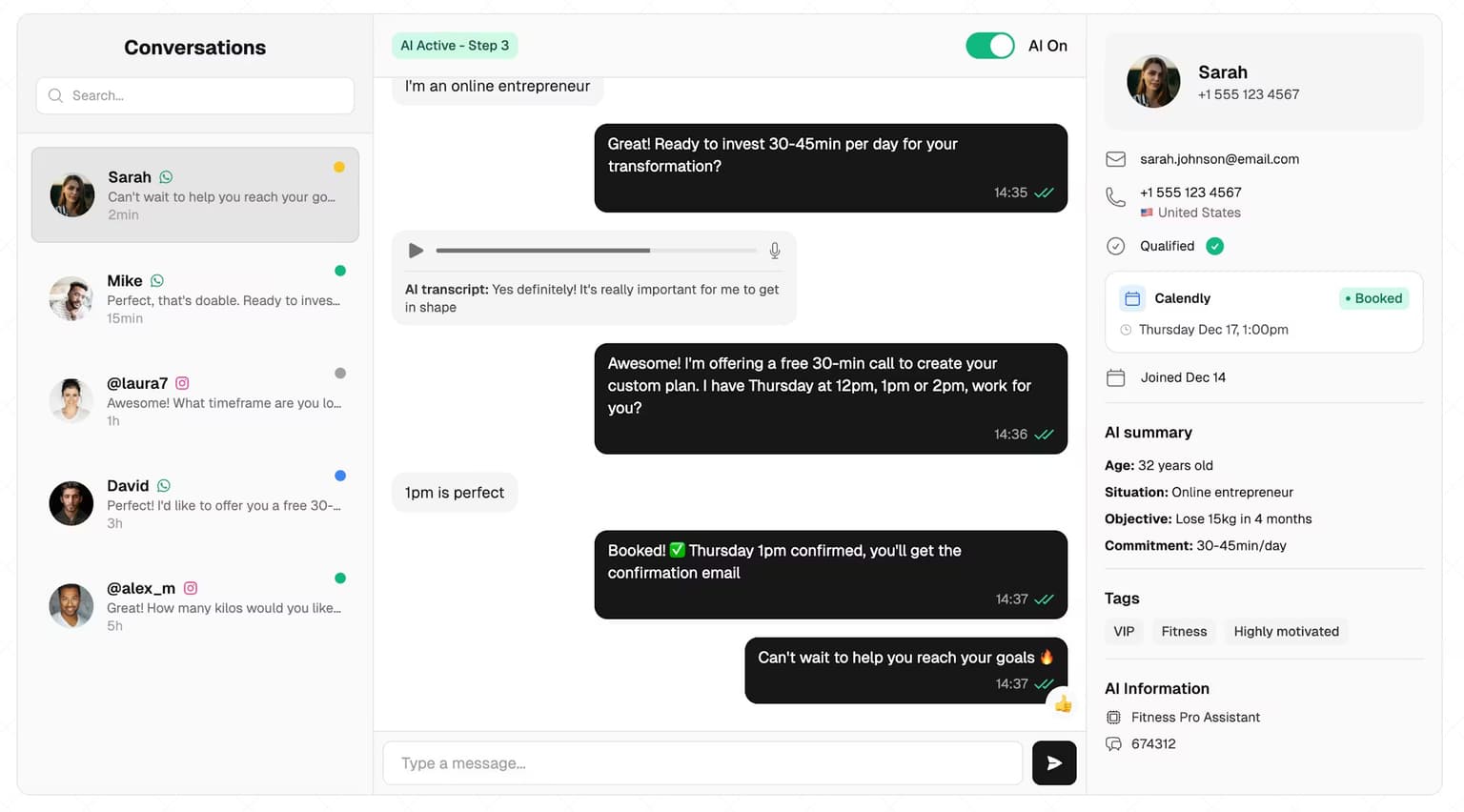
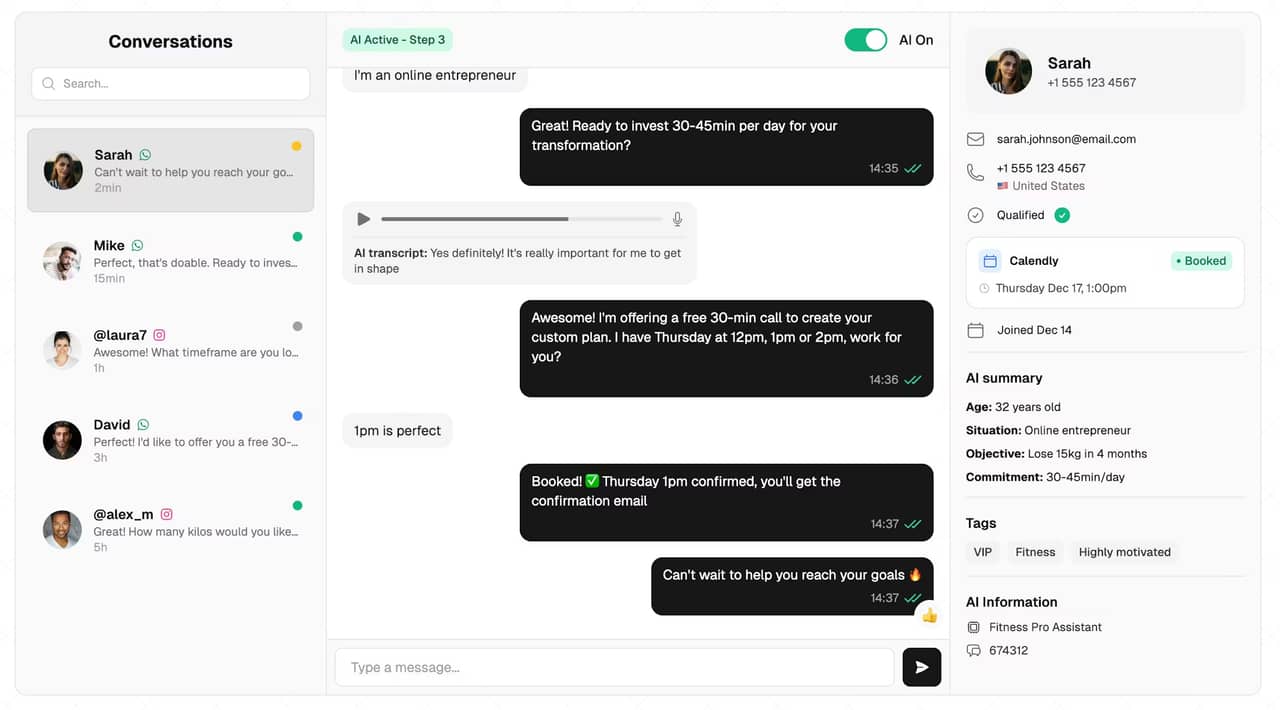
The fastest way to start an AI agency in 2026 is to sell one measurable outcome to one niche you already understand, and to deliver it on a white-label platform instead of building software. For most first-time founders, that outcome is booked sales calls from Instagram and WhatsApp DMs: it is easy to explain, easy to price, and easy to report on every week.
Most guides on how to start an AI automation agency stop at "pick a niche, learn the tools, find clients". That is not wrong, it is just not a plan. They skip what decides whether you have paying clients in 30 days: the offer, the price and why, the tools and who pays for them, how you deliver without holding your clients' passwords, and how you prove the result every week. This guide covers those parts, written by a company that works with agencies reselling AI setting to coaches, creators and small businesses every day.
One rule before we start, because it shapes every step below: the AI setter qualifies the lead and books the call. It never closes a high-ticket offer in the DM. Your client sells on the call. If you build your agency on that promise, you will sell something clients believe and can measure. If you promise "AI that closes deals", you will spend your first year refunding people.
What an AI automation agency is (and the 3 business models)
An AI automation agency is a service business that sets up and runs AI-driven workflows for other companies, usually for a monthly fee, so the client gets an outcome (answered leads, booked calls, processed paperwork) without hiring anyone or building anything. It is different from a classic social media marketing agency: an SMMA sells attention (content, ads, growth), an AI agency sells what happens after the attention arrives. In practice the two overlap a lot, which is why many of the agencies that add AI setting to their offer are SMMAs that already manage a client's Instagram.
There are three ways to structure the business, and the choice matters more than the niche.
| Model | How you get paid | Pros | Cons |
|---|---|---|---|
| Project automation | One-off build fee per workflow | Fast cash, easy first sale, proves you can deliver | No recurring revenue, you restart at zero every month, clients cannot maintain what you built |
| Managed service on retainer | Setup fee plus a monthly fee for running and optimising the system | Recurring revenue, compounding results, you own the client relationship and the reporting | You are on the hook for the outcome every month, so you need a repeatable delivery process |
| White-label SaaS resale | Clients pay you a subscription for software that runs under your brand | Highest margin per hour, scales without headcount | You are competing with the vendor's own pricing page, churn is high when nobody runs the tool for the client |
The vendors writing about this space each push the model that suits their product. Moxo's guide argues for a "workflow partner" model built on discovery fees, retainers and performance bonuses, and puts the setup fee for an initial workflow implementation at $2,000 to $10,000 followed by a monthly retainer of $500 to $3,000, according to its own industry estimates. DesignRush advises starting with project-based engagements and moving to retainers once trust is earned. Stammer, which sells white-label chatbots, says its 1,300+ agencies generate $300 to $500 in monthly recurring revenue per client. Treat all three as vendor marketing rather than benchmarks, but notice what they agree on: the money is in the retainer, not the build.
The model this guide recommends is the middle one, delivered on white-label software: a managed service on retainer. You get the recurring revenue of SaaS resale and the pricing power of a service, because the client is paying you for a result and a weekly report, not for a login.
Step 1: pick a niche you can already talk to
Direct answer: pick the niche where you can name ten people you could message today, and where the sale already happens on a booked call that starts in the DMs. Everything else is secondary.
DesignRush's guide makes the point bluntly: clients do not want generalists. Moxo and Voiceflow both point their readers at professional services firms and enterprise operations, which is fine for them, but a first-time founder with no team does not want a client whose procurement and compliance review takes longer than the project. Voiceflow's own "AI agency" article has even been rewritten into an enterprise buying guide. That market is not ready to buy from a one-person agency.
The niches where AI DM setting sells fastest share one trait: the business already sells high-ticket over a call, and the leads already arrive as messages.
| Niche | Why it works | Where the leads arrive | Watch out for |
|---|---|---|---|
| Online coaches (fitness and nutrition first) | High-ticket programs sold on a call, DM funnels already running, drowning in manual qualification | Instagram DMs, story replies, comment keywords | Small solo businesses, so keep onboarding short and pricing simple |
| Course creators and info-product sellers | Launches create DM spikes nobody can answer fast enough | Instagram, Messenger, WhatsApp | Volume is seasonal, so price the retainer on the average month |
| High-ticket service businesses (consultants, agencies) | Every unanswered inbound message is a lost call worth thousands | Instagram, WhatsApp, website chat to WhatsApp | Longer sales cycles, so the pilot needs 60 days, not 30 |
| Local services that sell over WhatsApp | Real estate, clinics, home services: the first reply speed decides who gets the appointment | WhatsApp, click-to-WhatsApp ads | WhatsApp API opt-in rules and Meta conversation fees apply |
| SMMAs that already sell Instagram growth | They have clients with full inboxes and no setter; you become their delivery partner or they become your clients | Their clients' Instagram DMs | Decide early whether you white-label to them or compete with them |
If you want a real signal rather than a theory: the largest customer segment on SetSmart is online coaching, with fitness coaches at the front, followed by course creators and agencies. That is where the inbound DM problem is most painful and where the buyer already understands what a setter is. If you are coming from that world yourself, our guides on how to start an online coaching business and how to start online fitness coaching describe the exact funnel your future clients are running, which makes your sales conversation a lot easier. If you are coming from the agency side, SMMA marketing covers how those agencies already sell.
Step 2: productise one service: AI appointment setting in the DMs
Direct answer: sell one thing, an AI setter that answers, qualifies and books calls in your client's Instagram, WhatsApp and Messenger DMs, and package it with reporting. Do not sell "automation" as a category.
A productised service is one that has the same deliverables, the same setup process and the same report for every client. It is what lets you onboard a second client in a day instead of a week, and it is what a buyer can say yes to without a scoping call. AI DM setting is the best first product for a new AI agency for three reasons:
- The KPI is booked calls. Not "efficiency", not "engagement". A number the client already tracks and already pays for.
- The alternative is expensive and well understood. Appointment setting services and the larger appointment setter companies charge for humans; in our roundup of the best AI setters we put a human setter at $2,000 to $4,000 a month in pay and commission. Your client is not comparing you to nothing, they are comparing you to that.
- Delivery is repeatable. The same script structure (greeting, qualification questions, objection handling, booking, follow-up) works across a fitness coach, a course creator and a consultant, with different answers plugged in.
Here is what the package contains, and what it deliberately does not.
In scope: a custom qualification script per client, connection of the client's Instagram, WhatsApp or Messenger, booking on the client's own calendar, automatic follow-ups when a lead goes quiet, a weekly report of conversations and booked calls, and a monthly script review.
Out of scope: content, ads, and closing. The setter books the call; the client (or their closer) runs the high-ticket sales call. Put this sentence in your contract and in your sales deck. It protects you from the one expectation you cannot meet and it makes the offer credible to anyone who has hired a human setter.
The outcome you are selling looks like this in your client's words:
"I book 15 to 25 calls per week... without managing a single setter." Mathis Ladoué, online fitness coach
That quote is about a coach using an AI DM setter directly. Your agency's job is to deliver the same thing for clients who do not want to set it up, watch it, or report on it themselves. For a full picture of what the software does, our AI setter guide and the best AI setters comparison are the two pages to read before your first sales call.
Step 3: price the offer
Direct answer: price between the cost of the software and the cost of a human setter, charge a setup fee, and keep the monthly fee tied to something the client can see on their calendar.
There are four pricing models that work for an AI appointment setting business. Pick one for your first three clients and resist the urge to mix them.
| Model | How it works | When it fits | Risk |
|---|---|---|---|
| Setup fee + monthly retainer | One-off fee for the script and onboarding, then a flat monthly fee for running and reporting | Default choice; any niche with steady inbound volume | Low. The retainer must include the software cost so you never eat overages |
| Per booked call | The client pays a fixed amount per call the setter books | Clients with a known call value and a closer who shows up | Disputes over what counts. Define "booked" as a slot on the client's calendar and use the analytics page as the source of truth |
| Retainer + performance bonus | Lower flat fee plus a bonus above an agreed number of booked calls | Clients who push back on a full retainer but have volume | You share the downside of a weak offer or a slow closer you do not control |
| Flat white-label subscription | The client pays for "your software" monthly, with minimal service | SMMAs adding a line item to existing clients | Churn: with no report and no human check-in the client forgets why they pay |
What do AI automation agencies actually charge?
Only quote ranges you can attribute. Moxo's guide puts initial workflow implementations at $2,000 to $10,000 with retainers of $500 to $3,000 a month, but those are enterprise-style workflow projects for firms with approval chains and document processing, not a DM setter for a coach. Stammer's homepage claims its agencies make $300 to $500 in monthly recurring revenue per client for a self-serve chatbot subscription, and its FAQ describes the same $300 to $500 per month per agent plus a one-time setup fee. DesignRush declines to give a number and says startup costs range from a few thousand to tens of thousands of dollars, which tells you more about who they write for than about what a client will pay.
A managed AI setting service with weekly reporting sits above a self-serve chatbot subscription and well below a human setter. Anchor your pitch on that comparison: the client is currently paying a human setter $2,000 to $4,000 a month, or paying nothing and losing the leads.
The margin math (as an assumption, not a promise)
Assume you sign ten clients at Stammer's low end of $300 per client per month. That is $3,000 a month in retainers. If each client's inbox uses about 400 messages a month, all ten fit inside a SetSmart Scale subscription (4,000 messages for $297 a month), so the platform costs about 10% of revenue, or about 6% if you charge $500. Your real cost is your own time: the onboarding call and the weekly review. That is why the delivery process in step 5 matters more than the tool.
Do the same math before you accept a per-booked-call deal. If a client's offer is weak or their closer no-shows, your revenue drops while your work does not.
Step 4: build the delivery stack (and what it really costs)
Direct answer: run every client as a separate workspace on a white-label AI setter platform, keep the client on their own calendar and their own channels, and use your own billing tool for invoices. Do not build software before you have three paying clients.
Here is the stack, who pays for each layer, and what it costs.
| Layer | What you use | Who pays | Cost |
|---|---|---|---|
| AI setter platform | SetSmart in white-label (managed agency) mode, one workspace per client | You | Pro $97/month for 1,000 messages, Scale $297/month for 4,000, Enterprise $797/month for 15,000. Annual billing is ten months for twelve |
| Extra messages | Top-ups above the included volume | You (build it into the retainer) | Per 1,000 messages: $100 on Pro, $70 on Scale, $40 on Enterprise |
| Calendar | The client's own Calendly, GoHighLevel, Cal.com or iClosed | Client | Often a free tier; the client already has one |
| Channels | The client's Instagram, WhatsApp Business and Messenger accounts | Client | Instagram and Messenger are free; WhatsApp API conversations carry Meta's own fees on the client's WhatsApp Business account |
| Reporting | Per-client analytics page, Slack booking alerts under your brand, optional email alerts to you | Included | No extra cost |
| Invoicing and contracts | Your own invoicing and e-signature tools | You | Whatever you already use; there is no rebilling module inside the setter platform |
| CRM (optional) | The client's existing CRM, if any | Client | Not required to start; booked calls land on the calendar either way |
How the message quota is shared across clients
In white-label mode every message a client workspace sends counts on your own plan's quota, and you do not need any AI keys for yourself or your clients. So the plan you pick is a capacity decision. Keep the same assumption as above, about 400 messages per client inbox per month: Pro covers two clients with headroom, Scale covers ten, Enterprise covers around thirty-seven. That works out to roughly $30 per client per month on Scale and around $21 on Enterprise. When you outgrow a tier, a $70 top-up on Scale buys 1,000 messages, or about two and a half more clients at that usage, before it is cheaper to move up. Busy launches or WhatsApp-heavy clients will use more, so review the per-client usage page monthly and price accordingly.
What white-label mode actually gives you
Everything below is enabled from the app (Settings, Advanced) on a Pro, Scale or Enterprise subscription and documented in the white-label API documentation. There is no separate agency product; it is a mode on your existing plan.
- Client workspaces. Create, rename, delete and open each client's workspace, then return to your agency account from a banner at the top of the page. The script is built in the same assistant builder, booking flow and channels a direct customer uses.
- A client portal on a share link. Each client gets a link (no login) to their own dashboard, connections hub and analytics. The Messenger is on by default so the client can read conversations, reply themselves and pause the AI on a lead; the assistants editor is off by default so nobody edits the script by accident. Your agency name and logo sit at the top of every page (leave both empty for a neutral look), and the link can be revoked and regenerated at any time.
- A connect hub. One unbranded page per client where they connect their own WhatsApp, Messenger, Instagram, Calendly, GoHighLevel, Cal.com or iClosed themselves. You can deep-link straight to one integration. The Meta authorisation screens are served on setsmart.io, because Meta requires it; the page around them carries your brand.
- A custom domain. Add forms.youragency.com in the app, create the DNS records shown, click Verify, and every client link (portal, hub, analytics, forms) is generated on your domain with no mention of the platform anywhere.
- Alerts under your name. Booking alerts post to the client's Slack with your agency's name and icon. Clients never receive emails from the platform; you can opt in to receive their booking alerts in your own inbox.
- An API and MCP access. Per-client API keys, endpoints to create and manage clients, generate a connect link, read and update a client's prompt, list conversations and read usage, so you can wire onboarding into your own tools later.
What it does not do (so you plan around it)
Be honest with yourself here, because the gaps decide which tool fits your model. There is no white-label mobile app, no rebilling or payment module (you invoice clients with your own tool), the Meta authorisation screen itself is not white-labelled, and there is no per-client billing inside the platform. It is also not a CRM pipeline, a website builder or an email and SMS marketing suite. If your model is "resell an all-in-one platform as my own software", GoHighLevel's SaaS Mode on its Agency Pro plan at $497 per month is built for that, and our GoHighLevel alternatives and GoHighLevel pricing breakdowns cover the trade-off, and our GoHighLevel white label guide walks through SaaS Mode and its real costs. If your model is agentic AI inside a CRM with rebilling, our CloseBot review covers the other serious option. If your model is a managed DM setting service for coaches and creators, the stack above is the shortest path, and the white-label page and agencies page show it end to end.
Step 5: deliver and report (the weekly workflow)
Direct answer: the delivery process is a fixed sequence you repeat for every client, and the weekly report is the product the client is actually paying for.
- Onboarding call (45 minutes). Get the offer, the ideal client, the three to five qualification questions, the disqualifiers, the calendar link, the tone, and the answers to the ten questions leads ask most. Record it. This call is the raw material for the script.
- Build the script in the client's workspace. Open the workspace, build the assistant in the builder: greeting, qualification, objection handling, booking, follow-ups. Test it yourself in a demo conversation before the client ever sees it.
- Send the connect hub link. The client connects their own Instagram, WhatsApp or Messenger and their calendar from the hub page. You never ask for a password and you never log into their accounts, which is both a security policy and a selling point. If you need the channel mechanics, our guides on Instagram DM automation and WhatsApp automation cover what each platform allows.
- First-week review. Read the first conversations in the portal Messenger, pause the AI on any lead that needs a human, and fix the script where leads got stuck. Most edits happen in week one.
- Weekly report. Pull conversations and booked calls from the client's analytics page, add three lines of commentary (what changed, what you fixed, what you recommend), and send it. Slack booking alerts under your brand mean the client sees every booked call in real time, so the report is confirmation, not news.
- Monthly optimisation. Review the qualification questions, refresh answers to new objections, and check per-client usage against your quota.
If a client's inbox is empty, no setter will help. The fix belongs upstream: comment-to-DM automation and story keywords fill the inbox that the setter then works. Sell that as an add-on or partner with an SMMA that does it, but keep it out of your core package.
Step 6: land the first three clients
Direct answer: your first three clients come from your own network, a paid pilot with clear exit criteria, and one case study, in that order. Paid ads for an agency with no case study are a way to spend money.
- Start where you already are. If you were a coach, a closer, a setter, or you ran social for a business, you already know people with a full inbox and no setter. That is your first client, and they will forgive a rough onboarding because they know you.
- Sell a paid 30-day pilot. Charge the setup fee, discount the first month if you must, and write the exit criteria into the offer: a number of booked calls in 30 days, measured on the analytics page. A free pilot with no criteria is unpaid work that ends in "let's see".
- Turn the first result into a case study. DesignRush's guide notes that agencies showing hard metrics consistently outperform those relying on buzzwords. Ask for permission on day one, screenshot the analytics page on day 30, and write the three numbers that matter: conversations handled, calls booked, calls that showed up.
- Do your own outreach by hand. Ironically, the best prospecting for an AI setting agency is a human sending a short, specific DM to a specific person about their specific inbox. The AI setter is for your clients' inbound conversations; it is not a tool for blasting strangers, and Meta's rules agree.
- Partner with SMMAs. Agencies that already sell Instagram growth have clients with full inboxes and no delivery for the conversation layer. Offer to run it under their brand or yours. Our ManyChat alternative for agencies guide covers how those agencies evaluate DM tools, which is useful background for that conversation.
Legal and ops basics
Direct answer: put the KPI, the scope, the data access and the tool costs in the contract before the first client, and keep your clients' accounts in their own hands.
- Contract scope. Define the deliverable as qualification and booking on the client's calendar, name the KPI (booked calls), and state that closing is the client's responsibility. Add who owns the script (you wrote it, the client uses it while they pay), a 30-day notice period, and a limit of liability equal to the fees paid.
- Data access. The client keeps ownership of their Instagram, WhatsApp and Messenger accounts and connects them through the hub link themselves. You have workspace access, not passwords. At offboarding you revoke the portal link and delete the workspace, and the client's accounts keep working without you.
- Who pays for what. You pay the setter platform and build it into the retainer. The client pays their calendar tool and Meta's WhatsApp conversation fees on their own WhatsApp Business account; our WhatsApp Business API pricing guide explains how those fees work so you can set expectations up front. You invoice with your own billing tool, because there is no rebilling inside the platform.
- Business structure. DesignRush flags the legal structure as an early decision that affects liability and client confidence. Get an accountant, register the entity, and open a separate bank account before the first invoice, not after.
- Platform rules. Run everything on the official Instagram and WhatsApp APIs, collect opt-in on WhatsApp, and never use tools that log into a client's account with browser automation. One banned account will cost you more than every shortcut ever saved.
Mistakes that kill new AI agencies
- Selling "AI" instead of an outcome. The Gartner forecast Voiceflow cites, more than 40% of agentic AI projects cancelled by 2027 over unclear business value, is what happens when the promise is a technology. Sell booked calls.
- Too many tools, too many services. Every extra tool is a login, an invoice and a support ticket. One platform, one calendar, one report.
- No reporting. The client cannot see the setter working. If the only proof is their own calendar, they will credit their content, not you. The weekly report is the retention mechanism.
- Letting the setter "close". A script that pushes for the sale in the DM scares off high-ticket buyers and breaks the promise you sold. Book the call, hand over.
- Holding clients' logins. It is a security risk, a liability, and a reason for a client to feel trapped rather than served. Use the connect hub.
- Free pilots with no exit criteria. Unpaid work that never converts into a decision.
- Building custom software before three paying clients. A white-label platform costs less per month than one hour of a developer. Build later, if ever.
Your first 30 days
Direct answer: one week to set up, one week to sell, two weeks to deliver and prove it.
Week 1: set up. Pick the niche and write the one-sentence offer. Choose a pricing model and draft the contract. Start a SetSmart subscription (Pro or Scale both come with a 7-day free trial), enable white-label mode, add your name and logo, and set up your custom domain. Create a demo workspace and build a script for a fictional client in your niche so you can show it on a call.
Week 2: sell. Message twenty people in your niche by hand, one at a time, about their inbox. Book five conversations, run the demo, and offer three of them the paid pilot with exit criteria.
Week 3: deliver. Run the onboarding call with the first client, build the script, send the connect hub link, and do the first-week review. Turn on Slack alerts under your brand.
Week 4: prove. Send the first weekly report, ask the client for case-study permission, and onboard clients two and three. By day 30 you should have a working script you can reuse, a report template, and one set of real numbers to show the next prospect.
Bottom line
You do not start an AI agency by learning every tool or by pitching "AI" to everyone. You start it by picking one niche where sales already happen on a booked call, productising one service with one KPI, pricing it between the software and a human setter, and delivering it on a white-label platform with a weekly report the client can read in a minute. The delivery engine is a commodity you rent; the offer, the reporting and the relationship are the business you own. Get your first three clients in 30 days with that structure and the fourth will come from the first three.
FAQ
How much does it cost to start an AI agency?
Less than most guides imply. DesignRush puts startup costs at a few thousand to tens of thousands of dollars, but that assumes hardware, developers and office space. A managed AI setting agency needs a white-label setter subscription (SetSmart Pro is $97 a month for 1,000 messages, Scale is $297 a month for 4,000), an invoicing tool, a contract template and your time. The client pays for their own calendar and channels. Your first setup fee usually covers the first months of software.
Do I need to know how to code to start an AI automation agency?
No. A managed setting service runs on a no-code assistant builder, the client connects their own channels through a link, and reporting comes from a built-in analytics page. An API and MCP access exist for agencies that want to automate onboarding later, but none of your first ten clients will require a line of code. What you do need is the ability to write a good qualification script and to read a conversation critically.
What services does an AI automation agency offer?
The common menu is AI appointment setting in the DMs, customer support chatbots (compare the options in our white label AI chatbot platforms roundup), lead capture on websites, voice agents for phone lines, and back-office workflow automation (document collection, approvals, onboarding). The advice in this guide is to start with one: AI DM setting for businesses that sell on a call, because it has a single KPI (booked calls), a clear comparison point (a human setter) and a delivery process you can repeat for every client.
How much do AI automation agencies charge?
It depends on the model. Moxo's guide cites $2,000 to $10,000 for an initial workflow implementation plus $500 to $3,000 a month in retainers for enterprise-style workflow projects. Stammer claims its agencies make $300 to $500 in monthly recurring revenue per client for self-serve chatbot subscriptions. A managed DM setting service with weekly reporting sits above a self-serve subscription and below the $2,000 to $4,000 a month a human setter costs. Charge a setup fee in every case.
Is an appointment setting business profitable?
It can be, if the retainer covers the software with room to spare and your delivery time per client stays small. As an illustration, ten clients at $300 a month is $3,000 in retainers; if each client uses about 400 messages a month they all fit on one $297 Scale subscription, so the platform is about a tenth of revenue. The risks are on the delivery side: clients with empty inboxes, weak offers or closers who no-show, which is why the pilot needs exit criteria and the report needs to exist.
How do I get my first AI agency client?
From your own network, with a paid pilot. Message people you already know who sell on a call and have a full inbox, show them a demo script built for their niche, and offer a 30-day pilot with a setup fee and a booked-calls target measured on the analytics page. Turn the first result into a one-page case study and send it to the next twenty people by hand. Partnering with an SMMA that already manages Instagram accounts is the fastest second channel.
What is an AI automation agency?
An AI automation agency is a service business that sets up and runs AI-driven workflows for clients on a recurring fee, so the client gets an outcome such as answered leads, booked calls or processed documents without hiring staff or building software. It usually operates on one of three models: project automation, a managed service on retainer, or white-label software resale. The version this guide recommends is a managed service that delivers booked sales calls from Instagram and WhatsApp DMs.
Ready to automate your DMs?
Start your free 7-day trial and let AI handle your lead qualification 24/7.
Try SetSmart free