Group Coaching: How to Price, Run & Fill It (2026)

Every coach hits the same wall eventually. Your calendar is full of 1:1 calls, your income is capped by the number of hours in a week, and raising prices again feels like it would price out the people you actually want to help. Group coaching is the usual answer, but most coaches get it wrong on the first try: they take their 1:1 program, put eight people on the same Zoom, and wonder why half the group goes quiet by week three.
This guide covers what group coaching actually is (and how it differs from team coaching, masterminds, and courses), when it beats 1:1, the four formats you can choose from, what coaches really charge in 2026 using public pricing data, a session template you can run next week, and the part most guides skip: how to fill the program. We use online fitness and nutrition coaches as the running example, because that is where group programs are most common right now, but the framework works for any niche.
What is group coaching?
Direct answer: group coaching is one coach working with several clients at the same time, in a series of live sessions, where each member works toward their own version of a shared goal. The members do not need to know each other beforehand. They join because they want a similar result, like losing 10 pounds before summer, landing a first coaching client, or building a consistent training habit.
Most group programs share a few traits:
- A shared outcome. Everyone joins for roughly the same result, which is what makes the group format work. Ten people with ten unrelated problems is not a group program, it is ten rushed 1:1 sessions.
- A fixed schedule. Sessions happen at set times, usually weekly, so the whole group can attend.
- A defined size. The Co-Active Training Institute describes group coaching as "a small group of individuals (typically 5-20)" and suggests 6 to 12 participants as the sweet spot in its FAQ.
- Peer learning. Members learn from watching each other get coached, not only from the coach.
That last point is the real difference. In a 1:1 session, the client only learns from you. In a group, every member also learns from the questions, mistakes, and wins of the other members. When you coach one person on the hot seat, the rest of the group is quietly applying it to their own situation.
Group coaching vs team coaching vs mastermind
These terms get mixed up constantly, including by coaches selling them. Here is how the main professional bodies separate them.
| Format | Who is in the room | Whose goal | Who leads |
|---|---|---|---|
| Group coaching | Individuals with a similar goal, often strangers | Each member's own goal | A coach |
| Team coaching | An existing team that already works together | One collective goal | A coach |
| Mastermind | Peers at a similar level | Each member's own goal | Mostly the peers, with a facilitator |
| Group course | Anyone who buys | Learning the material | A teacher, little or no live coaching |
| Group therapy | People treating a mental health condition | Clinical outcomes | A licensed professional |
The International Coaching Federation puts the key line clearly in its blog post on group coaching: team coaching helps a team "operate as a single entity," while group coaching "brings together individuals with common personal or professional goals, helping them achieve these goals individually." Erickson Coaching International makes the same split in its guide to the difference between group and team coaching: group coaching focuses on individual growth within a group, team coaching on how an intact team functions together.
If you are an online coach selling to individuals on Instagram, you are almost always selling group coaching, not team coaching. And if most of your "program" is pre-recorded videos with one optional Q&A a month, you are selling a course with a community, which is fine, but price and market it as one.
Group coaching vs 1:1 coaching: which should you offer?
Direct answer: offer group coaching when your clients share a common problem with a mostly common solution, when you want fixed coaching hours, and when a lower price would open your offer to more of the right people. Keep 1:1 when clients need deep personalization, sensitive conversations, or flexible scheduling.
| 1:1 coaching | Group coaching | |
|---|---|---|
| Price per client | Higher | Lower, easier to say yes to |
| Your income per hour on calls | Capped by your hourly rate | Usually much higher |
| Personal attention | 100% of the session | Shared, with turns on the hot seat |
| Accountability | Comes from you | Comes from you and the group |
| Scheduling | Flexible | Fixed times for everyone |
| Privacy | Fully private | Members share in front of peers |
The math that makes coaches switch
Here is a simple example. Say you run a 12-week cohort with 10 members, each paying $1,000, and you hold one 75-minute group call per week.
- Revenue: 10 members x $1,000 = $10,000
- Live call time: 12 calls x 75 minutes = 15 hours
- Revenue per hour of live calls: about $667
Now compare that with 1:1. ICF's 2023 Global Coaching Study put the average fee for a one-hour session at $244, as summarized in Heartbeat's group coaching guide. The same 15 hours of 1:1 calls at that rate would bring in $3,660.
Two honest caveats. First, group programs carry extra hidden hours: prep, the community between calls, onboarding, and enrollment. Your real hourly rate is lower than the call math suggests, in both models. Second, the comparison only holds if you can actually fill 10 seats. A group of three at $1,000 each is a worse business than your 1:1 calendar. Filling the program is the real constraint, which is why we give it its own section below.
When 1:1 is still the better choice
Group coaching is not automatically an upgrade. Stay with 1:1 (or keep it as a premium tier) when:
- Your clients' situations differ so much that a shared curriculum would not fit anyone well.
- The topic is sensitive enough that people will not open up in front of strangers.
- Your clients need a custom plan that changes weekly, such as contest prep or medically supervised nutrition.
- You are still learning your method. Most coaches design a much better group program after coaching 20 or 30 people 1:1 and seeing which problems repeat.
A common middle path is to keep a small number of 1:1 spots at a high price and move everyone else into a group or hybrid program. Our guide on how to grow an online coaching business covers when that move makes sense for your capacity.
The 4 group coaching models
Direct answer: most group coaching programs use one of four formats. A cohort (everyone starts and ends together), a rolling membership (join any time, pay monthly), a hybrid (group calls plus private support), or an open drop-in group (pay per session). For a first program, a cohort is the safest bet.
1. Cohort program
Everyone starts on the same date, moves through the same curriculum, and finishes together. This is the most common format by far. When Heartbeat reviewed 42 group programs with public sales pages, 26 were cohorts, 10 hybrids, and 6 rolling groups, and 12 weeks was the most common length.
Cohorts work because they create urgency (there is a start date), a shared journey (everyone is on week four at the same time), and a clean ending you can sell the next step from. The downside is that you have to re-launch every round.
2. Rolling membership
Members join and leave whenever they want, usually on a monthly subscription. Sessions run continuously, often for years. This suits ongoing support, like accountability for people who already finished a cohort, or a maintenance group for clients who hit their weight-loss goal and want to keep it.
The challenge is onboarding. A new member walking into a group that has met for six months can feel like an outsider. Give them a clear way in, like a short welcome call or a starter module.
3. Hybrid program
A hybrid adds private support on top of group sessions: a monthly 1:1 call, check-in messages between sessions, form or meal reviews, or office hours. Hybrids sit between group and 1:1 in price and time. They suit fitness and nutrition coaches well, because clients often need a personal plan but benefit from group accountability. Because each member costs you more time, keep the group smaller.
4. Open drop-in group
The loosest format: a recurring session people pay for one at a time, or join as part of a broader membership. It is easy to start and easy to attend, but it builds less momentum and is hard to sell as a transformation. Use it as a feeder or as an add-on, not as your main offer.
| Model | How people join | Typical pricing | Best for |
|---|---|---|---|
| Cohort | Fixed start and end date | One price or payment plan | A first program, a clear transformation |
| Rolling membership | Any time | Monthly subscription | Ongoing support, alumni, maintenance |
| Hybrid | Either way, plus private support | Higher than a pure cohort | Clients who need a personal plan |
| Open drop-in | Per session | Pay per session | A low-commitment feeder offer |
If you are still deciding how your group program fits next to your other offers, our breakdown of coaching packages shows how coaches tier a lighter group container under a premium 1:1 package.
How much to charge for group coaching (2026 benchmarks)
Direct answer: most group coaching programs sell for roughly $550 to $1,650 per person, with a median around $1,070, based on Heartbeat's October 2026 review of public sales pages. Twelve-week programs run higher, with a median of $1,382. Price is driven far more by niche and outcome than by the number of calls.
Here is what Heartbeat found across 37 fixed-length programs, regular prices in USD, checked on October 8, 2026:
| Niche | Typical price | Price range | Typical price per week |
|---|---|---|---|
| Career | $1,497 | $597 to $2,500 | $150 |
| Business | $1,500 | $297 to $2,691 | $115 |
| Health and fitness | $1,000 | $397 to $1,497 | $100 |
| Life coaching | $980 | $211 to $2,497 | $78 |
Source: Heartbeat, Group Coaching: How to Design, Price and Run One, published October 15, 2026.
Two more data points from the same review are worth knowing. Hybrid programs, which add private calls, had a median price of about $1,320 against about $1,040 for pure cohorts. And 26 of the 37 fixed-length programs offered a payment plan, which tells you how normal it is to split a $1,000 seat into a few installments.
Price against your 1:1 offer, not against your hours
The cleanest way to set your price is to anchor it to your 1:1 offer and discount for reduced access. Paperbell's coaching pricing guide suggests group programs typically sit at a 40 to 70 percent discount from your 1:1 rate: if your three-month 1:1 package is $3,500, the group version might run $1,200 to $2,000 per person. The smaller and more personal the group, the closer it can sit to your 1:1 price.
A few pricing rules that hold up well:
- Price the outcome, not the calls. Members pay for a result, like dropping two dress sizes or running their first 10K. Nobody buys "12 Zoom calls."
- Charge for private access. If you add 1:1 calls, messaging, or reviews, the price should move up. That is exactly what the hybrid premium above reflects.
- Offer a payment plan. It lowers the barrier without lowering the price.
- Cap the seats and stick to it. A real cap protects the experience you are charging for, and "two spots left" is a legitimate reason to decide now.
- Raise the price between cohorts, not during. Each finished cohort gives you testimonials and results that justify the next increase.
At the higher end of the range, a group seat starts to look like a high ticket offer, and the way you sell it changes. Under a few hundred dollars, people will often buy straight from a checkout page. Above roughly $1,000, most buyers want a conversation first, which means a short qualifying chat and an enrollment call. Our guide to high ticket coaching goes deeper on how premium programs are structured and sold.
How to start a group coaching program in 7 steps
Direct answer: pick one outcome for one type of client, choose a format and length, set the group size, build the curriculum from your clients' real questions, design a repeatable session template, price it against your 1:1 offer, and fill the first cohort personally before you try a public launch.
1. Pick one outcome for one type of client
The fastest way to kill a group program is a vague promise. "Get healthier" attracts a group with nothing in common. "Lose your first 10 pounds in 8 weeks without giving up dinners out" attracts a group that faces the same obstacles every week. The narrower the outcome, the more useful each hot seat is to everyone else in the room.
2. Choose the format and length
For a first program, run a cohort. Length depends on the outcome: four to six weeks for a focused skill or reset, eight to twelve weeks for a body composition or habit change. If you are unsure, go shorter. It is easy to extend a program members love and painful to keep people engaged through weeks nine to twelve of one they are bored with.
3. Set the group size
Most sources land in the same zone. Co-Active suggests 6 to 12 participants, the ICF's own framework uses groups of six to eight, Paperbell recommends capping at 6 to 15, and the cohorts in Heartbeat's review had a median cap of 10. Above about 12, each member gets very little hot-seat time per session unless you add a co-coach or breakout rooms.
If you are working toward an ICF credential, there is one more reason to stay small: ICF's experience requirements only count group coaching hours when the group has 15 or fewer people (unless a co-coach is present), and the hour is not multiplied by the number of participants.
Set two numbers before you launch: the minimum you need to run the group (often three to five for a first cohort) and the maximum you will not go above.
4. Build the curriculum from real client questions
You do not need to invent content. Write down the 10 to 15 questions your 1:1 clients ask most often, group them into themes, and assign one theme per week. For a nutrition group, that might be: week one, setting up your plate; week two, eating out; week three, weekends; week four, plateaus; and so on. If you have no past clients yet, ask your followers in a story poll what they struggle with most.
5. Design a repeatable session template
Use the same structure every week so members know what to expect and you spend less time planning. We give a full template in the next section.
6. Set the price and payment plan
Use the benchmarks above, anchor to your 1:1 offer, and decide on your payment plan before you open enrollment, so you are not making it up on a call.
7. Set a start date and fill the first cohort personally
Pick a start date four to six weeks out, then fill the first round one conversation at a time. Do not wait for a perfect launch. A first cohort of five people who get results is worth more than a 20-person launch you never run. The full enrollment playbook is below.
How to run a group coaching session (60 or 90 minute template)
Direct answer: run every session with the same five parts: a quick check-in, a short teaching block, two or three hot seats, a group reflection, and one commitment per member. Structure is what stops one person from taking over the whole call.
| Part of the call | 60 min | 90 min | What happens |
|---|---|---|---|
| Check-in and wins | 5 | 10 | One sentence each: a win, a number, or where they are this week |
| Focus topic | 10 | 15 | You frame this week's theme. Keep it short; this is not a lecture |
| Hot seats | 30 | 45 | Coach two or three members live, 10 to 15 minutes each: goal, current reality, options |
| Group reflection | 10 | 10 | Others share what they took from the hot seats for their own situation |
| Commitments | 5 | 10 | Each member names one specific action for the week |
The hot-seat structure follows the first steps of the GROUP model from coaching researchers Brown and Grant, which adapts the classic GROW model (Goal, Reality, Options, Way forward) to a group setting. Rotate who gets the hot seat so every member is coached live at least every two or three sessions.
Managing group dynamics
The three problems that come up in almost every group:
- One voice dominates. Set a "share the air" rule in the first session, use timed rounds for check-ins, and move on politely when someone runs long. "Let's park that and come back to it in the community" works well.
- Quiet members disappear. Call on them by name with an easy question, give them the hot seat early, and check in privately if they miss two sessions in a row.
- People overshare or under-share. Agree on confidentiality as a ground rule on day one. Remind members you cannot control what others repeat, so they should share only what they are comfortable with.
How to keep members engaged between sessions
Direct answer: members spend most of the program between calls, so give them a place to talk, a weekly check-in, replays with short recaps, and accountability partners. Engagement is won or lost between sessions, not on them.
Heartbeat's review of 42 programs found that 32 included a private community, 22 offered call replays, and 22 gave members homework or a workbook. Only 3 mentioned accountability partners or pods, which makes pairing members one of the easiest ways to stand out.
Practical ways to keep momentum:
- A weekly check-in post. Ask members to report on last week's commitment and their key number (weight, steps, workouts, meals logged).
- Accountability pairs. Pair members up for a two-minute daily message. The ICF framework mentioned above suggests a short evening catch-up between partners on what they practiced.
- Replays with a recap. Post three bullet points with each recording. Most people will read the recap and skip the video, and that is fine.
- Visible but bounded support. A quick reaction or reply in the community shows you are paying attention. Set clear hours so the group does not become a 24/7 inbox.
For the tools to run all this, our comparison of the best online coaching platforms covers community-first options like Skool next to fitness-specific apps like Trainerize.
Group coaching examples for fitness and nutrition coaches
Direct answer: the strongest group programs in fitness and nutrition sell a specific transformation over a fixed window, with group calls for accountability and light personal support for the parts that cannot be generic.
Here are three example structures you can adapt. They are templates, not real programs, so set your own price using the benchmarks above.
1. The 8-week fat-loss reset (cohort). Weekly 60-minute group call, a shared meal framework, a private community for daily check-ins, and a weekly photo or weight update. Works well for weight-loss coaches whose 1:1 clients all struggle with the same weekend and eating-out problems.
2. The 12-week strength foundation (hybrid). Weekly group call plus a training plan adjusted per member every four weeks and one form review per week by video. Keeps the personal element where it matters (programming and form) and groups the rest (mindset, consistency, nutrition basics).
3. The maintenance club (rolling membership). For past clients who reached their goal. Two group calls a month, a community, and a monthly challenge. It turns finished clients into recurring revenue and a steady source of testimonials for the next cohort.
If you are building your business from scratch, start with our guides on how to start online fitness coaching and how to become a nutrition coach, then come back to group delivery once you have coached enough people 1:1 to know which problems repeat.
How to fill a group coaching program
Direct answer: fill your first cohort from warm leads first (past clients, engaged followers, people already in your DMs), invite them personally, run every inquiry through a short qualifying conversation, and book an enrollment call for higher-priced seats. Public launches come later, once you have proof.
This is where most group programs fail. Not because the coaching is bad, but because the coach opens enrollment with one story and one post, gets a handful of "interested!" replies, and loses most of them in a messy inbox before the start date.
Start with the people who already know you
Your first cohort should come from people who already trust you: past 1:1 clients, people who asked about working with you but could not afford 1:1, and followers who reply to your stories. Heartbeat's guide tells the story of a coach who launched her first bootcamp by contacting 18 loyal readers individually and explaining why it fit each of them. That is the playbook: personal invitations, not broadcast announcements.
Use Instagram content to start conversations, not to sell
For most online fitness and nutrition coaches, Instagram is where enrollment actually happens. The pattern that works:
- Content that names the problem the group solves. A Reel on "why you lose weight Monday to Friday and gain it back every weekend" speaks directly to the fat-loss reset group.
- A clear call to action into the DMs. "Comment RESET and I'll send you the details" or "DM me the word GROUP." Keyword triggers like this are covered in our guide to Instagram DM automation.
- A short qualifying conversation. Before anyone gets a link or a call, find out their goal, what they have tried, their timeline, and whether the group format and price fit them.
- The right next step for the right person. Lower-priced seats can go straight to a checkout link. For seats around $1,000 or more, book a short enrollment call where you answer objections and confirm fit. Our guide to running a discovery call works for enrollment calls too.
The qualifying step matters more in a group than in 1:1. One wrong member (someone who wanted 1:1 attention, or whose goal does not match the group) affects everyone else's experience. A few good questions in the DM protect the whole cohort.
For more ways to generate those conversations in the first place, see our full guide on how to get coaching clients, which includes a group launch strategy.
Where enrollment breaks during a launch
Group launches create a very specific problem: all your demand arrives in the same week. You post the announcement, run a story sequence, maybe go live, and 60 people message you within 48 hours. Meanwhile you are still coaching your current clients.
This is what usually happens next:
- Slow replies. You answer the first 15 people quickly, then fall behind. Someone who messaged on Tuesday night gets a reply on Thursday, after they have cooled off.
- No follow-up. People say "let me think about it" and nobody checks back before the deadline.
- Unqualified calls. You spend enrollment-call time with people who were never a fit, while good leads wait in message requests.
- Booking friction. Every "here's my link, pick a time" is another step where people drop off.
Where an AI setter fits
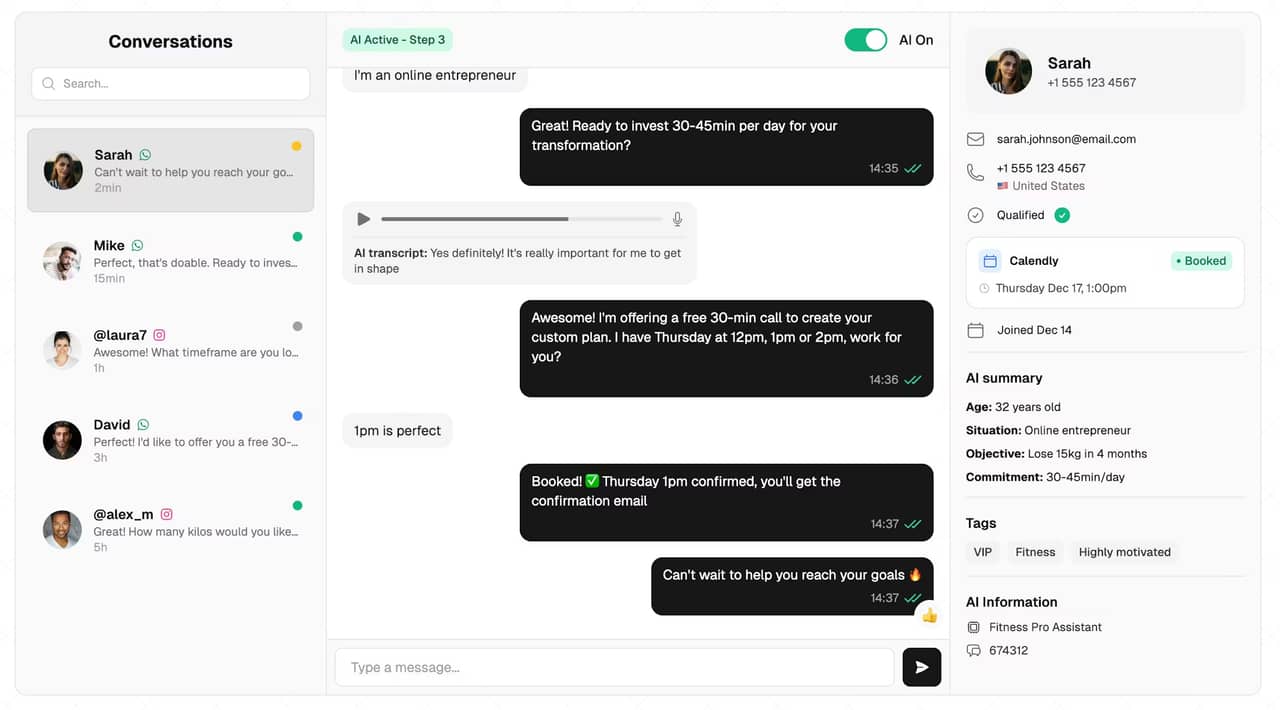
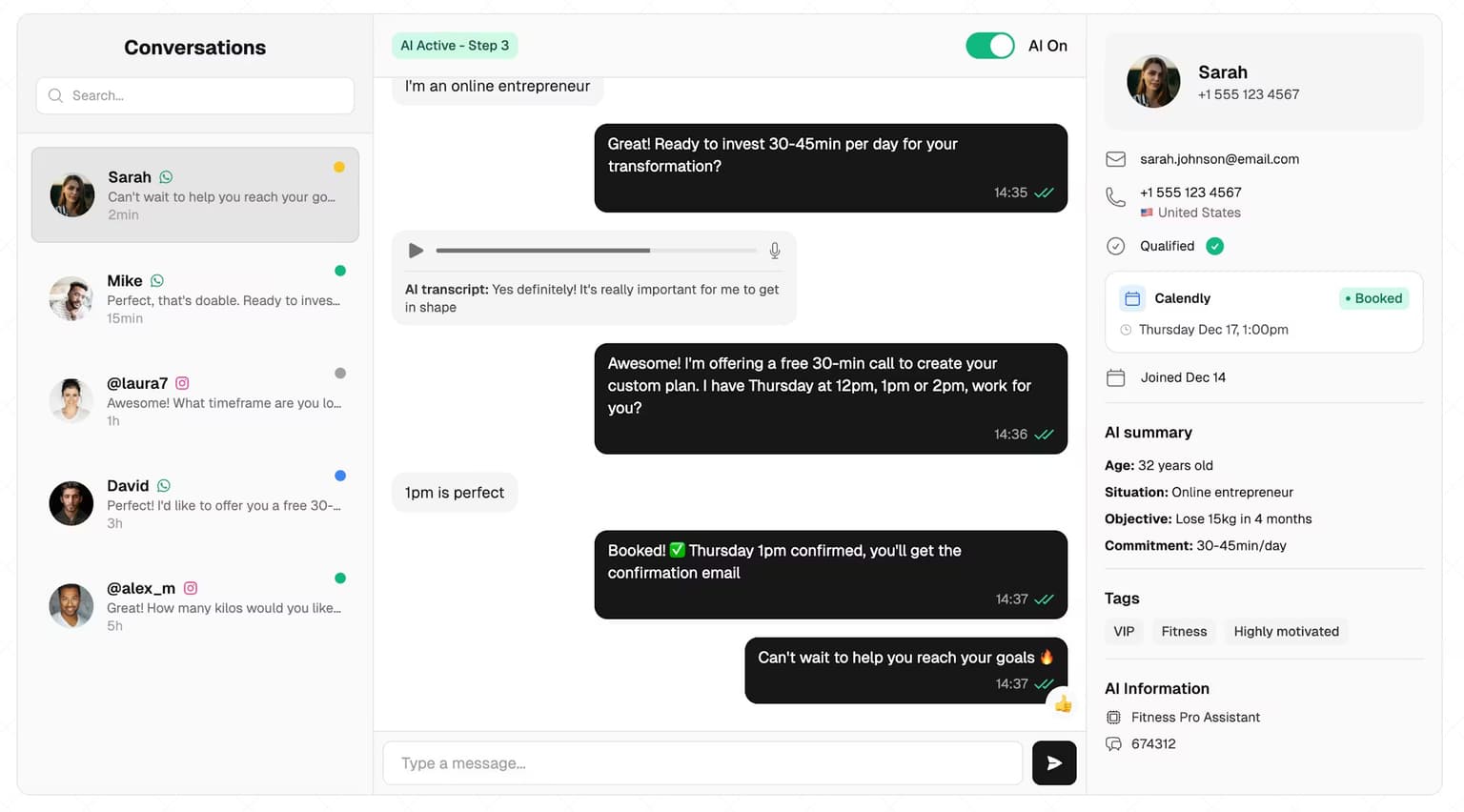
This is the gap an AI setter fills. SetSmart answers every Instagram and WhatsApp DM in seconds, including the "RESET" comment replies from your launch content, asks your qualifying questions in your tone of voice, follows up with people who go quiet before enrollment closes, and books qualified leads straight into your calendar through Calendly, Cal.com, iClosed, or GoHighLevel. If you are still choosing a calendar, our comparison of scheduling software for coaches shows which tools support booking inside the chat.
"I book 15 to 25 calls per week... without managing a single setter." Mathis Ladoué, Online Fitness Coach, 22.4K followers
To be clear about the boundary: the AI qualifies and books, it does not sell your group program in the DM. The enrollment decision happens on the call, coach to client, or through your own checkout for lower-priced seats. SetSmart's job is to make sure the people on your calendar are a real fit for the group, and that nobody who was ready to join slipped through the cracks during launch week.
Common group coaching mistakes
- Copying your 1:1 program onto Zoom. A group needs its own structure: a shared curriculum, hot seats, and between-session support. Ten mini 1:1 sessions in a row is exhausting for you and boring for everyone else.
- Making the group too big too soon. Big numbers look good on a launch post, but past about 12 members, attention per person drops fast. Start small and add seats when you have the system to support them.
- Pricing per call. Price the outcome. A $1,000 program that gets someone into their old jeans is cheap; "12 calls for $1,000" sounds expensive.
- Mixing very different levels. A complete beginner and someone who has dieted for 10 years will not get much from the same hot seat. Use the qualifying conversation to keep the group coherent.
- Launching with no warm list. If nobody has asked you about coaching in the last month, build demand first. A public launch to a cold audience usually ends with three members and a lot of self-doubt.
- No plan for after the program. Decide before week one what members can do next: a rolling membership, a second cohort, or a 1:1 upgrade. The best time to offer it is the last two weeks, when results are fresh.
FAQ
What is group coaching?
Group coaching is one coach working with several clients at once, usually 6 to 12 people, through a series of live sessions. Each member works toward their own version of a shared goal, and learns both from the coach and from watching the other members get coached. It differs from team coaching, which works with an existing team on one collective goal.
How much does group coaching cost?
Based on Heartbeat's October 2026 review of public sales pages, the middle half of group coaching programs cost between $553 and $1,650 per person, with a median of about $1,070. Health and fitness programs had a typical price of $1,000, with a range of $397 to $1,497. Hybrid programs that add private calls cost more than pure group cohorts.
How many people should be in a group coaching program?
Most coaches and coaching bodies recommend about 6 to 12 members. That is large enough for real peer learning and small enough for everyone to get hot-seat time. If you want the hours to count toward an ICF credential, keep the group at 15 or fewer people unless a co-coach is present.
Is group coaching as effective as 1:1 coaching?
It can be, when the members share a similar goal and the program is designed for a group rather than copied from 1:1. Co-Active describes group coaching as able to match individual coaching through peer learning and community. It is less effective when clients need deep personalization or private, sensitive conversations.
How do I start a group coaching program with no audience?
Coach a handful of people 1:1 first, even at a low price, so you learn which problems repeat and collect results. Then invite those clients and the people who engage with your content personally into a small first cohort. A group of three to five who get real results is the proof you need to fill the next one.
What is the group coaching model?
The term usually refers to the format of the program: a cohort that starts and ends together, a rolling monthly membership, a hybrid with private support, or an open drop-in group. Inside the sessions, many coaches use the GROUP model from Brown and Grant, a group version of the GROW model built around goals, reality, and options.
Designing a great group program is the easy part. Filling it, cohort after cohort, is where most coaches get stuck. SetSmart answers your Instagram and WhatsApp DMs in seconds, qualifies each lead the way you would, and books the ready ones straight onto your calendar. Free 7-day trial, then from $97/month, or see the full pricing.
Ready to automate your DMs?
Start your free 7-day trial and let AI handle your lead qualification 24/7.
Try SetSmart free