Discovery Call: The Coach's DM-to-Call Playbook (2026)

A discovery call is a short, structured sales conversation where a coach and a potential client decide, together, whether the coach's offer is the right fit. For online coaches, it is the single most important 20 to 30 minutes in the whole funnel: it is where a warm Instagram or WhatsApp DM becomes a paying, high-ticket client.
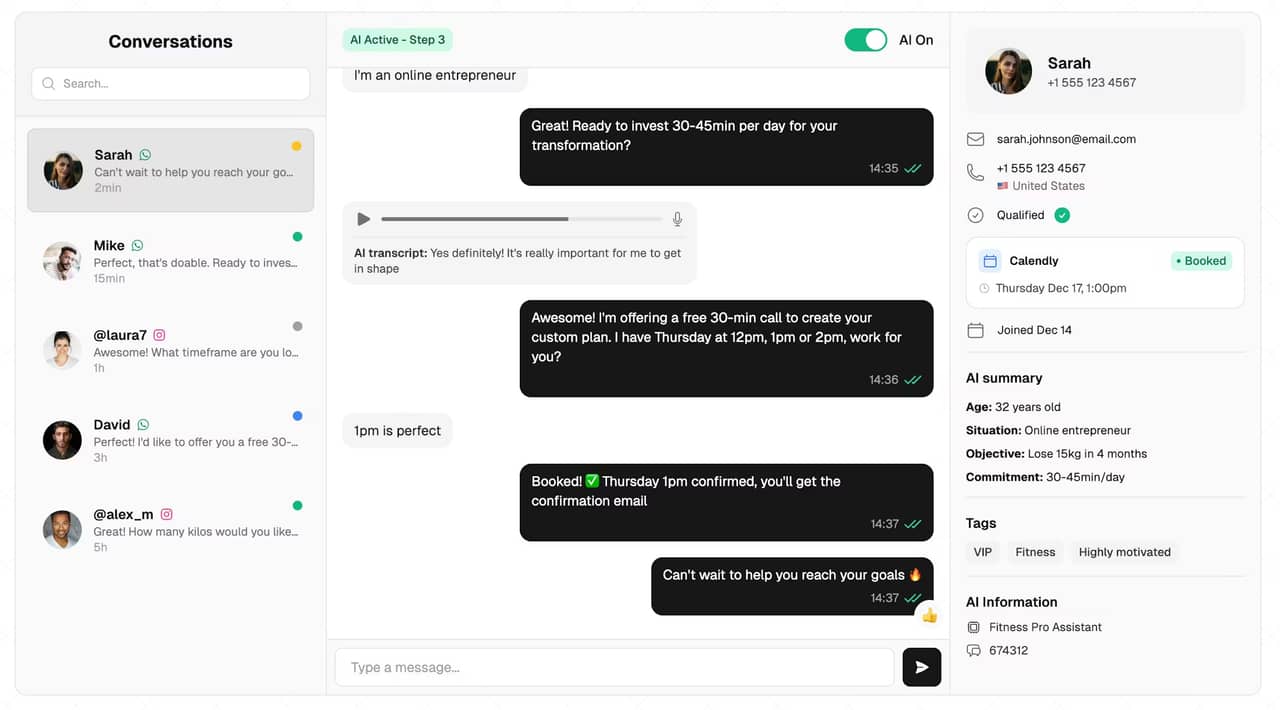
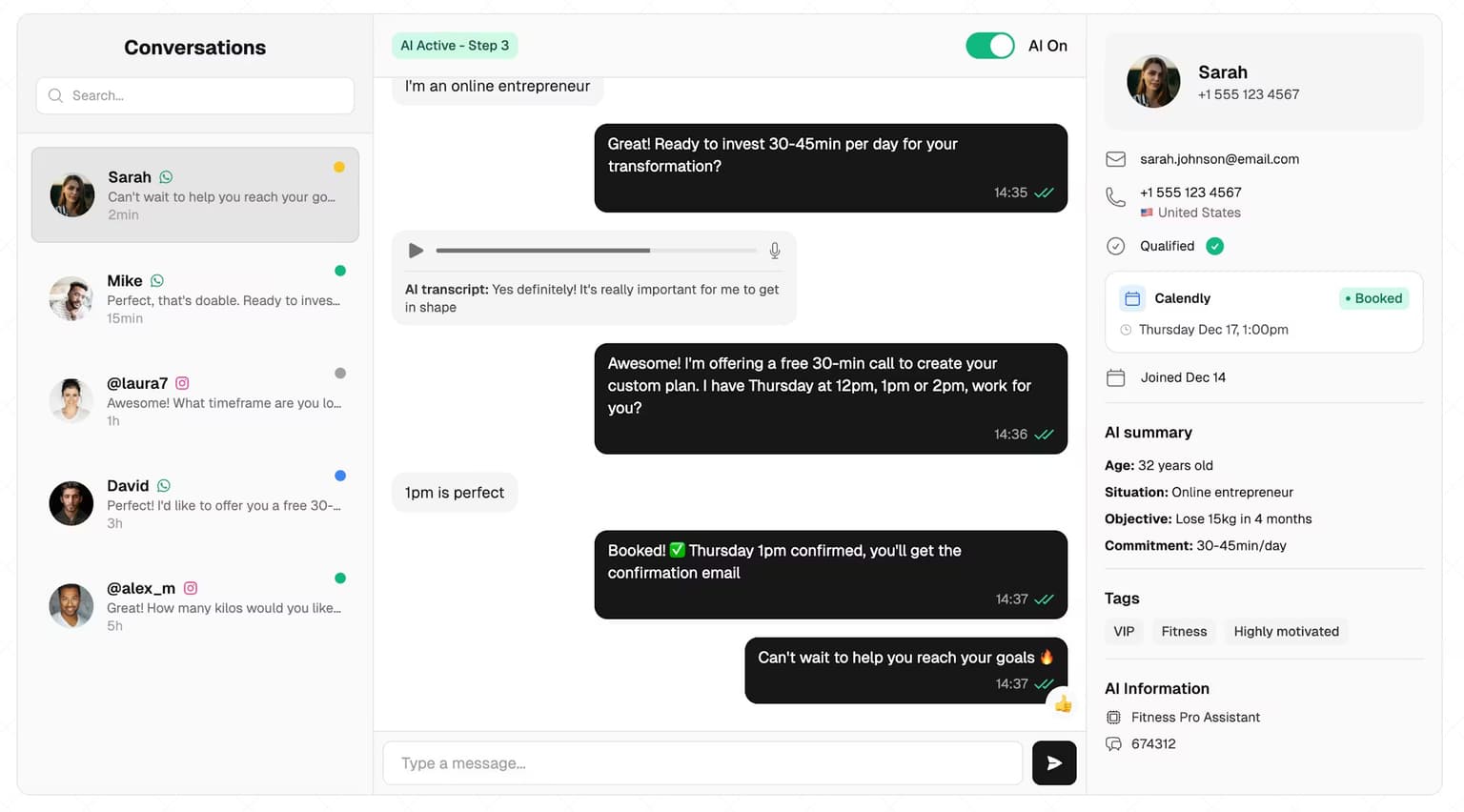
Here is the part most coaches get backwards. You do not close high-ticket offers inside the DM. The DM is where you qualify the lead and book the discovery call. The enrolment happens live, on that call, human to human. Treat those as two separate jobs and your calendar (and your revenue) changes fast.
This playbook covers the exact discovery call agenda, the questions that actually qualify a prospect, a word-for-word script you can adapt, and the DM-to-call system that keeps your calendar full. Everything here is built for the way coaches, creators, and info-product sellers actually sell in 2026: inbound conversations on Instagram and WhatsApp, not chasing strangers.
What is a discovery call?
A discovery call is a scheduled, one-to-one conversation between a service provider and a qualified prospect, held before any purchase, to uncover the prospect's situation, goals, and whether there is a genuine fit. In coaching, it is sometimes called a strategy call, a clarity call, a fit call, or simply "a call." The label does not matter. The job does: understand the person deeply enough that both of you can make an honest yes or no decision.
A discovery call is not a free coaching session, and it is not a pitch fest. It sits in the middle. You give enough value that the prospect leaves clearer than they arrived, and you gather enough information to know whether your offer can actually help them. When it is run well, the sale feels like the obvious next step rather than a hard push.
For a solo coach, the discovery call replaces the entire enterprise sales machine. There is no team of reps, no long procurement cycle. There is you, a warm lead who found you on Instagram, and half an hour to decide if you should work together. That simplicity is a gift, but only if you protect the call and fill it with the right people. Learning how to get coaching clients starts with getting more of the right prospects onto that calendar.
Why the discovery call is the only place you close
The most expensive mistake coaches make is trying to sell a $2,000 to $10,000 offer over text. It almost never works, and it burns the lead. High-ticket buying is emotional and high-trust. People need to hear your voice, feel understood, and ask their real questions before they hand over that kind of money. That happens on a call, not in a thread.
So the DM has exactly one goal: book the call. Everything you write in the inbox should move a good-fit prospect toward a scheduled slot, and politely filter out the people who are not ready. The heavy lifting of high-ticket closing happens live. If you want the full picture of how coaches package and price what they sell on that call, high-ticket coaching and coaching packages break down the offer side.
This split is why so many coaches now run a DM setter in front of their calendar. A setter (human or AI) handles the qualifying conversation and books the call, so the coach only ever talks to prospects who are a real fit. If you are new to the idea, what is a DM setter and the broader AI setter guide explain how the role works and where it fits in a creator funnel.
| Weak discovery call | Strong discovery call |
|---|---|
| Jumps straight into pitching the program | Spends most of the call understanding the prospect |
| Coach talks 70% of the time | Prospect talks 70% of the time |
| No agenda, wanders, runs long | Clear frame set in the first minute |
| Books anyone who will take a slot | Only books qualified, ready prospects |
| Ends with "let me know what you think" | Ends with a clear decision or next step |
The discovery call agenda: a 5-part structure
A discovery call should feel like a natural conversation, but under the hood it follows a repeatable structure. This is the agenda that consistently converts for coaches and consultants.
1. Frame the call (first 60 seconds)
Open by setting expectations: how long the call will run, what you will cover, and what happens at the end. A simple frame sounds like, "We have about 25 minutes. I want to understand where you are and where you want to get to, and if it makes sense I will walk you through how I could help. If it is not a fit, I will tell you honestly. Sound good?" This gives you permission to make an offer later and removes the awkwardness.
2. Diagnose the current situation
Spend the biggest chunk of the call here. Ask about where they are now, what they have already tried, and what it is costing them, in money, time, or stress, to stay stuck. Do not rush. The prospect should do most of the talking. Every answer is a piece of the case you will later make for your offer.
3. Define the desired outcome
Get them to paint the picture of what success looks like and by when. "If we were talking a year from now and you were thrilled, what would have changed?" The gap between their current situation and this outcome is the value of your offer. The wider and clearer the gap, the easier the enrolment.
4. Present the offer as the bridge
Only now do you talk about your program, and only in terms of the gap you just uncovered. Connect each part of your offer to something they said. This is not a feature dump. It is, "You told me X is the problem. Here is exactly how we solve X together." If you have mapped your high-ticket offer to the outcomes your avatar wants, this part almost writes itself.
5. Ask for the decision
End with a direct question, not a vague "let me know." Something like, "Based on everything we talked about, do you feel like this is the right next step for you?" Then stay quiet and let them answer. Handle objections calmly, confirm the details, and either enrol them or agree a concrete next step.
Discovery call questions that actually qualify
Great discovery calls are won on the quality of your questions. Weak questions get you surface-level answers and a lukewarm prospect. Strong, open questions get the prospect to sell themselves. Here are the coaching discovery call questions worth memorising, grouped by phase.
Situation questions
- What made you book this call today?
- Where are you right now with the problem?
- What have you already tried, and how did it go?
Problem and impact questions
- What is the hardest part of this for you right now?
- If nothing changes in the next six months, what does that look like?
- How is this affecting other areas of your life or business?
Outcome questions
- What would a great result look like for you?
- Why is now the right time to fix this?
- On a scale of one to ten, how committed are you to changing this?
Decision questions
- Is there anyone else involved in this decision?
- What would need to be true for you to say yes today?
- What is holding you back from getting started?
Notice that none of these are about your program. They are about the prospect. The same principle powers good lead qualification questions in the DM: the more precisely you understand someone, the easier it is to help them make a confident decision. Qualifying on the call is just a deeper version of the qualifying your setter already did in the inbox.
A discovery call script you can steal
Scripts are training wheels, not straitjackets. Use this discovery call script to internalise the flow, then make it sound like you. Anything in brackets is yours to fill in.
Open
"Hey name, great to finally talk. Thanks for booking. We have about 25 minutes. I want to really understand your situation, and if I think I can help I will show you how we could work together. If it is not a fit, I will say so, no pressure. That work for you?"
Diagnose
"Awesome. So tell me, what made you reach out about topic specifically? ... Got it. And how long has that been going on? ... What have you tried so far to fix it?"
Amplify
"That sounds frustrating. If you keep going like this for another year, where do you think you end up? ... And what would it mean for you to finally solve it?"
Transition
"Okay, based on everything you have shared, I think I can genuinely help. Can I walk you through how that would look?"
Present
"So here is what we would do. Because you said their problem, step one is solution. Then, to get you to their outcome, we next part. Throughout, you get support/accountability."
Close
"How does that sound to you? ... Great. Based on what we covered, do you feel like this is the right next step? ... Perfect, let me tell you how to get started."
If you want more inbox-level language to pair with this, the Instagram DM scripts library gives you the openers and booking messages that get prospects onto the call in the first place, and how to sell on Instagram covers the wider selling motion.
How to book more discovery calls from your DMs
A perfect script is worthless if your calendar is empty. The real constraint for most coaches is not call performance, it is call volume. This is where the DM-to-call system matters, and where speed and follow-up quietly decide your month.
Speed first. When someone raises their hand in your DMs, the window to book them is short. Reply in minutes, not hours. The lead response time statistics are brutal on this point: attention decays fast, and the first responder usually wins the call. If you are answering DMs between clients and workouts, you are already too slow.
Follow-up second. Most conversations stall before they ever reach a booking, and most coaches quit after one message. That is money left on the table. In our analysis of 828K real DM conversations, a single well-timed follow-up more than doubled booked calls (+106% among engaged leads). One nudge. Double the calendar. Yet almost nobody sends it consistently by hand.
This is exactly why coaches put an AI setter in front of their calendar. It answers every DM in seconds, qualifies the lead with the kind of questions above, sends the follow-ups you forget, and books the discovery call straight into your calendar, on Instagram or through WhatsApp automation. You keep the human close; the machine keeps the pipeline full. For a deeper look at building that inbound engine, lead generation for coaches and Instagram DM marketing map the whole system.
If you would rather outsource the booking layer than automate it, appointment setting services and the appointment setter role explainer cover the human option and its trade-offs.
Discovery call mistakes that kill your close rate
Even with a solid agenda, a few habits quietly wreck conversion. Avoid these.
- Talking too much. If you are talking more than the prospect, you are pitching, not discovering. Ask, then listen.
- Pitching before you diagnose. Presenting your offer before you understand the gap makes it generic. Earn the right to pitch by understanding first.
- Booking unqualified people. A full calendar of bad-fit calls is worse than a lighter calendar of great ones. Let your setter and your lead generation for coaches system filter hard before the call.
- Ending vaguely. "Let me know" is where deals go to die. Always end with a clear question and a concrete next step.
- No follow-up after the call. Not everyone says yes on the spot. A short, respectful follow-up sequence recovers a meaningful share of "let me think about it" prospects, the same way AI lead follow-up recovers stalled DMs.
Nail these, keep your calendar full with qualified prospects, and the discovery call stops feeling like selling. It starts feeling like helping the right person make an obvious decision.
FAQ
What is a discovery call?
A discovery call is a short, scheduled conversation between a coach or consultant and a qualified prospect, held before any purchase, to understand the prospect's situation and goals and decide whether there is a genuine fit. For online coaches it is where a warm Instagram or WhatsApp DM becomes a paying client.
How long should a discovery call be?
Most effective coaching discovery calls run 20 to 30 minutes. That is long enough to diagnose the situation, define the outcome, and present your offer, but short enough to keep energy high and respect the prospect's time. Set the length in your opening frame so there are no surprises.
How do you prepare for a discovery call?
Review anything the prospect shared in the DM, know the outcome your offer delivers, and have your agenda and key questions ready. Beyond that, the best preparation is to only take calls with pre-qualified prospects, which is what a good DM setter or qualifying conversation handles before the call is ever booked.
What is the difference between a discovery call and a sales call?
They are essentially the same event with different emphasis. A discovery call leads with understanding the prospect and only presents the offer once the fit is clear, while a hard sales call leads with the pitch. For coaches selling high-ticket, the discovery-first approach converts far better because the buying decision is built on trust.
Should coaches close in the DM or on a call?
Coaches should qualify and book the call in the DM, then close on the call. High-ticket offers are rarely sold over text because buyers need voice, trust, and space to ask questions. Use the inbox to filter and schedule, and reserve the enrolment conversation for the live discovery call.
How do I get more discovery calls booked?
Reply to DMs fast, follow up consistently, and only pitch the call to qualified prospects. Because speed and follow-up are hard to do by hand at volume, many coaches use an AI setter to answer instantly, qualify, follow up, and book calls automatically on Instagram and WhatsApp.
SetSmart is the AI setter that qualifies your Instagram and WhatsApp DMs and books discovery calls straight into your calendar, so you only ever hop on the phone with prospects who are a real fit. Start with a free 7-day trial, then $97/month for the Pro plan (1,000 messages included).
Ready to automate your DMs?
Start your free 7-day trial and let AI handle your lead qualification 24/7.
Try SetSmart free