What Is High Ticket Sales? The 2026 DM Playbook

High ticket sales is the model behind most premium coaching, consulting, and agency businesses: instead of selling a cheap product to thousands of people, you sell a high-value offer, usually $2,000 or more, to a small number of the right buyers. The math is friendlier, the clients are more committed, and the whole thing runs on conversations, most of them starting in Instagram and WhatsApp DMs.
If you searched "what is high ticket sales" you probably found a wall of hype, a few "is this a scam?" threads, and very little on the part that actually matters: the system that turns interest into booked calls and booked calls into paying clients. This guide fixes that. We will define high ticket sales plainly, show how the sales motion differs from low ticket, cover real examples by niche, and explain exactly where an AI setter fits so your calendar fills without you living in your inbox.
What is high ticket sales?
High ticket sales is the process of selling premium-priced offers, typically starting around $2,000 and running to $25,000 or more, that a buyer commits to after a real conversation rather than an impulse click. The "high ticket" part is not about charging more for the sake of it. It is about pricing for an outcome the buyer badly wants, then guiding them to a confident yes through a human sales process.
Because the price is high, nobody buys from a link in a bio. A $47 ebook can sell itself on a sales page. A $5,000 program cannot. The buyer has questions, doubts, and a real decision to make, so the sale happens through dialogue: a conversation that qualifies them, a call that builds trust, and an offer that fits their situation. That single fact shapes everything about how high ticket sales works.
In practice, high ticket sales splits into two jobs. The first is setting: starting conversations, qualifying interest, and booking the call. The second is closing: running the sales call, presenting the offer, and asking for the decision. Understanding that split is the key to the whole model, and it is where most beginners get confused.
High ticket sales vs low ticket sales
The clearest way to understand high ticket sales is to compare it to the low ticket model most people already know. They are not the same business with a different price tag. They are different motions with different bottlenecks.
| Dimension | Low ticket | High ticket |
|---|---|---|
| Typical price | $7 to $500 | $2,000 to $25,000+ |
| How it sells | Sales page, checkout, ads | Conversation, then a booked call |
| Volume needed | Hundreds of sales a month | A handful of clients a month |
| Main bottleneck | Traffic and conversion rate | Qualified conversations and calls |
| Buyer commitment | Low, easy refund | High, invested in the result |
The takeaway is simple. Low ticket is a traffic game: you need a lot of eyeballs and a page that converts. High ticket is a conversation game: you need fewer people, but each one needs a genuine back-and-forth before they buy. If your offer is $5,000, you need roughly two clients a month to clear six figures a year. If your offer is a $97 course, you need dozens of sales every single month plus the traffic to feed them. For a solo coach or creator with a few thousand engaged followers, the premium path is usually the faster route to a stable income, which is why so many move to a high ticket offer.
What do you actually sell in high ticket sales?
A common question from beginners is what people actually sell for these prices. The answer is almost always a transformation, not a thing. High ticket offers package a method, direct access, and accountability into a result the buyer cannot easily get on their own. Here are the categories that reliably support premium pricing for the coach, creator, and agency avatar.
| Niche | Example offer | Typical price range |
|---|---|---|
| Weight loss & nutrition | 12-week personalized coaching to lose 20-40 lbs | $2,000 - $6,000 |
| Online fitness coaching | Custom training and habit coaching over a block | $2,500 - $5,000 |
| Business & sales coaching | A program to hit a revenue or client goal | $3,000 - $15,000 |
| Agencies (SMMA) | Done-for-you marketing on a monthly retainer | $2,000 - $10,000/mo |
| Real estate & consulting | Advisory or coaching tied to a large decision | $3,000 - $20,000 |
Notice the pattern. Each offer pairs a painful, expensive problem with a buyer who can pay and a result you can point to. You do not need a huge market to make high ticket sales work. You need a specific person with a problem they are motivated to solve now. Coaches building this out for the first time can start with how to get coaching clients and then design the offer around one clear transformation.
How the high ticket sales process works
Direct answer: high ticket sales runs on a three-step motion, set the call, run the call, follow up the rest. Skip a step or try to collapse the whole thing into a single DM and conversion falls off a cliff. Here is the full sequence.
1. Content starts the conversation
Everything begins with attention that leads to a conversation. Posts, reels, and stories exist to make the right person curious enough to reach out or reply. A story with a clear prompt, a post with a comment trigger, or a simple "DM me the word PLAN" turns passive viewers into inbound conversations. This is the top of the funnel, and it is why Instagram DM automation matters so much for high ticket sellers.
2. The setter qualifies and books
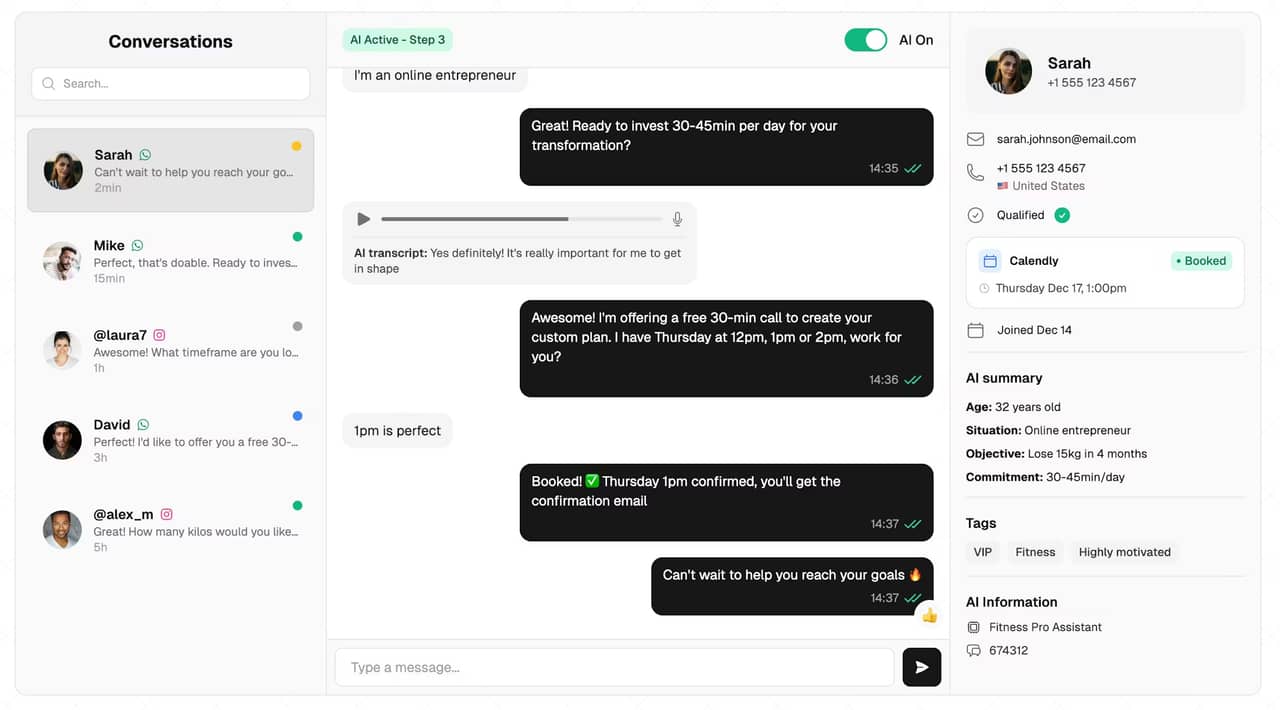
Once someone is in your DMs, the job is to qualify them and book a call, not to pitch. Qualifying means confirming the person has the problem you solve, the ability to invest, and the intent to act now. A few good questions do most of the work. This setting role is the engine of high ticket sales, and it is exactly what a DM setter does: separate serious buyers from window shoppers and get the real ones onto the calendar for a discovery call.
3. The closer runs the call
The sale happens live. On the call, the closer understands the buyer's situation, presents the offer in the context of their goals, handles objections, and asks for the decision. This is where premium buyers actually commit, and it is a skill worth learning properly if you want to sell at the top end. Our high ticket closing guide breaks down the setter-closer model, real income ranges, and the scripts that work.
4. Follow-up captures the rest
Most leads do not book or buy on the first touch. They get busy, they hesitate, they need one more nudge. The follow-up is the single highest-leverage habit in the entire process and the one most sellers skip. Reaching back out to quiet leads, on Instagram or WhatsApp, recovers deals that would otherwise die in the inbox.
Why high ticket sales lives and dies on the conversation
Here is the uncomfortable truth about high ticket sales: the offer is rarely the problem. The bottleneck is the number of conversations you can personally start, qualify, and follow up while also delivering the work. Every hour you spend chasing replies is an hour you are not on a paid call.
Speed and depth are what separate the sellers who fill their calendars from the ones who do not. Our analysis of 828K DM conversations found that a single follow-up message more than doubles booked calls, a +106% lift, yet most people never send it. The reason is human: doing all of that by hand, fast, every day, for every lead, is simply more than a solo operator can sustain. Interest is perishable. A lead who waits hours for a reply often books with someone faster.
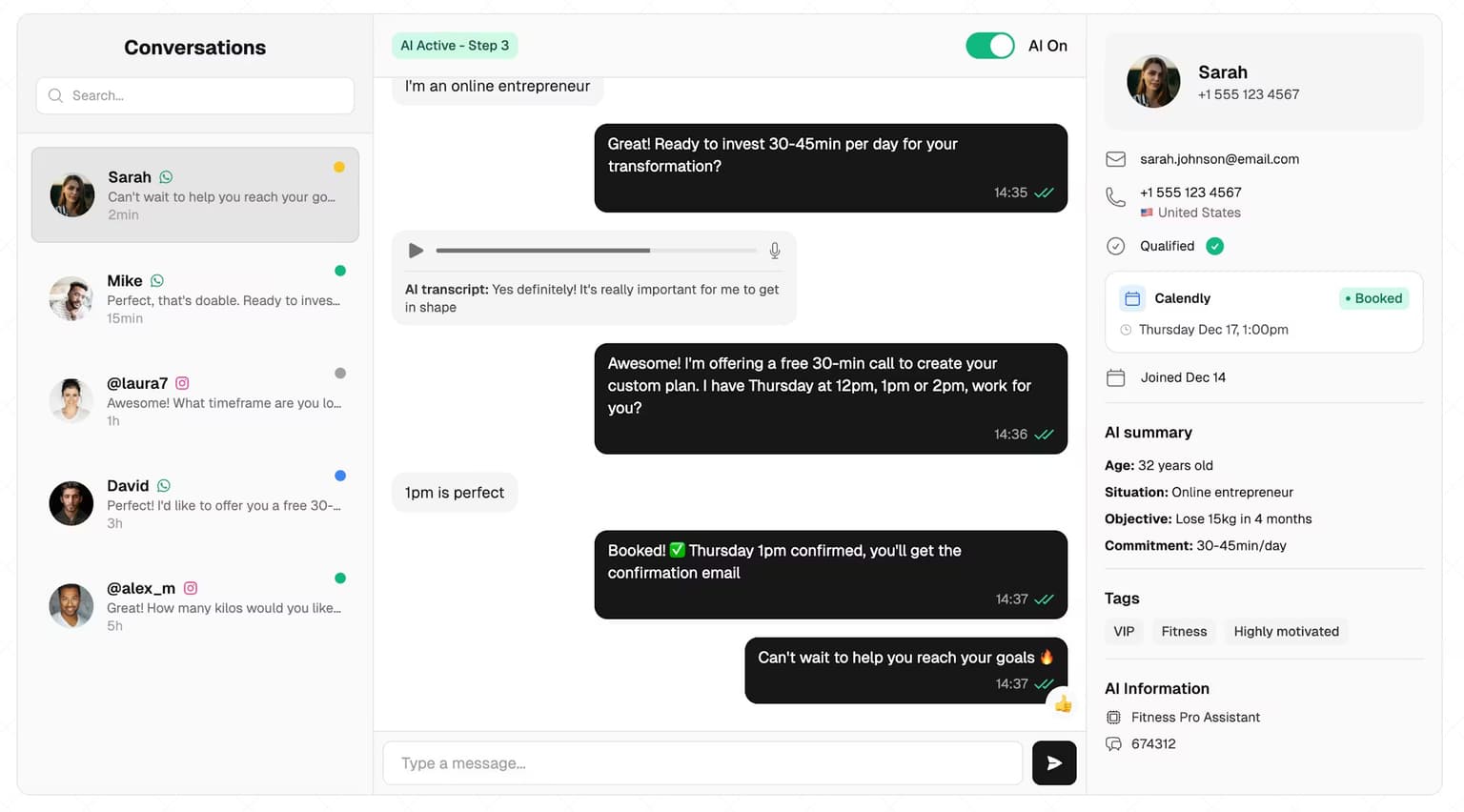
This is where an AI setter changes the math. Instead of you personally answering every DM, the AI holds a real conversation, qualifies the lead against your criteria, books the sales call directly in the chat, and follows up automatically when someone goes quiet. It responds in seconds instead of hours, works around the clock, and never forgets a follow-up. The close still belongs to you on the call. The setter just makes sure the calls are there to close. If you are comparing options, our roundup of the best AI appointment setters is a good starting point, and coaches specifically can see the full system in lead generation for coaches.
To be clear about what this does and does not do: an AI setter qualifies and books, it does not close high ticket deals in the DM. Premium buyers decide on a call with a human, and trying to sell a $5,000 program straight from a chat almost always backfires. The AI fills the calendar; you close.
Is high ticket sales legit or a scam?
High ticket sales is a legitimate, decades-old business model. Consultants, agencies, and coaches have always sold premium services through conversations and calls. The reason "is high ticket sales a scam?" is a top search is that the label attracts hype, especially the "become a remote closer and make $10k a month" pitch that floods social media. Agencies now productise the setting part of that process with AI; see how to start an AI agency.
The model is real. Some of the programs teaching it are not. A legitimate high ticket business has a specific promise, a clear method, honest proof from past clients, and an offer that actually produces the outcome. Red flags are the opposite: vague promises, pressure to buy on the spot, income claims with no substance, and a "system" that is really just a course selling the dream of selling. Judge the offer, not the price tag.
For the coach or creator side of the equation, the question is not whether high ticket sales works. It plainly does. The question is whether you have a reliable way to fill your calendar with qualified sales calls, because that is the part that actually decides whether you eat.
How to get into high ticket sales
There are two doors into high ticket sales, and they are worth separating clearly.
The first is selling your own offer. If you are a coach, consultant, or agency owner, you package a premium transformation and build the DM-to-call system to sell it. Start with the offer, then the content that starts conversations, then the setting and closing motion above. The high ticket coaching playbook walks through this end to end for the online coach avatar.
The second is working as a setter or closer for someone else. Setting is the common entry point: you qualify leads and book calls for an established business, which is a skill you can learn quickly and a role that is in constant demand. From there, many people move into closing. If that path interests you, our guide to becoming an appointment setter covers what the role involves and how the pay works.
Whichever door you take, the fundamentals are the same. High ticket sales rewards fast, consistent, high-quality conversations. Master the conversation, and the price on the offer stops being scary. It becomes the reason the whole model works.
FAQ
What is high ticket sales in simple terms?
High ticket sales means selling premium offers, usually $2,000 or more, that buyers commit to after a real conversation rather than an impulse purchase. Instead of a sales page and a checkout, the sale happens through a qualifying conversation and a booked call where a human presents the offer and asks for the decision.
What is considered high ticket?
Most people treat $2,000 and up as high ticket, with premium coaching and consulting offers commonly landing between $3,000 and $25,000. There is no official line, but the practical marker is a price high enough that buyers will not purchase on impulse and need a conversation first.
What do you sell in high ticket sales?
You sell a transformation, not a product: coaching programs, consulting, done-for-you agency services, and advisory work tied to an outcome the buyer badly wants. The common thread is a painful, expensive problem paired with a buyer who can pay and a result you can prove.
How much can you make in high ticket sales?
Income depends on the offer price, your conversion rate, and volume. Selling your own $5,000 offer, two clients a month is a six-figure year. As a hired setter or closer you typically earn a base plus commission, and our high ticket closing guide covers realistic income ranges for both roles.
Is high ticket sales worth it?
For coaches, creators, and agencies, high ticket sales is usually worth it because a small number of committed clients is easier to serve and more profitable than hundreds of cheap buyers. The catch is demand: the model only works if you can reliably fill your calendar with qualified sales calls, which is the part most people underestimate.
Can you do high ticket sales on Instagram?
Yes, but you sell through Instagram, not inside a single DM. Content starts the conversation, the DM qualifies and books the call, and the offer is presented live on that call. An AI setter can run the qualifying and booking automatically so your Instagram DMs turn into calendar bookings instead of a full-time job.
Ready to automate your DMs?
Start your free 7-day trial and let AI handle your lead qualification 24/7.
Try SetSmart free