What Is a Remote Closer? Salary & Truth (2026)

A remote closer is a salesperson who closes high-ticket offers entirely over the phone or Zoom, from anywhere. They do not knock on doors and they do not run the outreach. They take booked calls with warm, pre-qualified prospects and turn those conversations into paying clients. In the creator economy, the role sits at the end of a very specific machine: a coach or course creator generates attention, an appointment setter qualifies interest in the DMs and books the call, and the closer takes it from there.
If you have seen "remote closer" ads promising $10,000 per month working from your laptop, you are right to be skeptical. Some of it is real, and a lot of it is hype. This guide breaks down what a remote closer actually does, what the pay really looks like, whether the role is legit, how to become one, and, if you run a coaching business, when it makes sense to hire one and how to keep their calendar full.
What Is a Remote Closer?
A remote closer is a commission-based sales professional who closes deals on scheduled calls instead of in person. "Remote" means they work from home; "closer" means their one job is to get a qualified prospect to say yes and pay. They are the last human touch before the sale.
The role exists because high-ticket offers - coaching programs, masterminds, done-for-you services, and premium courses priced from roughly $2,000 to $25,000 - almost never sell from a checkout button. Buyers spending that much want a conversation. That conversation is the close, and the person running it is the closer.
Crucially, a remote closer is not a lead generator. In a healthy setup, they are handed a calendar of booked calls with people who already raised their hand. That is what separates a real remote closing role from a glorified prospecting job dressed up with a nicer title. The closer's leverage comes from focusing 100% of their energy on the call itself, which is exactly why the booking layer in front of them matters so much.
Remote Closer vs. Appointment Setter: Who Does What
The single most common confusion is between the setter and the closer. They are two different roles in the same pipeline, and understanding the split is the key to understanding remote closing at all. The setter fills the calendar; the closer empties it into revenue. If you want the full breakdown of the booking side, our guide on what a DM setter is covers it in depth.
| Aspect | Appointment Setter | Remote Closer |
|---|---|---|
| Main job | Qualify leads and book calls | Close booked calls into sales |
| Where they work | Instagram, WhatsApp, Messenger DMs | Phone and Zoom calls |
| Daily volume | 30 to 100+ conversations | 3 to 10 calls |
| Pay model | Small base plus per-booked-call or small commission | Larger commission per closed deal |
| Skill focus | Speed, follow-up, qualification | Discovery, framing, objection handling |
Both roles are part of the same setter-closer model that powers most online coaching businesses. The setter is a volume game measured in conversations and booked calls; closing is a depth game measured in close rate and cash collected. A closer with an empty calendar earns nothing, no matter how good they are, which is why the two roles rise and fall together.
How Remote Closing Actually Works
Remote closing works because of one structural truth: high-ticket buyers convert far better in a live conversation than in any funnel. The mechanics are simple to describe and hard to master.
First, a prospect discovers the coach through content, ads, or referrals. Second, they enter a conversation - usually in the DMs - where a setter (human or AI) qualifies them and books a call. Third, the closer runs that call using a repeatable framework: build rapport, run discovery to understand the prospect's real situation, diagnose the gap between where they are and where they want to be, present the offer as the bridge, and handle objections until the prospect either buys or clearly opts out.
The reason this is a genuinely remote job is that none of it requires being physically present. The call happens over Zoom, the payment is collected with a link, and onboarding is handed back to the coach's team. A skilled closer can run calls for a coach in another country and never meet them in person.
What makes or breaks a remote closer is the quality of the calls on the calendar. A call with a prospect who is qualified, informed, and expecting the conversation converts several times better than a call with someone who barely remembers booking. This is why speed and qualification upstream matter so much - and why the lead response time statistics that govern the booking layer directly shape a closer's paycheck. Slow, sloppy booking hands the closer cold calls; fast, sharp booking hands them warm ones.
Remote Closer Salary: What the Pay Really Looks Like
Here is the honest answer most "remote closing" ads avoid: remote closers are almost always paid on commission, not salary. The "salary" people search for is really expected monthly earnings, and it swings enormously based on the offer price, the close rate, and the number of qualified calls.
The standard commission is 10% to 20% of the deal value. On a $5,000 offer, that is $500 to $1,000 per closed client. Some businesses pay a small base plus a lower commission; most creator-economy closers are pure commission.
Realistic monthly earnings look roughly like this:
- Beginner (part-time, learning): often $0 to $2,000 per month while building a close rate and finding a reliable offer.
- Competent full-time closer: commonly $3,000 to $8,000 per month with a steady calendar.
- Strong closer on a good offer: $8,000 to $15,000 per month.
- Top closers on premium offers with full calendars: $15,000+ per month.
Notice the pattern: earnings are a function of deal size multiplied by close rate multiplied by number of calls. A closer can only control the first two. The third - how many qualified calls land on the calendar - is set by the coach's marketing and their booking system. This is the uncomfortable truth of the role: the best closer in the world starves on an empty calendar. That dependency is exactly why closers should care about who, or what, is setting their appointments.
For a deeper look at deal sizes and where the money sits across the pipeline, see our breakdown of high-ticket sales.
Is Remote Closing Legit or a Scam?
Remote closing is a legitimate job. Businesses genuinely need people to close high-ticket offers, and skilled closers genuinely earn well. But the "remote closing" niche online is crowded with courses selling a dream, so the skepticism in the search results is earned.
Here is how to tell the real thing from the trap:
Green flags (legit): you close for a real business with a real offer and real testimonials; the calls are booked by the company; you are paid a clear commission on collected cash; and you can talk to other closers already on the team.
Red flags (avoid): you have to pay thousands for a "certification" before you can close anything; you are expected to generate your own leads through cold outreach while being called a "closer"; the offer you would sell is itself a get-rich-quick closing course; or the pay structure is vague. If the main product being sold is the idea of remote closing, you are the customer, not the closer.
The role is real. The industry around teaching it is where most of the scams live. Judge any opportunity by the underlying offer you would be closing and by whether the calendar is actually filled for you.
How to Become a Remote Closer
If you want to break into remote closing, the path is less about buying a course and more about proving you can hold a sales conversation. Here is a realistic sequence.
- Pick one niche and learn the offer. High-ticket coaching and courses are the most accessible entry point. Learn the transformation, the price, and the objections cold.
- Master a call framework. Discovery, diagnosis, offer, objection handling. The framework matters more than a "closing script."
- Find one offer to close for. Approach coaches and creators who already run ads and book calls. You want a business with an existing calendar, not one you have to fill yourself.
- Make sure the calls get booked for you. Partner with a setter or an AI appointment setter so your calendar stays full of pre-qualified prospects. A closer earns on the call, not by chasing leads.
- Track and refine. Record calls, review your close rate weekly, and improve one objection at a time.
The skills that actually separate top closers are emotional control, genuine curiosity on discovery, and the discipline to follow up. None of them can be bought; all of them can be built with reps. If you are coming from the booking side, our guides on appointment setting services and what an appointment setter does show how setters often graduate into closing.
For Coaches: When to Hire a Remote Closer
If you are a coach or creator, the question is not "is remote closing legit" but "do I need a closer yet, and how do I keep them busy." Here is the decision.
Hire a closer when: you are consistently booking more qualified calls than you can personally take, your offer is above roughly $2,000, and you are losing revenue simply because you cannot be on every call. A good closer buys back your time and usually lifts your close rate above your own, because closing is all they do.
Do not hire a closer when: your calendar is not yet full of qualified calls. Bringing on a commission closer and handing them three lukewarm calls a week is the fastest way to lose a good one. Fix the booking engine first. If you are still early, our guide on getting coaching clients and the fundamentals of high-ticket coaching will get your pipeline to the point where a closer is worth it.
Pay a closer 10% to 20% of collected cash, give them detailed context on every prospect before the call, and protect their calendar so they only ever talk to qualified people. The closer's output is entirely gated by the quality and quantity of appointments you feed them. That is a booking problem, not a closing problem - and it is the one most coaches get wrong.
How AI Appointment Setting Feeds Your Closer a Full Calendar
The bottleneck in almost every remote closing setup is not the closer. It is the calendar. Human setters are expensive, work limited hours, and respond slowly, which means qualified prospects go cold before a call is ever booked. Speed is everything: the faster a lead is engaged and qualified, the more likely they are to book and show up.
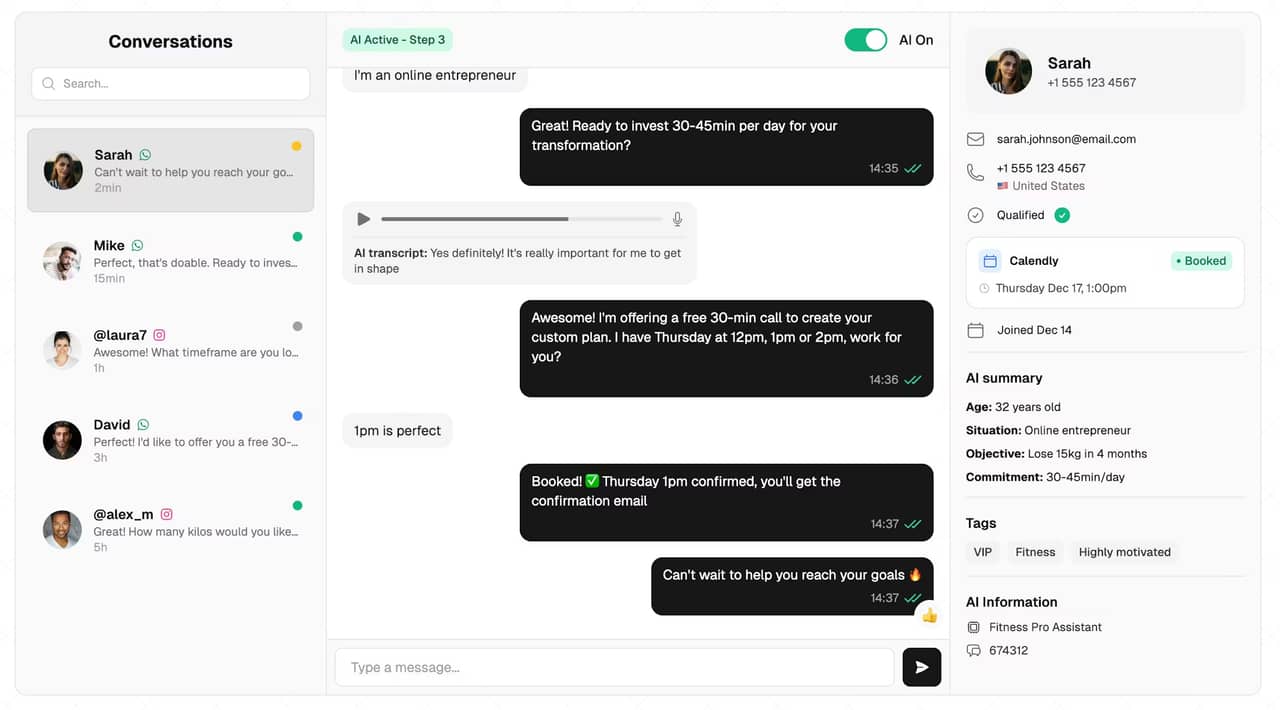
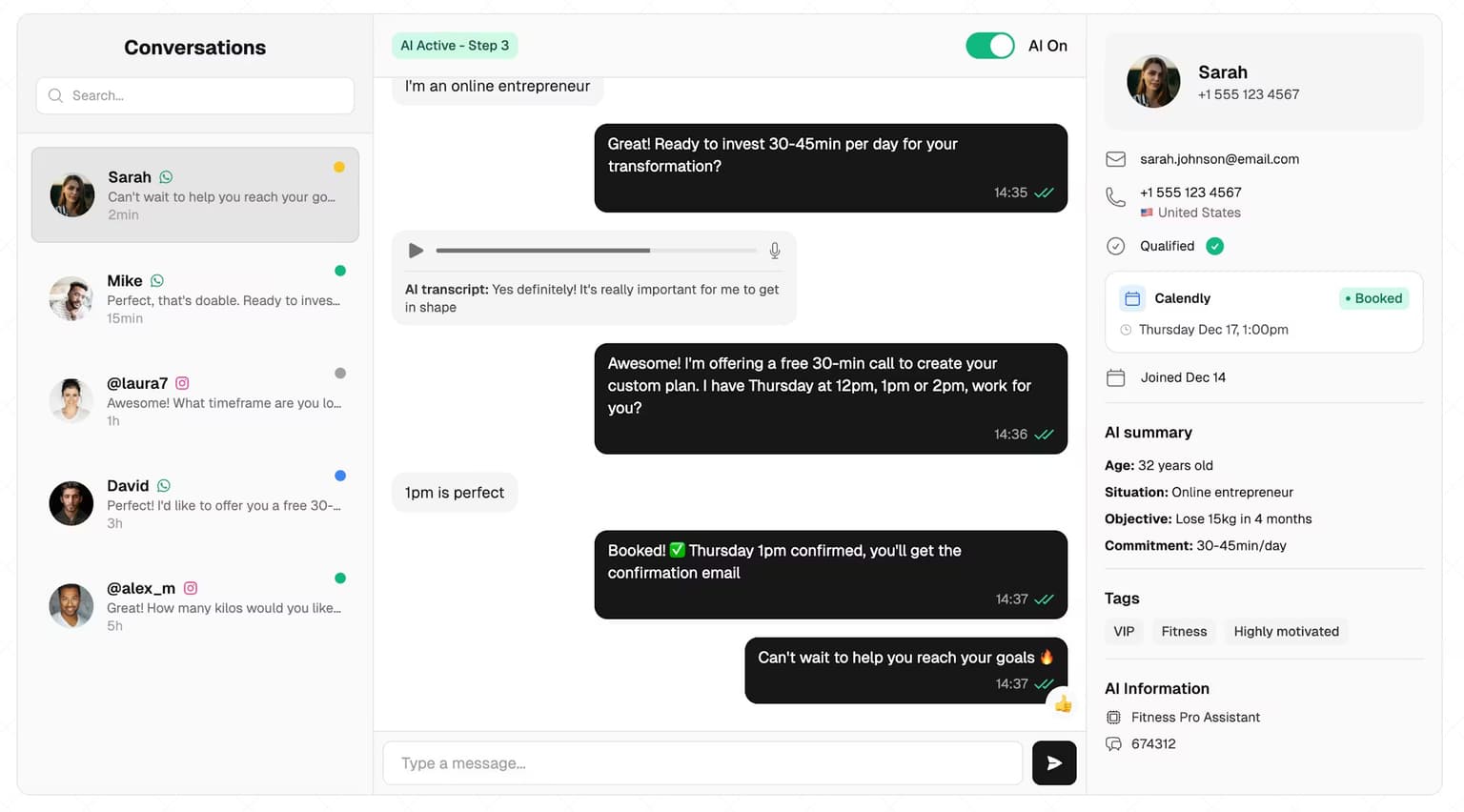
This is where an AI setter changes the math. Instead of paying one to three human setters to fill a single closer's calendar, an AI sales assistant qualifies and books directly inside Instagram DM automation and WhatsApp automation, around the clock, in seconds. It never sleeps, never forgets to follow up, and hands the closer full context on every prospect before the call.
The follow-up piece is where most calendars quietly leak. In our analysis of 828K DM conversations, a single follow-up more than doubled booked calls (a +106% lift among engaged leads) - and that is exactly the extra volume a closer needs to earn well. You can read the full DM conversation research for the underlying numbers.
SetSmart is built to be that booking layer. It qualifies leads by message and fills your closer's calendar with pre-qualified sales calls, so the human on the call spends their time closing instead of chasing. Importantly, SetSmart books the call; it does not replace it. The close stays a human conversation - the AI just makes sure that conversation happens with the right person at the right time. Coaches comparing tools can see how it stacks up in our roundup of the best AI setters.
Whether you want to become a remote closer or you are a coach ready to hire one, the model works the same way: the close is a human skill, but the calendar in front of it is a system. Fix the system and the closer takes care of the rest. Free 7-day trial, then from $97 per month including 1,000 messages.
FAQ
What does a remote closer actually do?
A remote closer takes scheduled calls with warm, pre-qualified prospects and closes them into paying clients over the phone or Zoom. They do not generate leads or run outreach; they focus entirely on the sales conversation and objection handling on calls that a setter or booking system has already filled.
How much does a remote closer make?
Remote closers are almost always paid on commission, typically 10% to 20% of the deal value. Realistic earnings run from $0 to $2,000 per month while learning, $3,000 to $8,000 per month for a competent full-time closer with a steady calendar, and $15,000+ per month for top closers on premium offers with full calendars.
Is remote closing legit or a scam?
Remote closing itself is a legitimate job, but the industry that teaches it is full of hype. It is legit when you close a real offer for a real business, the calls are booked for you, and you are paid on collected cash. It is a trap when you must pay thousands for a "certification," generate your own leads through cold outreach, or the only product is a closing course.
Is it hard to become a remote closer?
Getting started is accessible - you do not need a degree - but earning consistently is hard because it depends on both your close rate and a full calendar of qualified calls. The skills (discovery, framing, objection handling, follow-up) take reps to build, and your income is capped by how many good appointments you get.
What is the difference between a remote closer and an appointment setter?
An appointment setter qualifies leads and books calls, usually by message in Instagram, WhatsApp, or Messenger DMs. A remote closer takes those booked calls and closes the sale. The setter fills the calendar; the closer converts it into revenue. They are two roles in the same setter-closer pipeline.
Do I need a remote closer for my coaching business?
Hire a closer once you are consistently booking more qualified calls than you can personally take and your offer is above roughly $2,000. If your calendar is not yet full, fix the booking engine first - an AI setter that qualifies and books calls will make a closer worth hiring, and without it even a great closer will sit idle.
Ready to automate your DMs?
Start your free 7-day trial and let AI handle your lead qualification 24/7.
Try SetSmart free