WhatsApp Check Marks: What Every Tick Means (2026)

The WhatsApp check marks are the small ticks that appear under every message you send. One grey tick means the message left your phone. Two grey ticks mean it reached the other person's device. Two blue ticks mean they opened the chat and saw it. A little clock means it has not sent yet. That is the whole system in four states, and once you can read it at a glance, WhatsApp stops feeling like a guessing game.
But the ticks tell a bigger story than "sent" or "read," especially if you run sales conversations on WhatsApp. A message stuck on one tick can mean a dead phone, a blocked number, or a wrong contact. Two blue ticks with no reply is a very different signal from two grey ticks that never turned blue. For a coach, creator, or agency booking calls in the DM, learning to read those signals is the difference between chasing ghosts and following up on real leads. This guide breaks down every WhatsApp check mark, how read receipts work, how to turn them off, and what the ticks mean once you move from the free app to the WhatsApp Business API.
WhatsApp check marks at a glance
Here is the quick reference. Every message you send moves through these states, in this order:
| Icon | What it means | What happened |
|---|---|---|
| Clock | Pending | The message is still on your phone and has not been sent yet (usually no internet). |
| One grey tick | Sent | The message left your phone and reached WhatsApp's servers, but not the recipient's device. |
| Two grey ticks | Delivered | The message arrived on the recipient's phone. It does not mean they have read it. |
| Two blue ticks | Read | The recipient opened the chat and the message was displayed on their screen. |
That is the core of it. The rest of this article explains the edge cases: why a message gets stuck on one tick, how blue ticks behave in groups and with voice notes, how to hide read receipts, and how the same statuses show up when you send at scale through automation.
What each WhatsApp check mark means
Let's go state by state, because each tick answers a different question.
The clock icon: not sent yet
Before any tick appears, you might see a small clock. This means the message is sitting in your outbox and has not reached WhatsApp's servers. It almost always comes down to connectivity: no signal, airplane mode, or a weak connection. Once your phone gets online, the clock turns into one grey tick within seconds. If it stays on the clock for a long time, force-close and reopen WhatsApp, or check that the app has background data permission.
One grey check mark: sent
One grey tick means your message left your phone and reached WhatsApp, but has not been delivered to the other person's device. This is the tick that causes the most confusion, because a single grey tick can mean several very different things:
- The recipient's phone is off or has no internet (the message is queued and will deliver when they reconnect).
- Their phone is on, but WhatsApp has not yet handed the message over.
- You have been blocked (more on that below, since one tick alone is never proof).
- The number is wrong or not on WhatsApp, so the message can never be delivered.
A single grey tick is a "we are waiting" state. On its own it tells you nothing about whether the person is ignoring you. The most common reason by far is simply that their device is offline.
Two grey check marks: delivered
Two grey ticks mean the message has been delivered to the recipient's device, even if the app is closed and sitting in their pocket. This is a genuinely useful signal: the message is physically on their phone. What it does not tell you is whether they have opened it. Someone can have hundreds of undelivered notifications, see your preview on the lock screen, and never tap in. In that case you will sit on two grey ticks indefinitely, even though they may have read every word from the notification banner.
For anyone running sales conversations, two grey ticks is the "delivered but not opened" zone, and it is exactly where a well-timed follow-up earns its keep.
Two blue check marks: read
Two blue ticks mean the recipient opened the chat and your message was displayed on their screen. Blue ticks are WhatsApp's read receipts. They appear the moment the person opens the conversation, not necessarily the moment they read and understood the message. If both of you have read receipts turned on, you will see blue ticks; if either side has them off, you will never see blue on that chat (with one exception for groups, covered below).
Voice notes have their own twist: the two ticks turn blue when the voice message is delivered and the chat is opened, and the microphone icon next to the voice note turns blue once it has actually been played. So for voice notes you get an extra layer of "listened vs. just seen."
Why your WhatsApp message shows only one check mark
This is the single most searched question about WhatsApp ticks, so it deserves its own section. A message stuck on one grey tick means it was sent but never delivered. Here are the real reasons, from most to least common:
- Their phone is offline. Dead battery, airplane mode, no signal, or WhatsApp not opened in a while. This is the overwhelming majority of cases. The message will deliver the instant they reconnect.
- They force-closed WhatsApp or restricted its background data. The message waits until the app runs again.
- The number is wrong or not registered on WhatsApp. If you typed a digit wrong or the contact never had WhatsApp, delivery is impossible and the tick stays grey forever.
- You have been blocked. If someone blocks you, your messages show one tick and never a second. But one tick alone is not proof, because an offline phone looks identical. To understand the difference between a lead going quiet and an actual block, look at the full set of signals rather than the ticks alone.
The takeaway: do not read rejection into a single grey tick. Nine times out of ten it is a flat battery, not a snub.
Blue ticks and read receipts: how to turn them off
Read receipts (the blue ticks) are a two-way setting. If you turn yours off, you stop sending blue ticks and stop seeing other people's. It is all-or-nothing on personal accounts.
To turn off read receipts on WhatsApp:
- Open Settings.
- Tap Privacy.
- Toggle Read receipts off.
A few important rules once read receipts are off:
- You will no longer see when others have read your messages, and they will no longer see when you have read theirs. It is reciprocal by design.
- Group chats always show blue ticks, regardless of your setting. In a group, tap and hold a message and open its info to see exactly who has read it and when.
- Voice notes still show a blue microphone when played, even if read receipts are off. Turning off read receipts does not hide that you listened to a voice message.
- Read receipts have no effect on the grey ticks. Sent and delivered (one and two grey ticks) always show.
Turning off read receipts is popular for privacy, but it cuts both ways. If you sell or coach on WhatsApp, keeping them on gives you the delivery intelligence you need to time follow-ups, which matters far more than the small privacy trade-off.
Check marks on the WhatsApp Business app vs the API
Here is where most tick guides stop, but it is the part that matters if WhatsApp is a sales channel and not just a personal chat app.
The free WhatsApp Business app shows the same ticks as the consumer app: clock, one grey, two grey, two blue. Nothing changes visually. The difference is scale. Once you outgrow one-by-one messaging and move to the WhatsApp Business API, you stop reading ticks by eye and start reading message statuses as data. (If you are unsure which product you are on, our breakdown of WhatsApp vs WhatsApp Business explains the tiers.)
On the API, every message returns a status webhook, and the states map cleanly to the ticks you already know:
- sent = one grey tick (accepted by WhatsApp).
- delivered = two grey ticks (arrived on the device).
- read = two blue ticks (opened, only reported when the recipient has read receipts on).
- failed = the message could not be delivered (invalid number, no valid session, or a rejected message template).
That "failed" status is the one you never see as ticks in the normal app, and it is gold for a business. It tells you a broadcast bounced, a template was not approved, or a number is dead, so you are not left staring at a mystery single tick. When you run a WhatsApp broadcast or a sequence of automated messages, the API gives you delivered and read rates across the whole send, not just one chat at a time. Note that read status on the API is only reported when the recipient has read receipts enabled — if they have them off, you will see delivered but never read, exactly like the personal app.
For teams, those statuses flow into a WhatsApp CRM so every rep sees which leads got the message, which opened it, and which bounced, without anyone squinting at ticks on a phone.
What WhatsApp check marks mean for booking sales calls
If you use WhatsApp to qualify leads and book calls, the ticks are a live map of where each conversation is stuck. Read them as prompts, not verdicts:
- One grey tick for hours on a brand-new lead usually means a bad number or a phone that is off, not a rejection. If it is a lead from a click-to-WhatsApp ad, double-check the number formatting before assuming the worst.
- Two grey ticks, no reply means delivered but not opened. This is the classic follow-up window. A short, human nudge a few hours later often turns it blue.
- Two blue ticks, no reply means they read it and did not answer. This is not a dead lead; it is a timing or objection signal. A different angle or a simple question usually restarts the thread.
That middle case is where the data is most striking. In our analysis of 828K DM conversations, a single follow-up message more than doubles booked calls (a +106% lift among engaged leads — see the full DM conversation research). Most people never send that follow-up because they read a stalled tick as a "no." Speed matters too: the faster you respond after a lead opens your message, the more likely they book, a pattern we cover in our lead response time statistics.
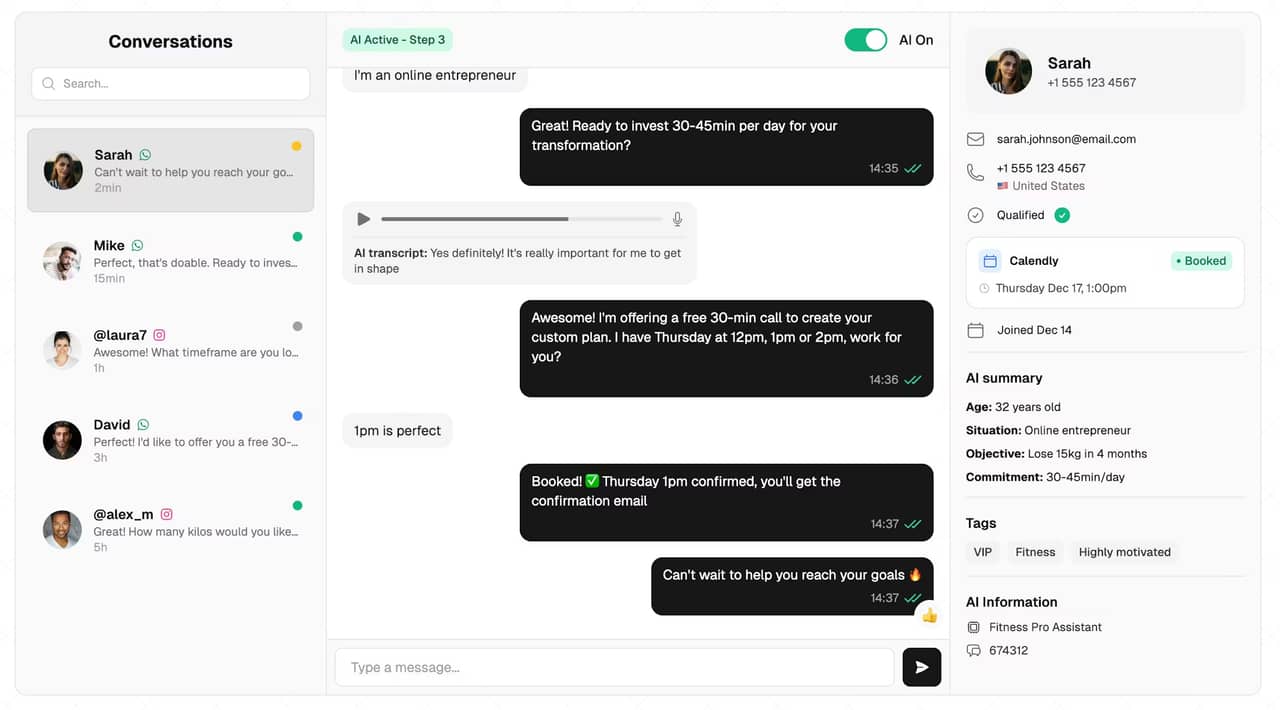
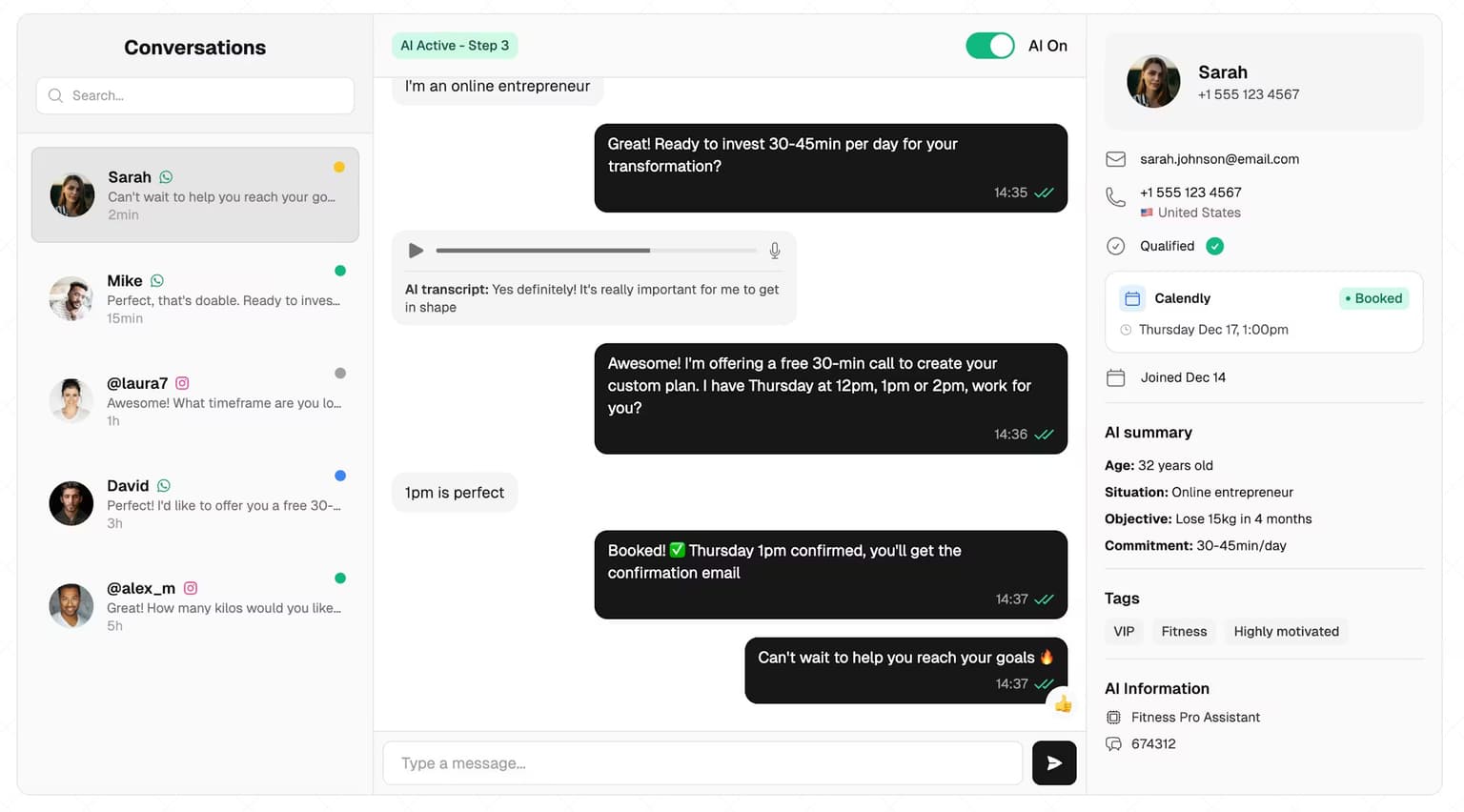
The problem is that reading ticks and firing follow-ups by hand does not scale past a few conversations a day. This is exactly what an AI setter is built for. Instead of you watching for two grey ticks to sit too long, the AI tracks delivery and read status on every WhatsApp thread, follows up automatically at the right interval, qualifies the lead through natural conversation, and books the sales call straight into your calendar. It does not close the deal for you — the human sales call still does that — but it makes sure no lead dies on a stalled tick.
Tools that combine WhatsApp automation with a real conversational layer (see how a WhatsApp chatbot that books calls is built) turn the tick data into booked calls automatically. If you are building a broader WhatsApp funnel, our WhatsApp marketing guide shows where check-mark intelligence fits, and if you need messages to go out at set times, here is how scheduling a WhatsApp message actually works. One last note: the message-status ticks are separate from the verified WhatsApp green tick badge, which is about account verification, not read receipts.
SetSmart runs this on the WhatsApp Business API, starts with a free 7-day trial, then from $97/month including 1,000 messages. It reads delivery and read status on every conversation so your follow-ups land at the right moment instead of whenever you happen to glance at your phone.
FAQ
What's the difference between 1 and 2 check marks on WhatsApp?
One grey check mark means your message was sent to WhatsApp's servers but not yet delivered to the recipient's phone (usually because their device is offline). Two grey check marks mean the message was delivered to their device. Neither grey state means the message has been read — only two blue ticks confirm that.
What do two blue check marks mean on WhatsApp?
Two blue check marks mean the recipient opened the chat and your message was displayed on their screen. Blue ticks are WhatsApp's read receipts. They only appear if both people have read receipts turned on, with the exception of group chats, where read status is always available in the message info.
Why does my WhatsApp message have only one check mark?
A single check mark means the message was sent but not delivered. The most common reason is that the recipient's phone is off or has no internet, so the message is queued and will deliver when they reconnect. It can also mean a wrong number, an unregistered contact, or that you have been blocked — but one tick alone is never proof of a block, since an offline phone looks identical.
Can someone read my WhatsApp message without showing blue ticks?
Yes. If they turn off read receipts, they can read your messages without ever sending blue ticks. They can also read the text straight from the notification banner without opening the chat, which leaves you on two grey ticks even though the message was seen. Group chats are the exception: read status is always visible in the message info.
Do WhatsApp check marks work the same on the Business API?
The ticks map to the same states, but on the WhatsApp Business API they arrive as data: sent, delivered, read, and failed status webhooks. The "failed" status is the extra one you never see as ticks in the normal app, and it tells businesses when a broadcast bounced or a template was rejected so they can fix the issue instead of guessing.
Does turning off read receipts hide that I listened to a voice note?
No. Even with read receipts off, the microphone icon next to a WhatsApp voice note still turns blue once you have played it. The read-receipt setting only controls the blue ticks on text and media, not the "played" indicator on voice messages.
Ready to automate your DMs?
Start your free 7-day trial and let AI handle your lead qualification 24/7.
Try SetSmart free