Branding for Coaching Business: 2026 DM Playbook

Branding for a coaching business is not your logo, your color palette, or your website. It is the answer to one question your ideal client asks in the first three seconds: "Is this person for me?" Strong branding makes that answer an instant yes, so the right people follow, message, and eventually book a call, and the wrong people scroll past.
Most guides on branding for coaching business start with fonts and mood boards. That is backwards. Positioning comes first, visuals come last, and the entire point of the exercise is to make your Instagram and WhatsApp DMs run warmer so you spend less to book each qualified sales call. This is the 2026 playbook for building a coaching brand that actually feeds your calendar, in the right order.
What branding for a coaching business actually means
Branding is the set of associations someone attaches to your name before they ever talk to you. For a coach, it is not one thing, it is four layers stacked in a specific order:
| Layer | What it answers | Build order |
|---|---|---|
| Positioning | Who you help and what result you deliver | First |
| Signature method | How you get them there, in a named framework | Second |
| Voice and message | How you sound and what you repeat | Third |
| Visual identity | Logo, colors, fonts, grid, profile photo | Last |
The mistake almost every new coach makes is starting at the bottom of that table. They spend two weeks on a logo and a Canva template before they can say in one sentence who they help. A beautiful grid built on fuzzy positioning still gets scrolled past. Positioning built on a plain profile still books calls. Get the order right and the visuals become the easy part.
If you are still deciding on the offer itself, read how to start an online coaching business first, then come back here to brand it. Branding an offer nobody wants is just decorating a problem.
Why branding decides how many calls you book
Here is the part the mood-board crowd misses: branding is a conversion lever, not a vanity project. Every unit of clarity you add at the top of the funnel changes how warm people are by the time they land in your DMs.
When your positioning is sharp, three things happen at once. The right people self-select and follow you. They arrive in your inbox already believing you can help them, so the conversation starts halfway to a yes. And the wrong people never message, so you waste zero time qualifying leads who were never going to buy. That is what "warm DMs" means, and it is the difference between a full calendar and a dead one.
Warm interest still has to be worked, though. Branding gets the right person into the conversation, but the conversation itself is where the call gets booked. In our analysis of 828K DM conversations, a single follow-up more than doubled booked calls (+106%), which tells you branding and follow-through are partners: the brand fills the top, the qualifying and follow-up fill the calendar. If your DMs feel cold and slow, the fix is usually upstream, in your positioning, not in a new logo.
This is also why branding lowers your cost per booked call. Warmer leads need fewer touches to qualify, so every ad dollar and every hour of content works harder. If you run Instagram lead generation or paid traffic, a tight brand quietly raises the return on all of it.
Step 1: Nail your niche and positioning statement
Your brand starts with a decision most coaches avoid: choosing who you are not for. A niche is not a cage, it is a magnet. "I help people feel better" attracts nobody. "I help busy dads over 35 lose 20 pounds without giving up dinner with their kids" attracts a very specific person who feels seen.
Write a one-line positioning statement using this frame:
I help specific person achieve specific outcome through your method or angle, without the thing they dread.
Say it out loud. If a stranger could repeat it back after hearing it once, it is sharp enough. If they squint, keep cutting. The best coaching brands are almost uncomfortably specific, because specificity is what makes a scrolling stranger stop and think "that's me."
Your niche should sit at the intersection of three things: what you are genuinely good at, what a group of people will pay to solve, and where you have proof or lived experience. If you are torn between two audiences, pick the one with more money and more urgency, and remember you can always widen later once you own a corner. Coaches who need help finding that corner should study how to get coaching clients and lead generation for coaches, both of which start from the same positioning-first principle.
Step 2: Build your signature framework and name your offer
Once you know who and what, brand how. A signature framework turns your coaching from "we'll figure it out together" into a named, repeatable process the client can picture before they buy. It is the single biggest lever for looking like an authority instead of one more face in the niche.
Take the transformation from step one and break it into three to five phases. Name each phase. Name the whole thing. A fitness coach might sell "The Lean Dad Method: Reset, Rebuild, Reinforce." A business coach might run "The Booked Calendar System." The words matter less than the fact that the method is now ownable, visual, and yours. When you talk about it in content and DMs, you sound like the person who invented the path, not someone renting it.
Do the same for your offer. A named package with a clear promise sells better than "1:1 coaching," because the name carries the outcome. This is where branding meets money, so treat it seriously and read coaching packages and high ticket offer to structure and price the thing your brand is selling. A strong framework is also what lets you charge premium rates without flinching, which is the whole game in high ticket coaching.
Step 3: Define your brand voice and core message
Your voice is how your positioning sounds out loud, and consistency here is what makes a brand feel like a brand instead of a random content account. Decide on a tone: are you the tough-love drill sergeant, the calm science-backed guide, the warm big-sister figure? There is no wrong answer, only wrong inconsistency. Pick one and hold it across your captions, stories, and replies.
Then choose three to five content pillars, the recurring themes you will talk about forever. For a nutrition coach that might be: myth-busting, client wins, simple recipes, and mindset. Every post should ladder up to one pillar and, ultimately, to your one promise. When your themes are locked, your content stops feeling like a scramble and starts compounding, because each post reinforces the same brand instead of pulling in ten directions.
The practical test: someone should be able to read three of your captions with your name hidden and still know it is you. That recognition is worth more than any font. For turning those themes into conversations, Instagram DM marketing and how to market your coaching business map the content-to-DM motion in detail.
Step 4: Add the visual layer (only now)
Now, and only now, build the look. With positioning, method, and voice locked, visual branding becomes a fast, obvious job instead of an agonizing one, because every choice just needs to match a brand you have already defined.
Keep it minimal and consistent:
- Two or three colors. One primary, one or two accents. Use them everywhere so your grid reads as one brand at a glance.
- One or two fonts. A clean heading font and a readable body font. Resist the urge to collect.
- A clear profile photo. Your face, well lit, looking approachable. For most coaches, personal branding beats a logo, because people book people.
- A cohesive grid. Your Instagram feed is your storefront window. It does not need to be a rigid puzzle, but it should feel like it belongs to one person with one message.
You do not need a designer or a five-figure brand package to start. A consistent Canva system beats an expensive logo built on vague positioning every time. If you want examples of clean coach aesthetics and where to host programs, best online coaching platforms is a useful reference. And if aesthetics tempt you to overthink, remember the visual layer exists to serve the message, never to replace it.
Step 5: Turn your profile into a DM engine
A brand that does not generate conversations is decoration. The last step is wiring your profile so branding actually produces DMs you can qualify and book.
Your bio is the highest-leverage real estate you own. It should restate your positioning in plain words and end with a clear next step, whether that is a story keyword, a link, or an invitation to DM. If your bio still just lists credentials, rewrite it using the ideas in Instagram bio ideas. Then set up highlights that pre-sell: proof and testimonials, your framework explained, FAQs, and a "start here" that tells a new visitor exactly what to do.
From there, content starts conversations and DMs qualify them. This is where your brand pays off: because you positioned sharply, the people messaging you are already the right fit, so the conversation moves quickly toward a booked call. Map the full path in Instagram sales funnel. The one rule that never changes: you do not pitch the price or close the deal in the DM. The DM qualifies interest and books the call; the actual sale happens live, on the call. That is the job of a DM setter and, more broadly, an appointment setter, a role you can run yourself, hire for, or automate.
Common branding mistakes coaches make
A few patterns quietly sink otherwise good coaching brands:
- Starting with the logo. Covered above, but worth repeating because it is the number one time-sink. Positioning first, always.
- Copying a bigger coach. Their brand fits their story, not yours. Borrow structure, never voice.
- Being everything to everyone. A broad brand is a weak brand. Narrow to get chosen.
- Rebranding instead of publishing. Endless tweaking of colors is procrastination dressed up as work. A "good enough" brand that ships beats a perfect one that never does.
- Branding with no funnel. A gorgeous grid that leads nowhere books zero calls. Wire the DM path in step five.
If you coach in fitness specifically, the niche version of these lessons lives in fitness marketing; life coaches will find theirs in how to get life coaching clients.
The 5 C's of branding for coaches
People often search for the "5 C's of branding" as a checklist. Here is the coach-friendly version:
- Clarity. Can a stranger repeat who you help in one line? If not, start here.
- Consistency. Same voice, colors, and promise across every touchpoint, so you become recognizable.
- Character. A real personality and point of view. Bland brands are invisible; opinions attract.
- Credibility. Proof, results, and testimonials that make the promise believable.
- Conversion. A brand that turns attention into DMs and DMs into booked calls, not just likes.
Most coaches nail one or two and ignore the rest. The compounding effect only kicks in when all five point at the same client and the same outcome.
FAQ
How do I brand my coaching business?
Start with positioning, not visuals. Write a one-line statement of who you help and what result you deliver, build a named framework for how you deliver it, define a consistent voice and three to five content pillars, and only then design a simple visual identity. Finish by wiring your Instagram bio, highlights, and content so profile visits turn into DM conversations you can qualify and book onto calls.
What are the 5 C's of branding?
The five C's are clarity, consistency, character, credibility, and conversion. For a coaching business that means: say clearly who you help, stay consistent across every post and DM, show a real personality, back your promise with proof, and make sure the brand actually turns attention into booked sales calls rather than just followers.
Do I need a logo and website to start a coaching business?
No. Most successful coaches start with a personal photo, a sharp Instagram bio, and a consistent content style, then add a logo or website later. Your face and your positioning matter far more than a logo in the early days, because people follow and book people. Build the brand around clarity first and treat visuals as the finishing touch, not the starting point.
How much does branding for a coaching business cost?
You can build a strong coaching brand for free with tools like Canva, which is exactly how most six-figure coaches start. A professional designer or brand package can run anywhere from a few hundred to several thousand dollars, but that spend is only worth it once your positioning is locked and you are consistently booking calls. Do not pay for polish before you have proven the message.
Is personal branding or business branding better for coaches?
For most solo coaches, personal branding wins. Clients want to follow and buy from a person, so leading with your face, story, and voice usually converts better than a faceless business brand. You can add a business or program name on top (like a signature framework), but in the early years your name and personality are the brand that fills your DMs and your calendar.
Can I build a coaching brand for free?
Yes. Positioning, a named framework, a defined voice, and a consistent Instagram presence cost nothing but thought and time, and they are the parts that actually drive bookings. Free design tools handle the visual layer well enough to launch. The only thing you truly cannot skip is clarity, and clarity is free.
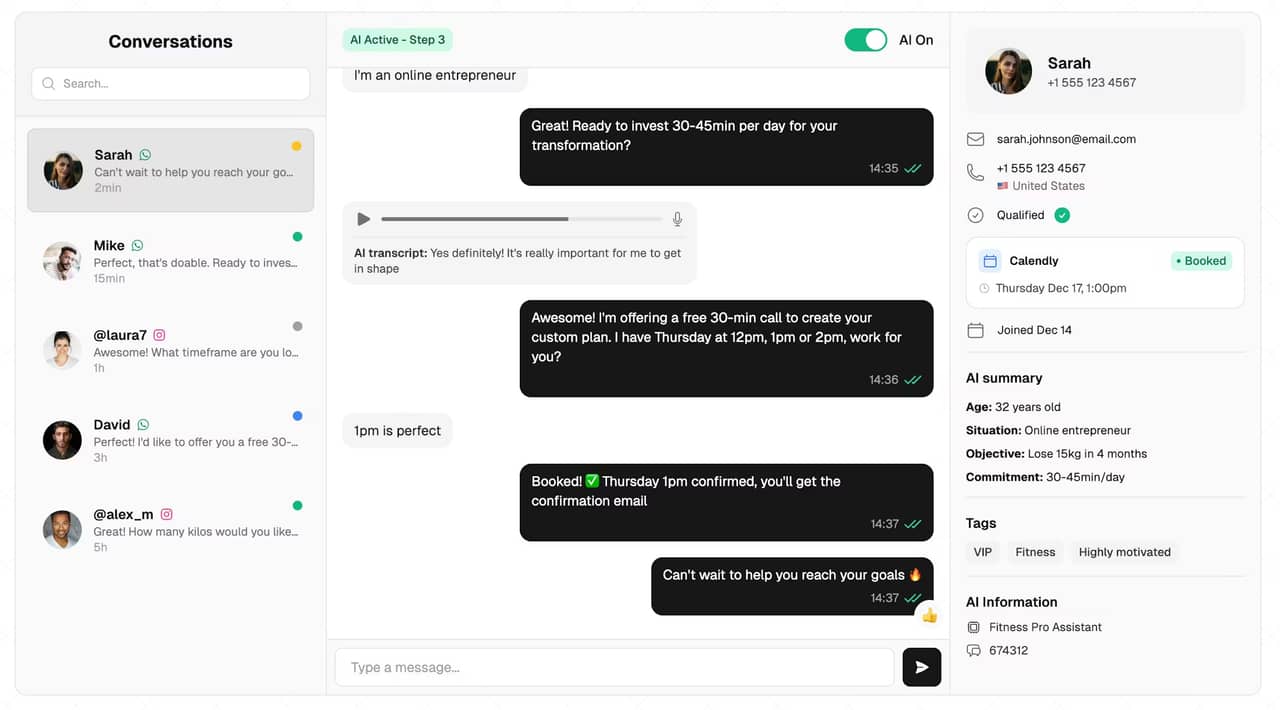
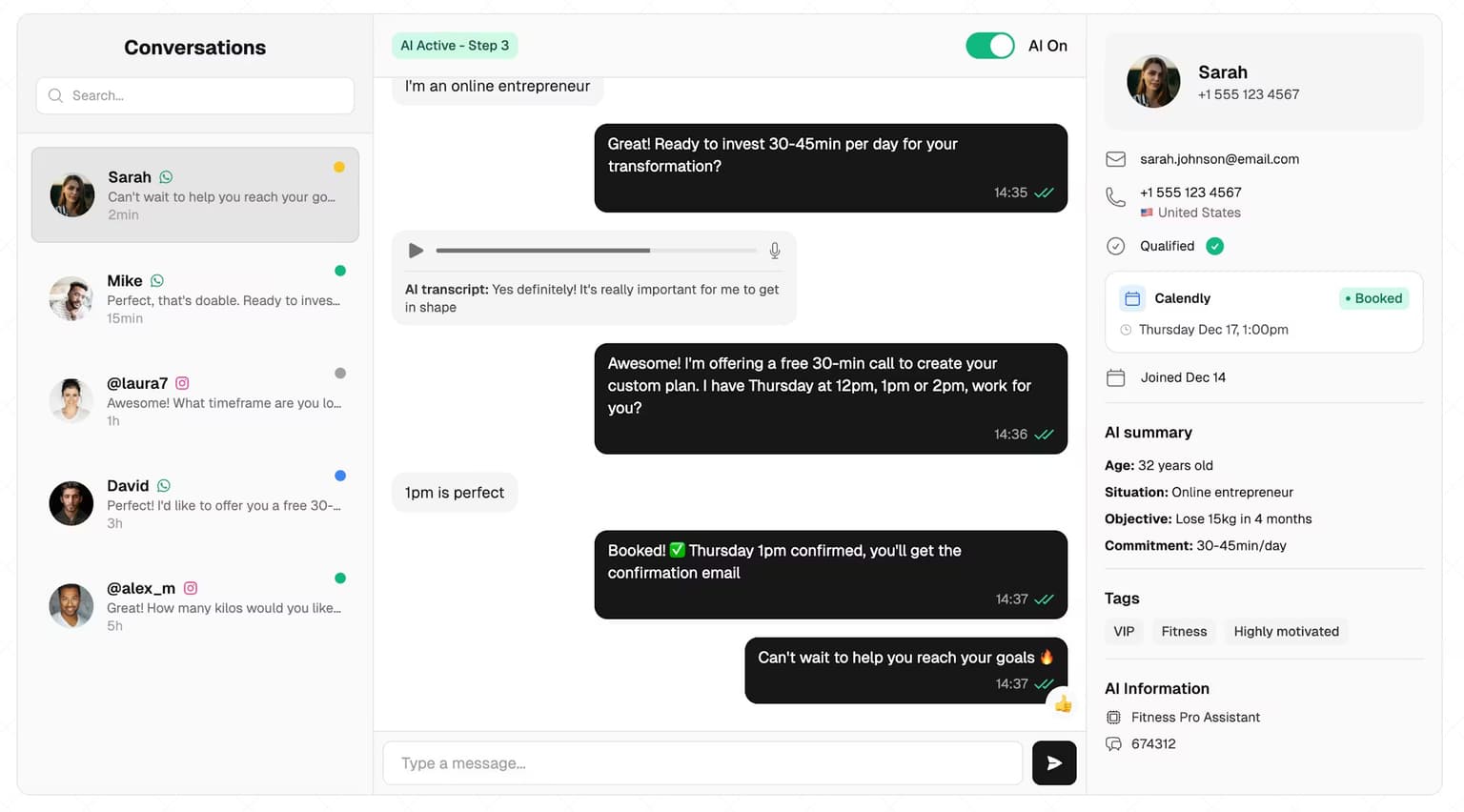
Once your brand is pulling the right people into your DMs, SetSmart's AI setter qualifies them and books the calls for you around the clock, so a warmer inbox turns straight into a fuller calendar. Free 7-day trial, then from $97/month.
Ready to automate your DMs?
Start your free 7-day trial and let AI handle your lead qualification 24/7.
Try SetSmart free