Life Coach vs Therapist: What Coaches Must Know (2026)

The short answer to the life coach vs therapist question is this: a therapist is a licensed clinician who diagnoses and treats mental health conditions, while a life coach is an unlicensed professional who helps a functioning client move from where they are to a specific goal. Therapy often looks backward to heal; coaching looks forward to build. That single line decides what you can offer, what you can say in your marketing, and when you have to send someone somewhere else.
Most articles on this topic are written for consumers deciding who to hire. This one is written for you, the coach. If you run an online coaching practice from your phone, qualify leads in your Instagram DMs, and book discovery calls, you need to know exactly where your lane ends. Cross that line, even with good intentions, and you risk your reputation, your ad accounts, and in some places the law. Stay inside it, and you can market with total confidence.
Life coach vs therapist: the difference in one table
Here is the core comparison before we go deeper. Both roles help people, but they operate under very different rules, training, and goals.
| Dimension | Therapist | Life coach |
|---|---|---|
| Primary focus | Healing, mental health, the past | Goals, action, the future |
| Can diagnose conditions | Yes | No |
| Can treat mental illness | Yes | No |
| License required | Yes (state or country board) | No (certification optional) |
| Regulated profession | Yes | No, self-regulated |
| Typical client | Someone struggling to function | Someone functioning who wants more |
| Insurance coverage | Often | Rarely |
| Session model | Weekly, open-ended | Packages, programs, sprints |
The rest of this guide unpacks each row, then shows you how to position and sell your coaching offer honestly without ever pretending to be a clinician.
What a therapist does that a life coach cannot
A therapist (also called a counselor, psychologist, or psychotherapist depending on the credential) is trained and licensed to work with mental health. That means three things a coach cannot legally or ethically do.
They diagnose. A therapist can assess a client and name a condition: anxiety disorder, depression, PTSD, an eating disorder. A life coach cannot. If you ever write "I help you overcome your anxiety disorder" in a caption or a DM, you have implied a clinical service you are not licensed to provide.
They treat clinical conditions. Therapists use recognized modalities such as cognitive behavioral therapy, EMDR, or psychodynamic therapy to treat illness. These are interventions, not motivation. They require years of supervised training.
They work with the past and with trauma. Therapy frequently digs into childhood, trauma, and unresolved pain to heal a person so they can function. Coaching assumes the person already functions and wants to level up.
Therapists also carry heavy regulatory weight: state or national licensing boards, mandatory continuing education, confidentiality laws, and malpractice exposure. Their sessions are often reimbursable by insurance, which is why a therapist might charge $100 to $250 per session while much of it is covered.
What a life coach does that a therapist usually does not
Coaching is not "therapy lite". It is a different service with its own strengths, and framing it that way is how you sell it with a straight face.
Action and accountability. A coach is hired to get a result: land more clients, hit a strength goal, launch the offer, lose the weight, fix the morning routine. The whole engagement is built around forward motion and being held to it.
Niche expertise. Most coaches are specialists. A weight loss coach, a nutrition coach, a business coach, or a mindset coach brings deep domain knowledge that a generalist therapist usually does not have in that exact area.
Structured programs, not open-ended sessions. Therapy is often weekly and indefinite. Coaching tends to be sold in packages and programs with a clear start, finish, and outcome. That structure is also why coaching lends itself to premium pricing and to a high ticket coaching model.
A marketing-led practice. Therapists often fill their books through referrals and directories. Coaches, especially online ones, build an audience and convert it. If you are still shaping the business, our guide on how to start an online coaching business covers offer and positioning, and best online coaching platforms covers where to host and deliver.
Because coaching is rarely covered by insurance, coaches price by transformation rather than by the hour. Sessions can run anywhere from $75 to $500 per session, and full programs far more, depending on the outcome and the market. If you want a grounded view of the numbers, our breakdown of life coach salary shows what coaches actually earn.
Training, certification, and regulation
This is where the two roles diverge the most, and where a lot of confusion lives.
To become a therapist, you complete a graduate degree, thousands of supervised clinical hours, and a licensing exam, then maintain that license for life. The title is protected. You cannot call yourself a licensed therapist without the credential.
To become a life coach, you need nothing legally. There is no government license, no protected title, no mandatory board. Anyone can call themselves a life coach tomorrow. Certification exists (ICF-accredited programs are the best known) and it can build trust and skill, but it is optional and privately run, not a legal requirement. We compare paths and how they affect client trust in our guide to weight loss coach certification.
That freedom is a double-edged sword. It lets you start fast, but it also means the burden of drawing the ethical line falls entirely on you. Nobody is going to stop you from overstepping, which is exactly why you have to police it yourself.
The legal and ethical line every coach must respect
Here is the practical rule of thumb: coach the goal, never the disorder. You can help a client build confidence; you cannot treat their social anxiety. You can help someone create a healthier routine; you cannot treat their eating disorder. You can support a client through a stressful season; you cannot treat clinical depression.
A few guardrails that keep you safe:
- Do not diagnose. Never label a client with a condition, even casually. "It sounds like you might have ADHD" is a diagnosis you are not qualified to make.
- Do not treat. Do not position your program as a cure or treatment for any mental health condition.
- Do not promise medical or clinical outcomes. Frame results as goals you work toward together, not guaranteed clinical fixes.
- Use a scope-of-practice disclaimer. State plainly, on your site and in your onboarding, that coaching is not therapy or medical advice and does not replace treatment from a licensed professional.
- Keep your marketing honest. This matters double on paid ads. Meta and other platforms scrutinize health and mental-health claims, and clinical language in your copy can get an ad or an account restricted. Selling honestly protects your reach, not just your ethics.
Honesty is also good marketing. When you clearly say "I am a coach, not a therapist, and here is exactly what I help with", the right clients trust you more, not less.
When to refer a client out to a therapist
Part of being a responsible coach is knowing when a person in front of you is not a coaching client at all. Refer out, kindly and without shame, when you see signs like these:
- The person describes symptoms of depression, severe anxiety, trauma, or an eating disorder.
- They cannot function in daily life (work, relationships, basic routines are breaking down).
- They mention self-harm or thoughts of suicide. This is an immediate referral, and in a crisis you point them to emergency services or a crisis line, not a discovery call.
- Their past keeps blocking the present in a way that clearly needs clinical work, not goal-setting.
- You simply feel out of your depth. That instinct is usually correct.
Referring out is not losing a client. It protects the person, it protects you, and it builds a reputation for integrity that brings you the clients you can genuinely help. Many great coaches keep a short list of therapists they can point people to.
How to position and sell coaching without crossing the line
Once you are clear on the line, you can market aggressively inside it. The mechanics for online coaches are the same whether you sell mindset, fitness, or business coaching: turn attention into conversations, qualify those conversations, and book calls.
Lead with a specific outcome, not a feeling. "I help busy founders build a strength habit in 90 days" is a coaching promise. "I help you heal" drifts toward therapy language. Your branding for a coaching business should make the transformation obvious and non-clinical.
Run an inbound DM funnel. Post content that invites a message ("comment a keyword", "reply to this story"), then handle the conversation in your DMs. Our guides on lead generation for coaches and how to get clients as a life coach lay out the full system, and how to market your coaching business covers the content side.
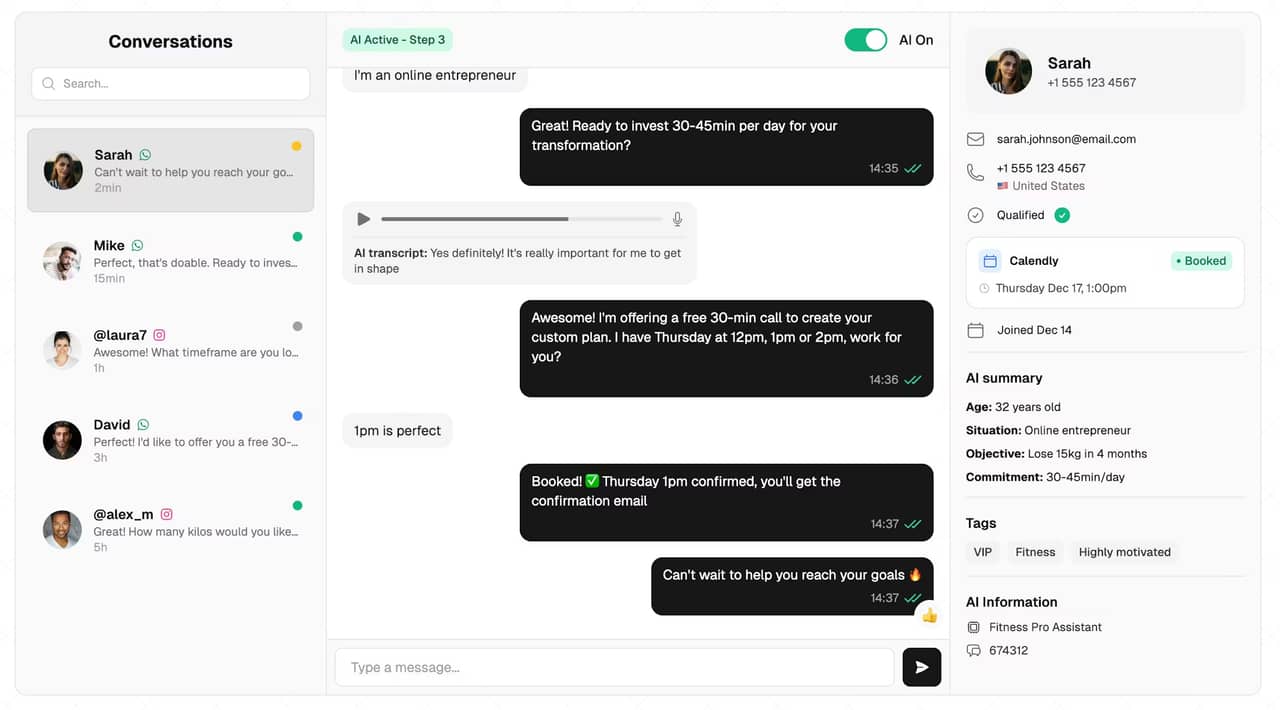
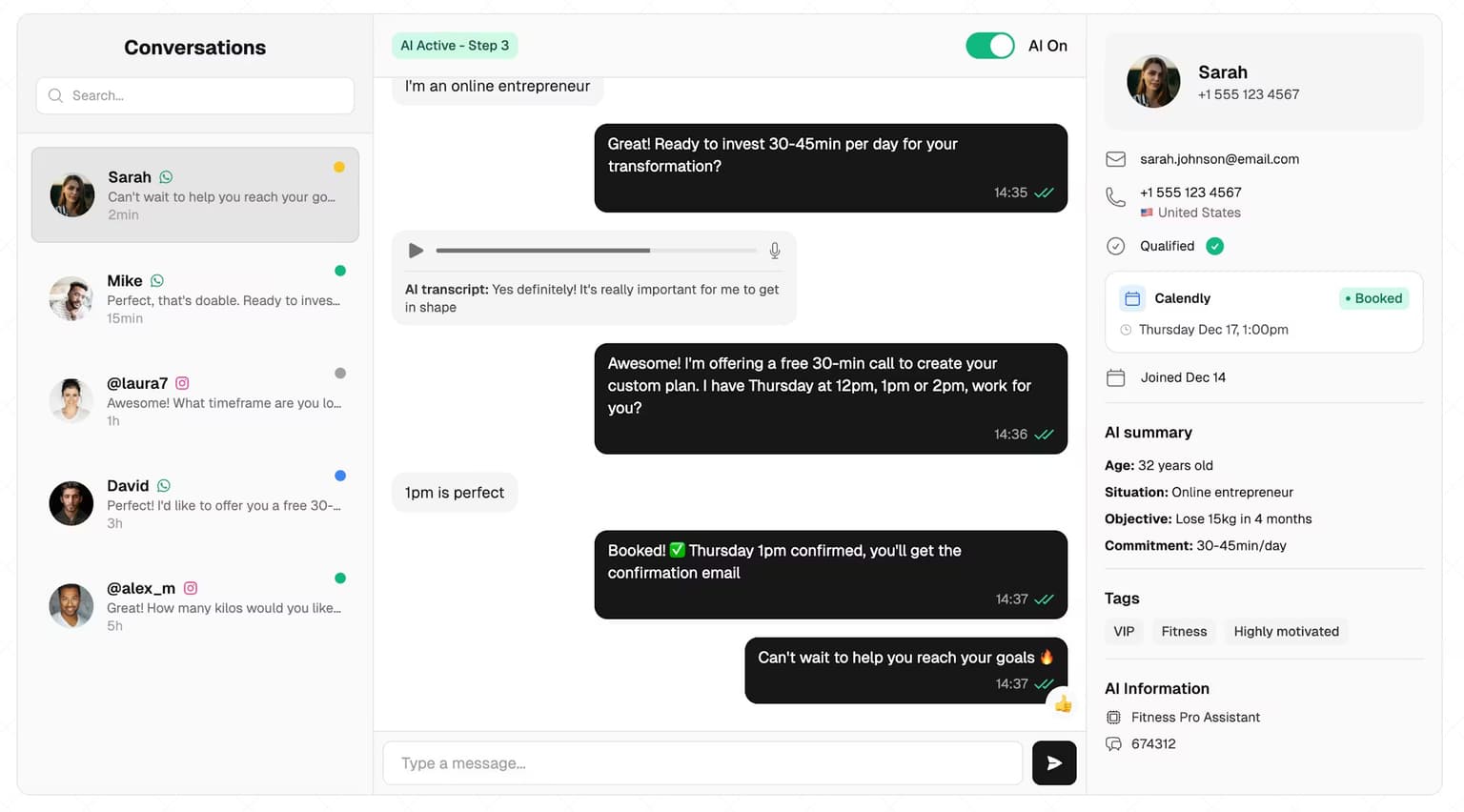
Qualify before you book. This is where the coach vs therapist line becomes a filter. A few good questions about the person's goal, situation, and timeline tell you fast whether they are a coaching fit or someone who really needs clinical support. Qualifying is exactly what a DM setter does, and it is why an AI setter can help you screen and book calls around the clock without living in your inbox. When someone raises a red flag, you refer out instead of booking.
Book the call, close on the call. Coaching is sold on a conversation, not in the chat. The DM qualifies and books; the discovery call is where you enrol the client. Handing that booking off to an appointment setter, human or AI, keeps your calendar full of qualified calls while you stay in your zone of genius.
Can you be both a coach and a therapist?
Yes, and some professionals are. A licensed therapist can also offer coaching, as long as they keep the two services clearly separate: different agreements, different scope, different expectations, and clarity with each client about which hat they are wearing. What you cannot do is blur them, offering coaching while quietly doing therapy, or the reverse.
For the vast majority of online coaches who are not licensed clinicians, the answer is simpler: be an excellent coach, own that title proudly, and refer out when clinical work is needed. You do not need to be a therapist to change lives. You need a clear offer, an honest promise, and a system that fills your calendar with the right people.
FAQ
Should someone see a life coach or a therapist?
If they are struggling to function, dealing with trauma, or facing a mental health condition, they need a therapist. If they are functioning well and want to reach a specific goal such as a career move, a health target, or a business launch, a life coach is the better fit. The two can also work in parallel.
Can a life coach diagnose or treat mental health conditions?
No. Diagnosing and treating mental health conditions is reserved for licensed clinicians. A life coach who diagnoses or claims to treat a condition is stepping outside their scope of practice and, in many places, breaking the law. Coaches work on goals, not clinical treatment.
Do life coaches need a license or certification?
No license is legally required to work as a life coach, and the title is not protected. Certification, such as an ICF-accredited program, is optional. It is not a legal requirement, but it can improve your skills and build client trust, which is why many coaches choose to get certified anyway.
How much does a life coach cost compared to a therapist?
Therapy often runs $100 to $250 per session and is frequently covered, at least in part, by insurance. Coaching is rarely covered by insurance and is usually priced by outcome, so sessions can range from $75 to $500 per session and full programs cost much more, depending on the transformation and the market.
Can a therapist also be a life coach?
Yes. A licensed therapist can offer coaching as a separate service, provided they keep the scope, agreements, and client expectations clearly distinct from therapy. The key is transparency about which service the client is receiving at any given time.
When should a coach refer a client to a therapist?
Refer out whenever a client shows signs of a mental health condition, cannot function in daily life, mentions self-harm, or needs clinical work rather than goal-setting. Referring is a mark of integrity, not failure. It protects the client and your reputation, and it keeps you working with people you can genuinely help.
Ready to fill your calendar with qualified coaching calls without living in your DMs? SetSmart qualifies your Instagram and WhatsApp leads and books discovery calls for you, so you spend your time coaching, not chasing replies. Free 7-day trial, then from $97/month.
Ready to automate your DMs?
Start your free 7-day trial and let AI handle your lead qualification 24/7.
Try SetSmart free