What Does a Life Coach Do? A Clear 2026 Answer

"Life coach" is one of those job titles everyone has heard and almost no one can define. Ask five people and you will get five answers: a motivational speaker, a therapist without the paperwork, an accountability buddy, a guru, or someone who charges you to state the obvious. None of those are quite right. A life coach is a trained partner who helps you get clear on a goal and take consistent action toward it, and the good ones are surprisingly practical.
This guide gives you a plain-English answer to what a life coach actually does, what happens in a real session, the important line between coaching and therapy, the main niches you will run into, what it costs, and whether it is worth paying for. At the end we get to the part most coaches ignore: how a life coach actually finds clients today, because being good at coaching and being good at filling your calendar are two very different skills.
What does a life coach do?
Here is the direct answer: a life coach helps a client define a specific goal, uncover what is getting in the way, and build a concrete plan of action, then holds them accountable to it over time. Coaches do not hand you answers or diagnose problems. They ask sharp questions, reflect what they hear, challenge the stories you tell yourself, and keep you moving between sessions.
Think of the difference between a friend and a coach. A friend listens and sympathizes. A coach listens, then asks the question you have been avoiding, helps you turn a vague wish ("I want to be happier") into a measurable target ("I want to leave my job and replace my income within nine months"), and makes sure you actually do the thing you said you would do. The value is in the structure and the accountability, not in a magic script.
In practice, a life coach spends most of their working time on three things:
- Clarifying goals. Turning fuzzy dissatisfaction into specific, believable outcomes with a timeline.
- Removing obstacles. Surfacing the limiting beliefs, habits, and fears that keep the client stuck, and reframing them.
- Driving action and accountability. Co-creating a plan, breaking it into steps, and checking in on progress so momentum does not fade.
Everything else, from the intake questionnaire to the between-session voice notes, exists to support those three jobs.
What actually happens in a life coaching session
Direct answer: a typical session is a focused 45-to-60-minute conversation, usually over video or in person, structured around one topic the client brings that day. It is not free-flowing chat. Good coaches run a loose framework so the hour produces a decision or an action, not just a nice talk.
A common session shape looks like this:
- Check-in. What has happened since last time? What did you commit to, and did you do it? Wins and slippage both get named.
- Set the focus. The client picks the one thing they most want to work through today. The coach helps narrow it.
- Explore. The coach asks open questions, notices patterns, and reflects blind spots. This is where the real work happens, and where a skilled coach earns their fee.
- Decide and commit. The client leaves with a specific action and a deadline, plus a way to be held accountable.
Between sessions, many coaches stay in contact through messaging, short check-ins, or accountability nudges. That ongoing contact is a big part of why coaching works, and increasingly it happens in Instagram or WhatsApp DMs rather than email, which is why so many coaches now run their whole client relationship through Instagram DM marketing.
What a life coach is not allowed to do
This is the most misunderstood part of the job, so let's be precise. A life coach is not a licensed mental health professional, and there are clear things they should never do:
- They cannot diagnose or treat mental illness. Depression, anxiety disorders, trauma, and addiction belong to therapists, psychologists, and doctors.
- They cannot prescribe medication or provide medical advice.
- They should not do therapy. Coaching looks forward ("where do you want to go and how do we get there") while therapy often looks back to heal the past. A good coach refers a client to a licensed professional the moment clinical issues surface.
- They cannot promise specific outcomes. Ethical coaches sell a process, not a guaranteed result.
The distinction matters because "life coach" is not a legally protected title in most countries. Anyone can use it tomorrow with zero training, which is exactly why credible coaches lean on certification and clear scope to build trust. If you want the full breakdown of where the line sits, we cover it in detail in life coach vs therapist. The short version: coaching is for functional people who want to move faster toward a goal, not for people in crisis.
Types of life coaches: the main niches
Direct answer: "life coach" is an umbrella term, and almost every working coach specializes. The niche shapes what they actually do day to day. Here are the ones you will meet most often.
| Type of coach | What they help with |
|---|---|
| Health & wellness coach | Habits, energy, stress, sustainable lifestyle change |
| Fitness / nutrition coach | Training, weight loss, body composition, adherence |
| Career coach | Job changes, promotions, interviews, direction |
| Business coach | Growth, offers, pricing, founder mindset |
| Relationship coach | Dating, communication, boundaries |
| Mindset / spiritual coach | Confidence, purpose, values-led decisions |
What does a spiritual life coach do? A spiritual coach focuses on meaning, purpose, and alignment with a client's values or faith rather than tactics. The mechanics are the same (questions, reflection, action) but the goals are inner: peace, clarity, a sense of direction.
What does a certified life coach do differently? Functionally, the same work. The certification (often from an ICF-accredited program) signals training in coaching ethics and technique. It does not grant any medical or legal authority, but it builds credibility and is sometimes required for corporate or employed roles. Certification matters more for trust and marketing than for the day-to-day mechanics.
The niche also decides where the coach finds clients. Health, fitness, and business coaches in 2026 overwhelmingly run their acquisition through Instagram content and DMs; relationship and spiritual coaches lean on the same channel plus referrals.
How much does a life coach cost?
Direct answer: most life coaches charge somewhere between $75 and $250 per hour, and the more experienced ones package their work into programs priced from roughly $1,500 to $5,000 for a multi-month engagement. Single sessions exist but the real work happens over time, so packages are the norm.
Pricing varies with niche, experience, and format:
- Entry-level / newer coaches: often $50 to $100 an hour while they build a track record.
- Established specialists: $150 to $250 an hour, or $2,000 to $5,000 for a three-month program.
- High ticket coaches: $5,000 to $25,000 for intensive programs, mastermind access, or done-with-you outcomes.
If you are a coach trying to decide what to charge, the honest answer is that per-hour pricing caps your income and your impact. Packaging your work around a clear outcome almost always earns more, which is why we wrote a full guide on building coaching packages and, for the top of the market, high ticket coaching. For a deeper look at what coaches actually earn across niches and formats, see our breakdown of life coach salary.
Do life coaches make good money, and is one worth it?
Direct answer: it depends entirely on which side of the table you are on. As a client, a good coach is worth it when you have a specific goal and keep getting in your own way; the accountability alone often pays for itself. As a coach, the money is real but it tracks your ability to fill a calendar with qualified conversations, not your certificate.
For clients, coaching is worth paying for when three things are true: you are functional (not in crisis), you have a concrete goal, and you are willing to do the work between sessions. If you are looking for someone to fix you or hand you motivation, coaching will disappoint you. If you want structure and honest reflection to move faster, it can be one of the highest-leverage things you buy.
The downsides to know about. Because the title is unregulated, quality varies wildly. Some "coaches" are barely trained and sell hype. Others push clients toward buying more coaching rather than solving the actual problem. And coaching is not a substitute for therapy; using it that way is the single most common mistake. Vet a coach on results, references, and clear scope before you pay.
How a life coach actually gets clients in 2026
Here is the part most "what does a life coach do" articles skip: a huge portion of a working coach's job is not coaching at all. It is finding people, starting conversations, qualifying who is a genuine fit, and getting them onto a call. Coaching skill and client-getting skill are completely separate, and the second one is where most coaches stall.
The modern coaching funnel looks like this:
- Attract. Post content on Instagram (or run ads) that speaks to one specific problem your ideal client has.
- Start the conversation. Move people from a comment, story reply, or bio link into the DM. This is where interest becomes a real lead.
- Qualify. Find out whether they actually want the outcome you sell, can invest, and are ready to start. Not every DM is a buyer.
- Book the call. Get the qualified ones onto a discovery call, because coaching offers close on a conversation, not in the chat.
- Close and deliver. You sell the program on the call, then coach.
That flow is exactly what our full playbook on how to get life coaching clients walks through step by step, and the marketing side is covered in how to market your coaching business. If you are just starting, the foundations live in how to start an online coaching business.
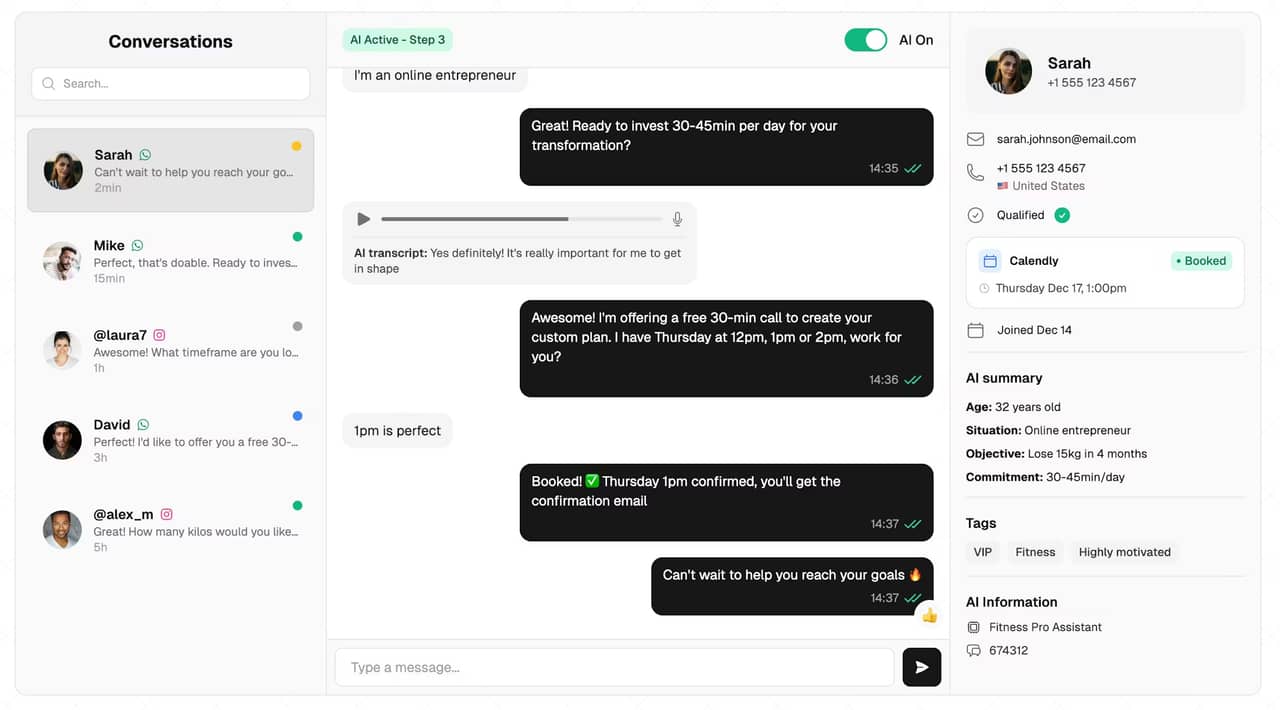
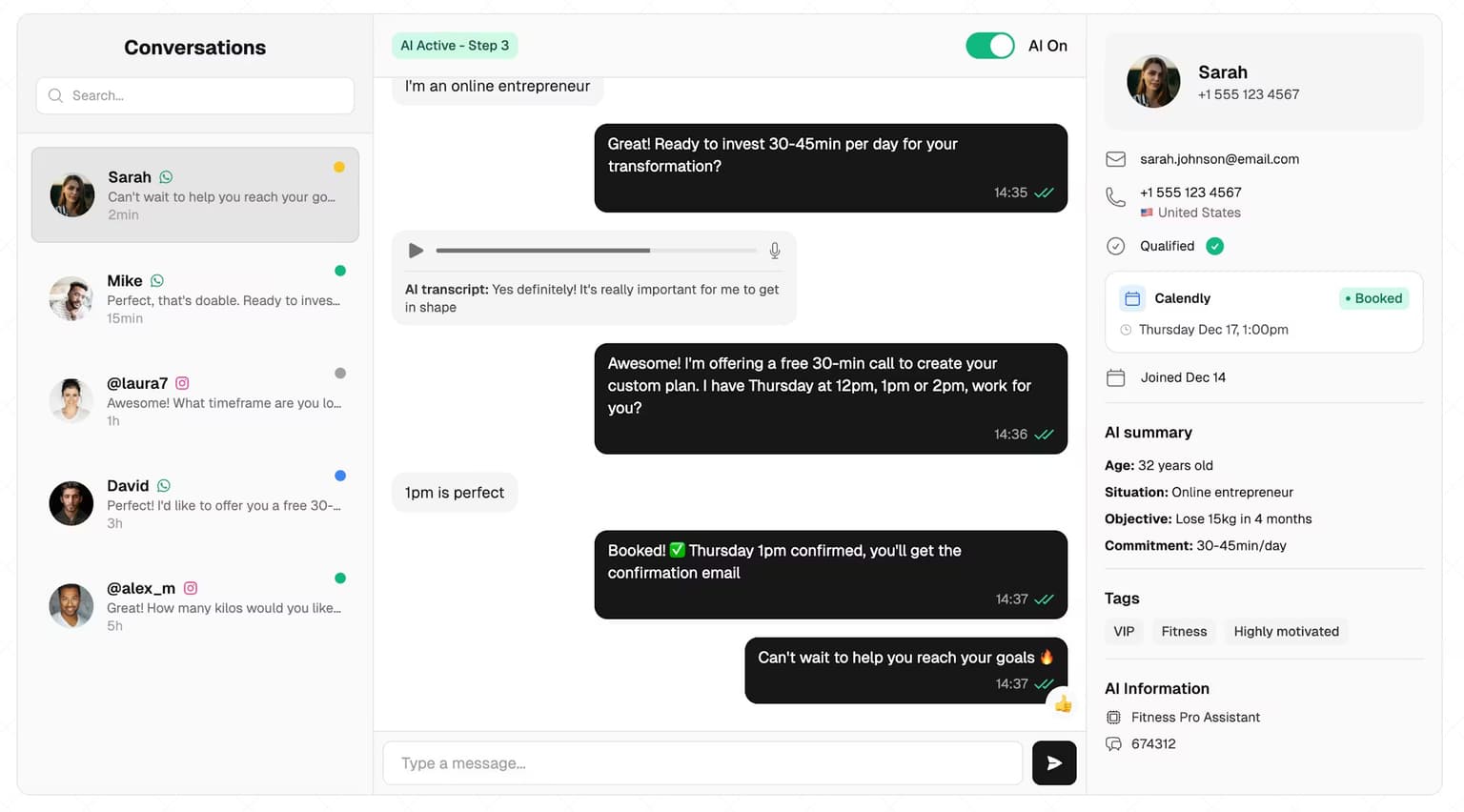
The bottleneck almost always shows up at steps 2 through 4. A coach posts, DMs pile up, replies come hours later, good leads go cold, and the calendar stays half-empty. That is not a coaching problem, it is a response-time and follow-up problem. This is where an AI setter earns its keep: it answers every Instagram and WhatsApp DM in seconds, asks the qualifying questions you would ask, and books the ready leads straight onto your calendar, so you spend your hours coaching instead of triaging an inbox. It works as your always-on appointment setter, never forgetting a follow-up.
To be clear about what that does and does not mean: the AI qualifies and books; it does not close your high ticket offer in the DM. You still sell on the call, human to human. The DM layer just makes sure your calendar is full of the right conversations.
FAQ
What does a life coach actually do?
A life coach helps you define a specific goal, identify what is blocking you, and build and follow through on a plan of action. They ask questions, reflect patterns, challenge limiting beliefs, and hold you accountable between sessions. They do not give you answers, diagnose problems, or do therapy.
What is a life coach not allowed to do?
A life coach cannot diagnose or treat mental health conditions, prescribe medication, give medical advice, or provide therapy. Because the title is unregulated in most countries, ethical coaches stay strictly within scope and refer clients to licensed professionals whenever clinical issues appear.
What is the difference between a life coach and a therapist?
A therapist is a licensed professional who diagnoses and treats mental health conditions, often working with the past to heal. A life coach works forward with functional clients to reach a goal faster. Coaching is not a substitute for therapy. We cover the full distinction in our life coach vs therapist guide.
What type of life coach is most in demand?
Health, fitness, and business coaching consistently show the strongest demand because the outcomes are concrete and easy to measure. Career and relationship coaching are also popular. The most bookable coaches are the ones with a sharp niche and a clear promise, not generalists.
How much does a life coach cost?
Most life coaches charge $75 to $250 per hour, and experienced coaches package their work into programs priced from roughly $1,500 to $5,000. High ticket coaches charge well beyond that for intensive or done-with-you programs. Packages priced around an outcome are far more common than one-off sessions.
Do you need a certification to be a life coach?
Legally, no. In most countries anyone can call themselves a life coach without training. A certification from an accredited body like the ICF builds credibility and is sometimes required for employed roles, but it grants no medical or legal authority. Practical skill and results matter more than the credential.
Knowing what a life coach does is the easy part. Building the client pipeline that keeps you coaching full-time is the hard part. SetSmart answers your Instagram and WhatsApp DMs in seconds, qualifies each lead the way you would, and books the ready ones straight onto your calendar. Free 7-day trial, then from $97/month, or see the full pricing.
Ready to automate your DMs?
Start your free 7-day trial and let AI handle your lead qualification 24/7.
Try SetSmart free